The Bunny Man may be the most well-known urban legend of Northern Virginia, but there is a lesser-known story about a creature that haunts a small patch of woods in the Fairfax County side of Alexandria: the Mount Vernon Monster.
The Mount Vernon Woods are in part of what was originally George Washington’s Mount Vernon estate. A 1979 Washington Post article states the land was specifically within an “area where George Washington’s slaves once grew wheat and raised pigs.”1 Today, the woods sit right off Mount Vernon Highway, between two neighborhoods. Grist Mill Park sits on the southwest edge, and a golf course borders the northwest edge.
Approximate area of the Monster in Mount Vernon, Alexandria. (Google)
Unlike a lot of urban legends, there is no discernable origin story of the monster. It simply appears in the form of “nocturnal screaming” sometime in the fall of 1978.2 The screaming occurred only at night and was described in a variety of different ways from witnesses:3
They described the sound as something like a wild boar, really loud frogs, some guy blowing in a wine bottle, a barred (or hoot) owl, a broken microphone on a CB outfit, a parrot, a mouse with an amplifier, a strangled dog, the ghost of George Washington and the ghost of George Washington’s pigs.
Blaine Harden, “The Mount Vernon Monster,” Washington Post (May 12, 1979)
I don’t know about you, but I want to know more about ghost pigs.
A blog article from Sam Hartz also describes the sounds as “something like: “ooahkra-ah,” or “eeveakgoo-ah” or even “aaaoohauoa-ah-oo.”4 A short video about the Mount Vernon Monster recalls the testimony of an 11 year-old witness, claiming it seemed most active between midnight and 5am and the sound was so loud it would cause the windows to rattle.5 A post on Fairfax Underground forum posted, “[The sound] rattled windows. It was very deep and not like any animal I have heard and I had spent time in the outdoors. The sound moved quickly from one end of the street to the other . . . There were large woods with marshy land behind our home. It sounded like it came from that area most of the time.”6 Though the descriptions of the sounds vary, all of the witnesses agree that it was an out-of-the ordinary sound, and it was loud.
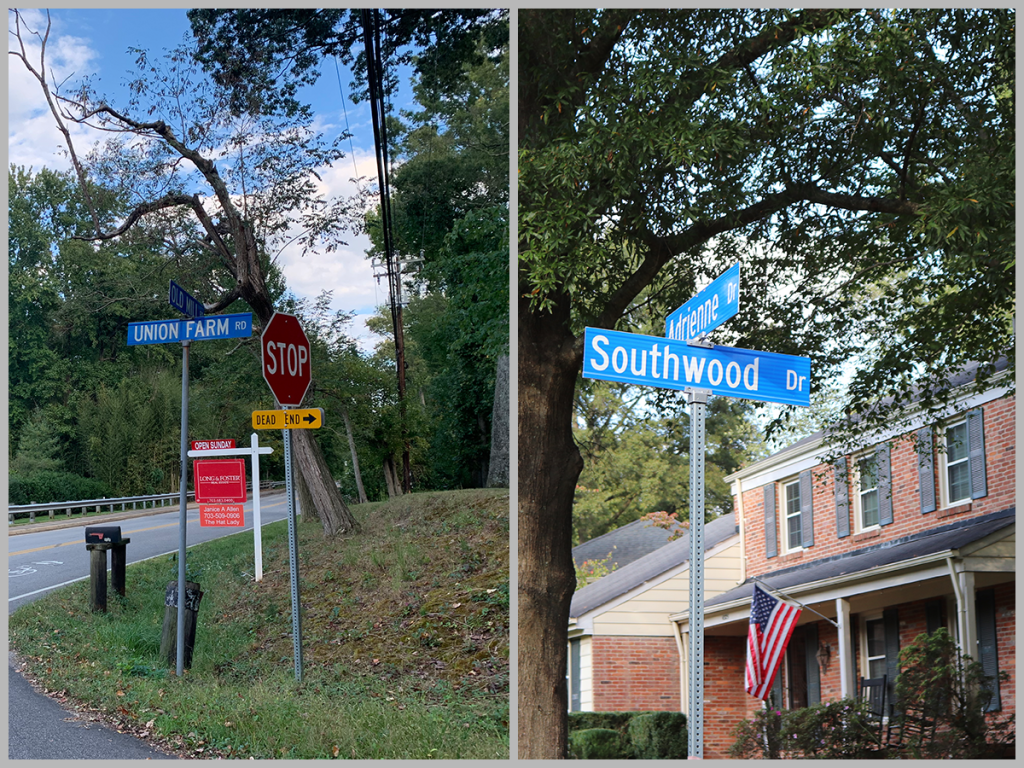
Spottings in the past occurred at the end of Union Farm Road and Southwood Dr. directly in the back of the Mount Vernon Woods. (Matthew T. Eng/Offbeat NOVA)
There are far less acknowledgements of sightings, however. The Washington Post mentions that Thelma Crisp, who lived nearby, reported “a creature in her backyard that stands 6 feet tall and walks upright.”7 Perhaps her account is why the creature seems to be closely associated with Sasquatch or Bigfoot. I was able to track down another sighting online, though it is not within the correct timeframe or area. Others within the correct timeframe and area mentioned strange occurrences, like rabbit hutches ripped apart, trees breaking, and even, in one instance, an impaled deer.8 One person even produced a recording of the sound his father made. Listen to it here.
Depiction of the Mount Vernon Monster. Most other versions closely resemble a classic “Bigfoot” character.
The brouhaha was so large by spring of 1979 that the Fairfax County Police got involved. They combed the woods, complete with searchlights and a helicopter, but found nothing. After the police search, the monster seems to have disappeared. There are no other records of the monster or any weird sounds in any official news sources, and there’s only a smattering of comments about it in forums and sites dedicated to Bigfoot research. As quickly as it appeared, the monster faded into obscurity.
There are posts on the Fairfax Underground that claim the monster was a hoax—that kids put speakers in the open windows of a house or in the woods. However, some posters insist that the monster was real, and that there was no way those sounds could be faked. Real or not, the monster holds a place in Northern Virginia lore—and reminds us of our fraught relationship with nature and the fear of the unknown.
Footnotes:
Harden, Blaine. “The Mount Vernon Monster.” The Washington Post, May 12, 1979. LINK.
Ibid.
Ibid.
Hartz, Sam. “Mount Vernon Monster Haunts Woods, Wrecks Peace.” Kentucky Daily Independent Newspaper, May 20, 1979. LINK.
Author Denver Michaels. “The Mount Vernon Monster.” YouTube, December 16, 2022. LINK.
D.N. “Re: Mount Vernon Monster.” Fairfax Underground, December 25, 2013. LINK.
When I was growing up in Virginia Beach, I always heard tales of a friendly ghost at a local restaurant called Tandom’s Pine Tree Inn. The building had been around for decades—it was only natural that a ghost story go with it. Allegedly, the ghost liked to play tricks on staff. A friend’s mother, who waitressed there for time, told a story about plates being stacked one way, leaving the room, then returning to see them stacked another way. Another time, she said, she came in to open the restaurant one morning and all the chairs in the dining room were haphazardly strewn around, even though the person who had closed the night before swore they were neatly put away.
Eventually, that building was torn down to make way for progress (a Wawa, to be exact) and the stories of the friendly trickster ghost faded away. It made me wonder whether Northern Virginia had any tales of friendly ghosts—after all, cities like Alexandria had been around for much longer than Virginia Beach.
Imagine my surprise when I learned that the upscale Overlee Community Center and pool in Arlington was purported to have a friendly ghost hanging about.
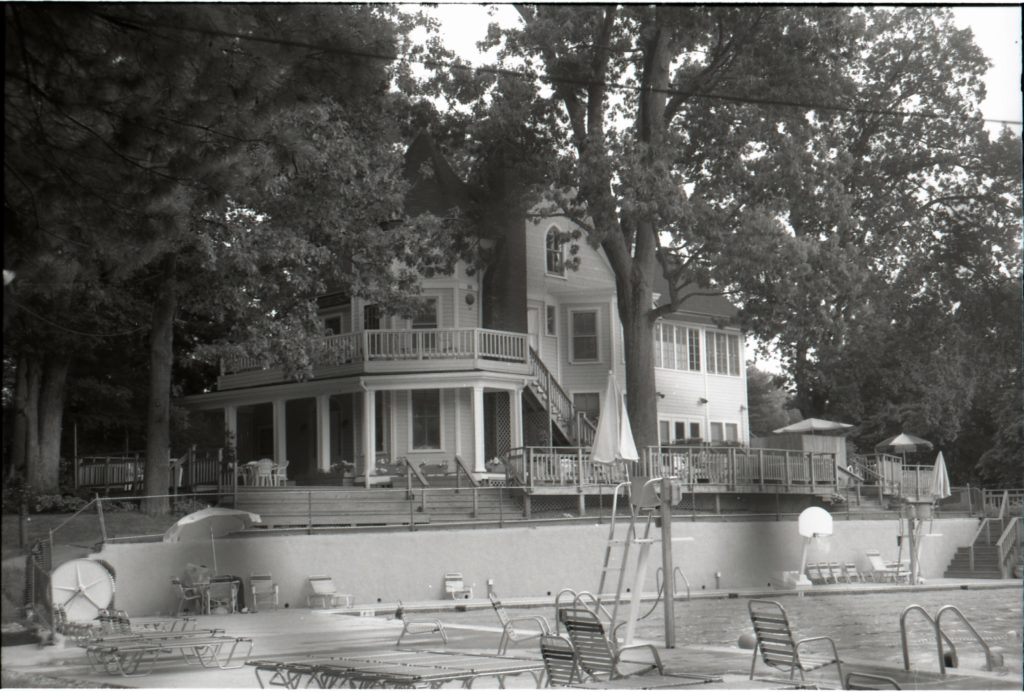
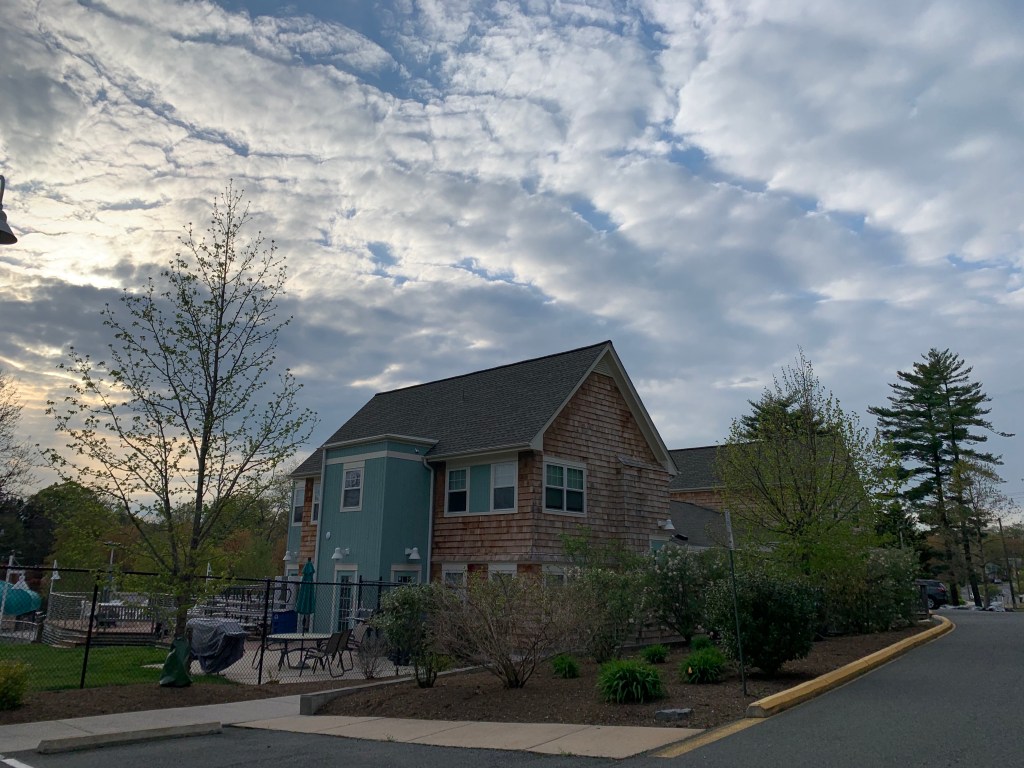
The Overlee (meaning “north of Lee Highway”)1 Community Center is a private club that was founded in 1957. It has multiple pools, park land, sports areas, and a clubhouse. The clubhouse is the item of interest in all the stories I read—though it is not the clubhouse that is standing today. The former clubhouse was a historic home, known as the Febrey-Kincheloe house, that served as the clubhouse for the association until 2012, when the pool members voted 55 to 4 to renovate the complex.2 Part of the renovations included tearing down the historic home and building a new clubhouse.
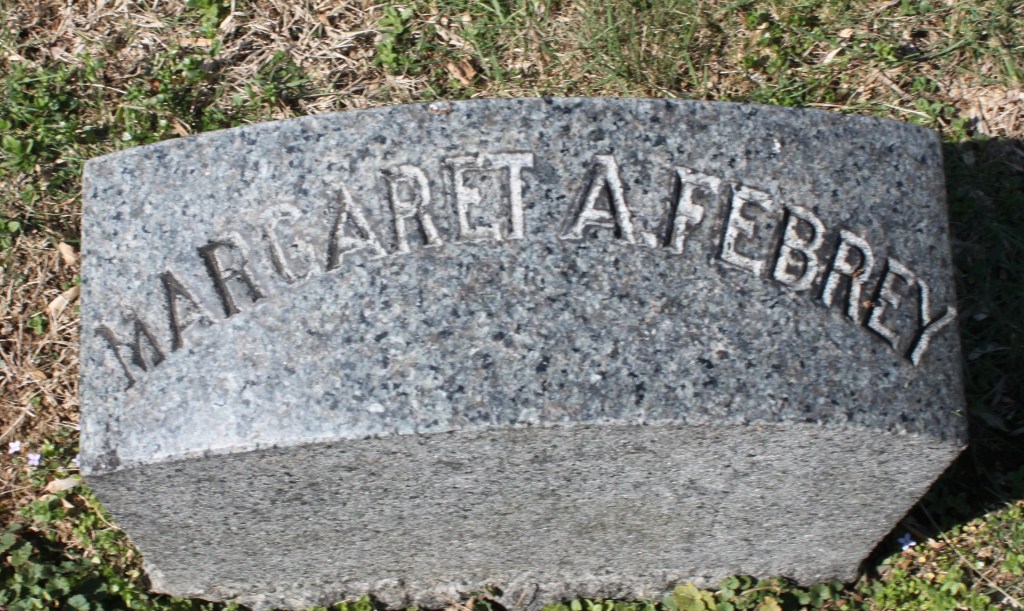
The Febrey family was the first to own the historic home. The Febreys bought a 176-acre tract of land in 1849; in 1890 Ernest Febrey built a three-bedroom home that overlooked an apple orchard and creek.3 Shortly after he built the home, his wife gave birth to a little girl, Margaret. Margaret, unfortunately, passed away on January 15, 1913, at the age of 14. She had Pott’s disease, a rare infection of the spine.4 Supposedly the family no longer used the home after Margaret died. She is buried in Oakwood Cemetery, not far from the site of her home, with her mother and infant brother.
Margaret A. Febrey Tombstone in Oakwood Cemetery, Falls Church (FindAGrave)
In 1947, a lady named Florence Kincheloe bought the property. She converted the home into what was known as the Crestwood Sanitarium, a home for retired Washington dignitaries.5 Little details exist about the Crestwood, though a publication from the Arlington Historical Society notes that “it was a burden to manage [the sanitarium] and that the population in the area was too young to need a nursing home,” so she sold the property in 1957.6 Soon after, it became the Overlee Community Center.
Febrey-Kincheloe House, 1997 (Arlington Library)
Over time, the creek and the orchard disappeared, but the house remained. However, it seems that more than just the house stuck around.
A former swim coach that lived in the Febrey-Kincheloe house in the late 70’s and early 80’s reported hearing weird noises (but never seeing anything) that reminded him of the ballroom dancing scene in Disneyland’s Haunted Mansion.7 One of the Overlee Board members mentioned “other ghost stories” that included “music and strange noises and things . . . most people believe it’s from the time it was a sanitarium.”8
Sounds like something straight out of a Stephen King novel, if you ask me.
However, there is another well-known ghost that is said to haunt the property.
Multiple people have reported seeing the ghost of a young girl wandering the grounds. Described as chatty and friendly, she was said to enjoy playing with other children at the pool.9 When the property was renovated and the original Febrey home torn down, construction workers reported seeing a girl in Victorian clothing climbing through the construction debris and walking around the site.10 Others reported talking to a young girl in “strange clothing” that they later identified as Margaret.11 One former manager recounted odd happenings, such as a lifeguard chair swiveling on its own, the sound of rocks being thrown into construction equipment, or the shuffling of feet in a breezeway.12One construction worker even quit after he sighted her in the house. He went in to find her, came out, then saw her on the steps. He turned away for a moment, and she was gone. A coworker said that the worker who sighted the girl immediately packed his stuff and left the site.13
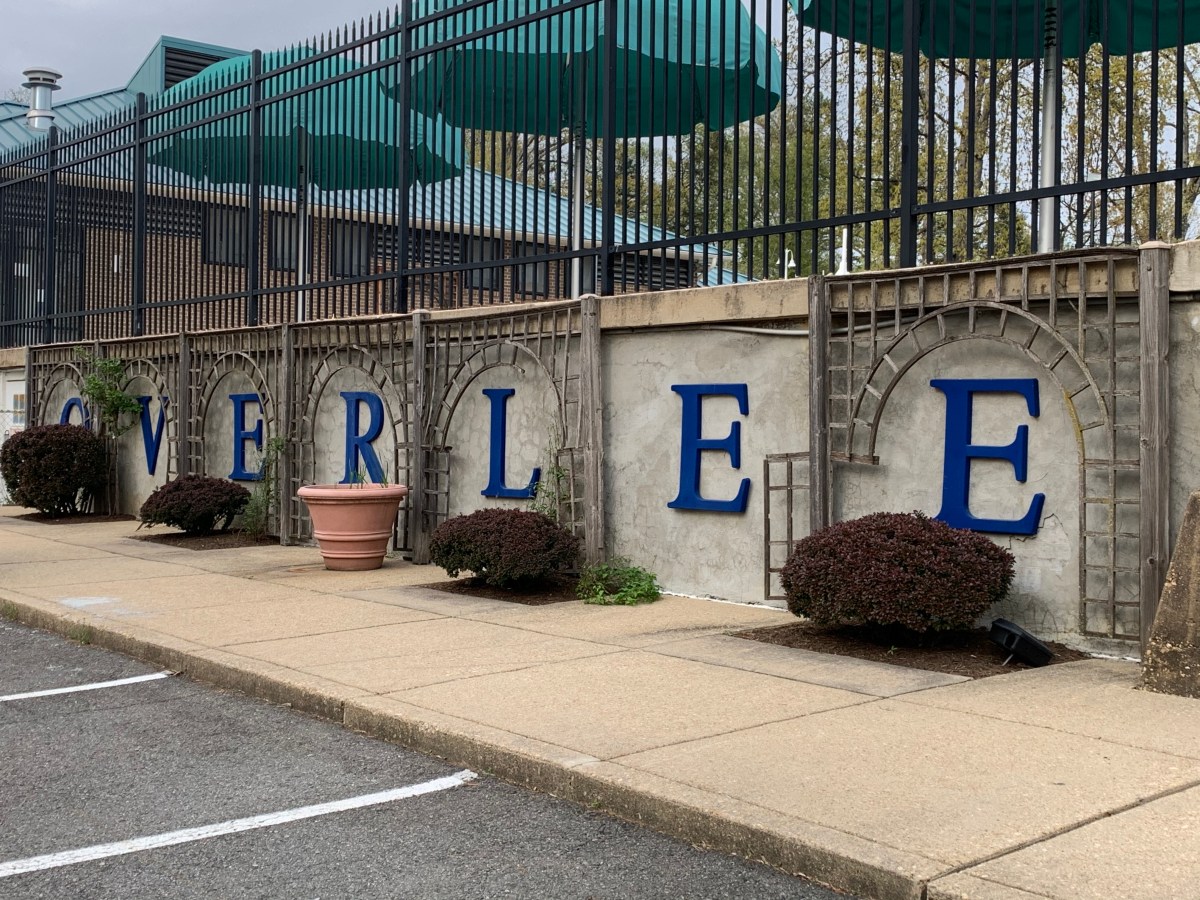
The Overlee Community Center Clubhouse, site of the former home (Offbeat NOVA)
No one reported any malice or frightful happenings, just small, slight occurrences that suggested there was more at work than just an active imagination. Even so, there have been few sightings of Margaret since 2012. An article from Arlington Connection, dated 2013, asks, “Where are you, Margaret?”14 and recounts one story of a sighting.
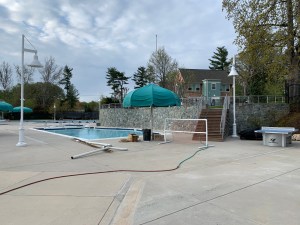
Overlee Community Pool (Offbeat NOVA)
The friendly ghost of my childhood, the Pine Tree Inn ghost, disappeared after the building was razed. The stories and occurrences stopped the second the building came down (though I’d love to know if anyone’s ever encountered something weird at the WaWa). Like the Pine Tree Inn ghost, the ghost of Margaret Febrey seems to have disappeared with the destruction of her home.
The board members didn’t take any chances when the house was demolished, though. They left flowers and a note that said, “Dear Margaret, we are building you a new house. Please come visit any time.”15
And maybe, she will.
But I wouldn’t hold my breath.
Footnotes:
Zak, Dan. “Haunting at Overlee pool in Arlington shows past is still part of community’s future,” The Washington Post, June 13, 2012. Accessed April 24, 2021, LINK.
Zak, “Haunting at Overlee.”
Ibid.
Ibid.
n.a. “The Spirits at Overlee,” Rediscover Haunted Arlington. October 28, 2019. Accessed April 24, 2021. LINK.
Vogel, Sophie. “Growth of a Suburban Village: Fostoria, Overlee Knolls & Westover, 1730-1998,” Arlington Historical Society Magazine. October 1998. Accessed April 24, 2021. LINK.
Zak, “Haunting at Overlee.”
Pyzyk, Katie. “Workers Report ghost Sightings at Overlee.” ARLnow. March 16, 2012. Accessed April 24, 2021. LINK.
Zak, “Haunting at Overlee.”
n.a.“Spirits at Overlee.”
Ibid.
Zak, “Haunting at Overlee.”
“Arlington ghost: construction worker quits after Margaret Febrey sighting.” YouTube video. November 9, 2012. Accessed April 24, 2012. LINK.
McMorrow, Michael. “Where Are You, Margaret? TheArlington Connection. Connection Newspapers. September 11, 2013. Accessed April 24, 2021. LINK.
One day last summer, Matt and I were in Old Town, trying to find a spot for takeout. We took a turn down a road named River Canal Way and stumbled into some kind of corporate conglomeration of office buildings and gazebos. However, as we turned around in the loop at the end of the road, I noticed a strange-looking fountain that was spewing water not up, but out towards the waterfront.
So like any amateur history bloggers that keep a keen eye out for the weird and usual, we parked and got out of the car for a closer look.
I was totally unprepared for what we saw.
Photos by Matthew Eng/Offbeat NOVA
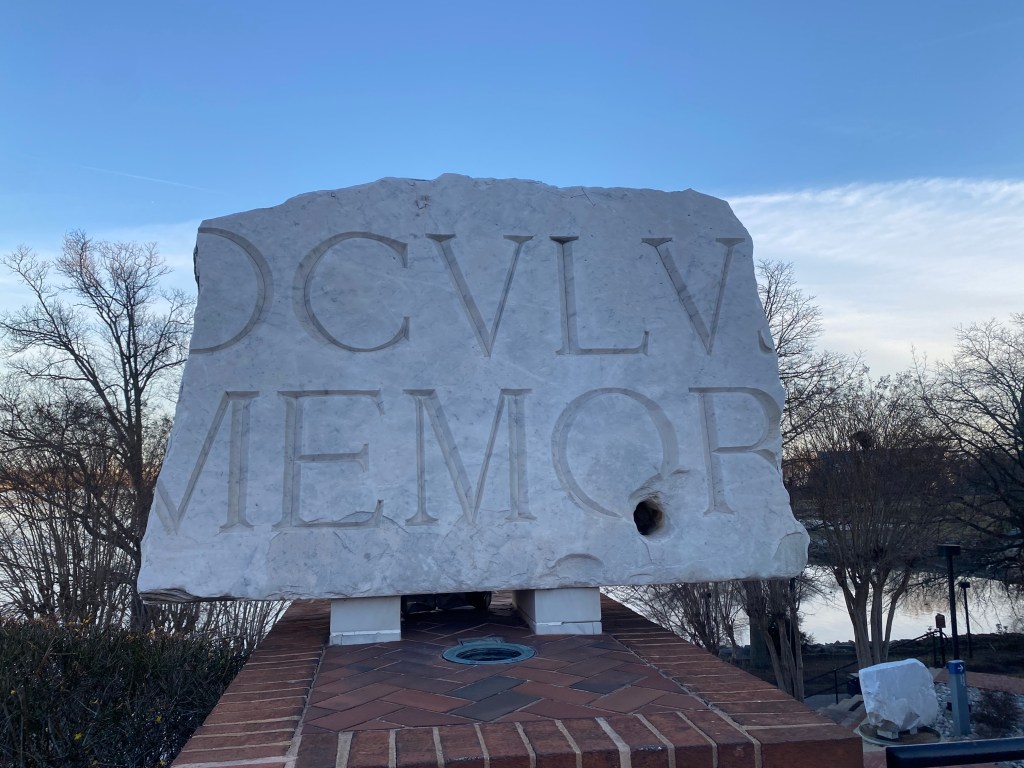
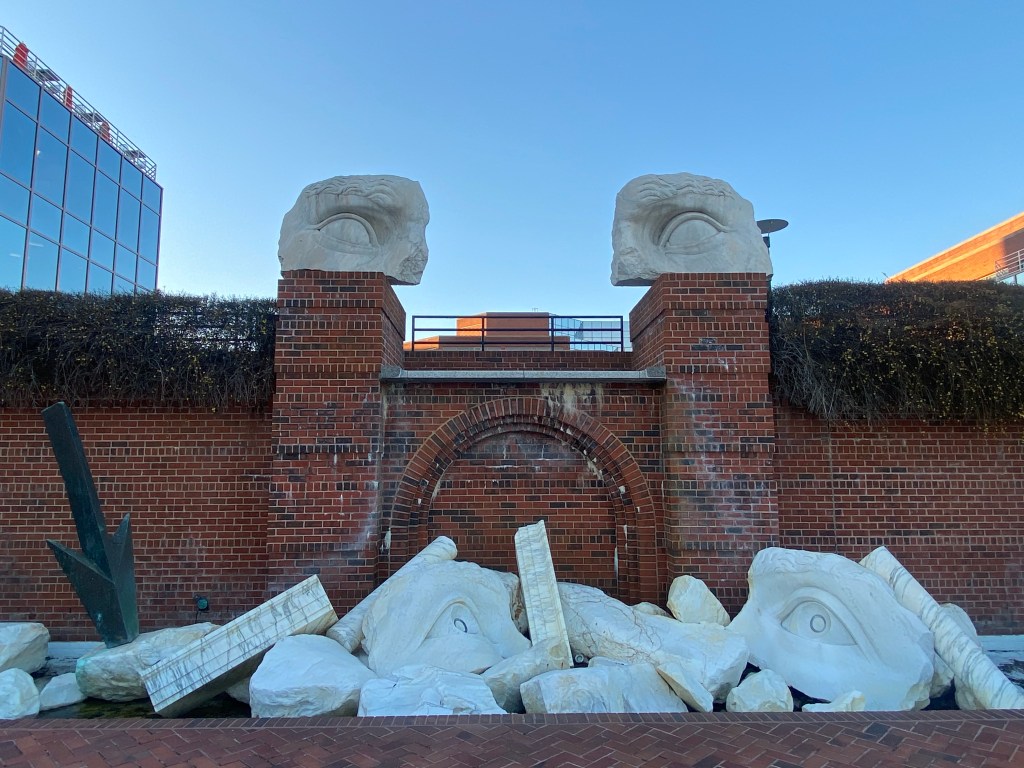
It was a giant pair of stone lips, made of marble and styled after a neoclassical statue. The water from the lips flowed forward in a small river of sorts, and cascaded over the edge of a small shelf. Two giant slabs of marble perched on top of columns on either side of the shelf, and one read “DCVLV MEMOR.” They framed, perfectly, a small-scale obelisk just like the Washington Monument. The Potomac glittered behind the obelisk, creating a picture-perfect view.
We had to pick up our food, so we got in the car and I did some research. It turns out that the fountain is part of a larger art installation called “Promenade Classique.” It is also part of Tide Lock Park, which is known for containing remnants of the old locks that once passed through Alexandria on the way to Washington, D.C.
The installation is described by The Washington Post as
the first large-scale American commission for the renowned French sculptoral team of Anne and Patrick Poirier. Working with landscape architect M. Paul Friedberg, the Poiriers devised a succession of neoclassical sculptural elements, starting with a bronze lightning bolt, which, except in winter, launches the flow of water. From there, the water makes its way past gargantuan sculptural fragments, through a reflecting pool and into a heap of “ruins” (shown at right) under a waterfall at the river’s edge.1
The Washington Post (Dec. 23, 1990)
So there was more? Given the surreal nature of the odd lips, we had to go back and see the “gargantuan sculptural fragments” that made up the “ruins.”
The only experience with hyperreal ruins I ever had was at Busch Gardens’ Escape from Pompeii or Roman Rapids rides, so I was excited to see what the park had in store for us. Unfortunately, we didn’t make it back to the park until the dead of winter, but that added an even more surreal layer to the park—all the water was drained from the fountains and there was a slightly dirty sheen to the marble.
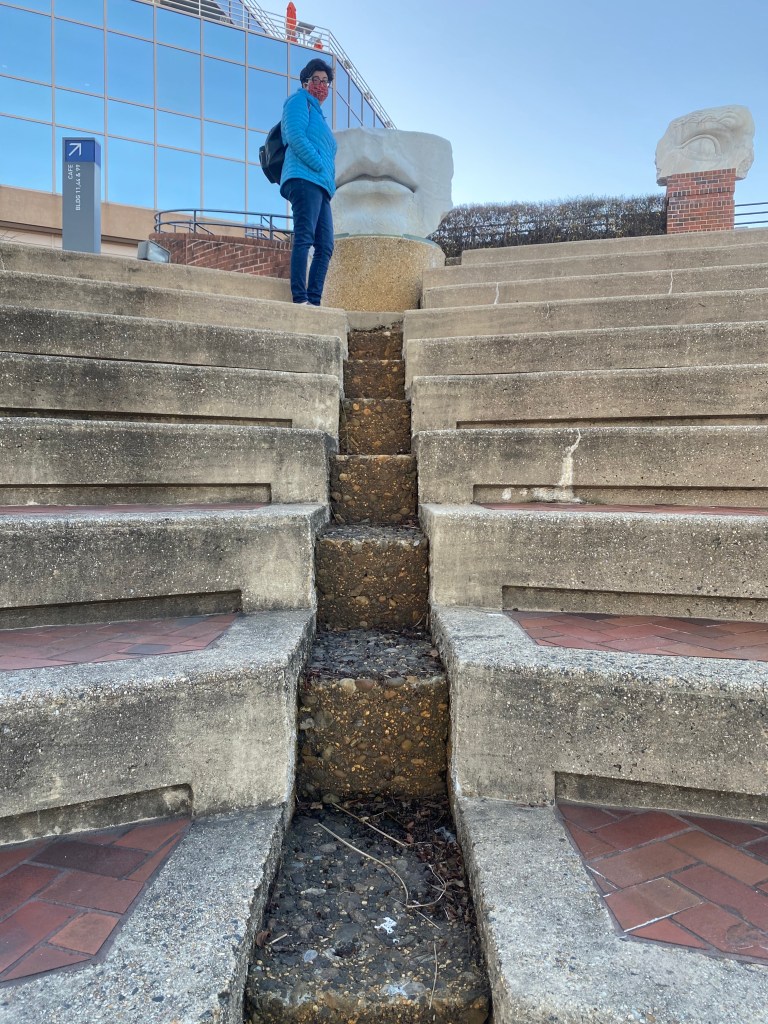
We walked past the giant bronze arrow and to the massive lips, which now stood in an empty pit with decaying leaves at the bottom. This time, though, we walked to where the water used to pour over the edge and discovered two curved sets of stairs. The stairs led to a lower level of the promenade, with the obelisk sitting on a dais at the waterfront. In between the sets of stairs were sections that looked amphitheater-like, broken up by small dark runnels.
Going down the amphitheater levels was a little more treacherous than I thought it would be (the steps were steep!), so I stuck with the stairs. At the bottom of the waterfall was a jumble of sculptural ruins, with two large eyes standing out more than the rest. The large slabs at the top of the columns also had eyes, and more lips stood at the top of the runnels, where more water had no doubt flowed in the summer.
I can’t help but think of our visit to the park as an allegory for this whole time in quarantine. Fragmented. Disruptive. Drained. However, winter is almost over.
Footnotes:
“Promenade Classique.” The Washington Post. Dec. 23, 1990. Accessed on March 8, 2021. LINK.
Have you ever done something out of sheer spite? If the answer is yes, have you ever taken it to the next level? Like building a house?
A “spite house” is built with the intention of irritating a neighbor or as an act of revenge against another landowner.1 You’d think these sorts of houses would be rare, but it turns out there’s a lot of spite going around—especially in Old Town Alexandria, which has not one but four spite houses.
Not to burst anyone’s bubble, but these spite houses actually have another name: alley houses. As Alexandria Living points out, a lot of these “spite houses” are actually alley houses. Alley houses were built between two existing structures in an alleyway. In fact, “an alley house would have been a cheap way to build, since the owner would only have to construct the rear and front walls and a roof.”2
We stumbled on a 2018 blog post that not only highlighted the famous spite house on Queen Street, but three more alley houses that were hidden in plain sight. Built out of spite or not, they sounded interesting. So we decided to check them out.
By far the most famous of the spite houses, 523 Queen Street has the distinction of not being the narrowest spite house in Alexandria; it is the narrowest house in America, period.3 Prior to the home’s construction, there was an alleyway between the two houses. However, as the story goes, the owner of the homes, a Mr. John Hollensbury, was tired of the riffraff hanging out in the alleyway and the oversized carriages leaving gouge marks in the buildings when they tried to squeeze though.4 So, to keep people out, he put brick walls up and a roof over the alleyway. Though this version of the events is probably the most well-known, a couple of local bloggers did a wonderful job of researching the three different stories they’ve heard. Supposedly, however, you can still see the pockmarks from those wagon wheels on the walls in the living room.5
Spite House, 823 Queen St., Alexandria, VA (Offbeat NOVA)
The Old Town Home bloggers actually visited the home and measured the width with a laser. The width came in at 7 feet, 6 inches.6 Absolutely tiny. If you Google the home, you can find photos of people standing in front, their arms stretched wide to show just how small the home is. According to Realtor.com, it is only 480 square feet and has one bathroom. It was last sold for $130,000 in 1990 and currently has an estimated value of $579,400.
This home is what the Old Town bloggers believe is the oldest. In their research, they found that it was constructed sometime in the late 1700s or early 1800s.7 It is now not a residence, but the She’s Unique jewelry and gift shop. It was measured as 11 feet, 9 inches—the biggest of the Alexandria alley houses.8
Spite House, 205 King St., Alexandria, VA (Offbeat NOVA)
The business has favorable reviews, with one saying, “I love this store! They have some really nice pieces and great design. The staff is very friendly and it’s a cute little shop.”
We had to backtrack a little bit to find this one. It’s possible I was just distracted because it’s so close to my favorite yarn shop, or it just blended into the homes around it. This house is the only one story dwelling of all the Alexandria alley houses, and is described as a “mini-me” of the surrounding buildings.9 The Old Town Home bloggers didn’t dig much up on it, only that it might have been built sometime in the early 1900s and it may have been absorbed into an adjoining home. Another source, after consulting Sanborn Fire Insurance Maps, states that it was built between 1891 and 1895.10 The bloggers measured it at 8 feet, 2 inches wide.11
Spite House, 1401 Prince St., Alexandria, VA (Offbeat NOVA)
Even though this home is the newest of the alley homes, apparently the late 1800s was a common time alley houses were built.12
The last home we visited, at 403 Prince Street, was a pretty brick home that stood out from the ones on either side. Supposedly built around 1800, Realtor.com lists this home as 608 square feet, with 1.5 bathrooms. It was last sold for $424,000 in 2016 and currently has an estimated value of $618,600. It was measured at 7 feet, 9 inches.13 By comparison to the Queen Street home, it is only a matter of inches—but it has at least more square feet and an extra half bath.
Spite House, 403 Prince St., Alexandria, VA (Offbeat NOVA)
Apparently, it is also well known for its holiday decorations.
So what do you think?
Could you build and live in a tiny home out of spite?
Footnotes:
Samantha Grindell, “10 unique homes that were built just to annoy people,” Insider, Nov. 10, 2019. Accessed February 20, 2021, LINK.
Sara Dingmann, “The Other Three ‘Spite’ Houses in Alexandria,” Alexandria Living, Oct. 8, 2020. Accessed February 20, 2021, LINK.
Meghan Overdeep, “You Can Find America’s Skinniest Home in this Charming Southern City,” Southern Living, April 2, 2018. Accessed February 20, 2021, LINK.
Overdeep, “Skinniest Home.”
Overdeep, “Skinniest Home.”
Alex Santantonio, “Which of Old Town Alexandria’s Spite Houses is the Narrowest? It’s a Game of Inches!” Old Town Home Blog, February 23, 2018. Accessed Feb. 13, 2021, LINK.
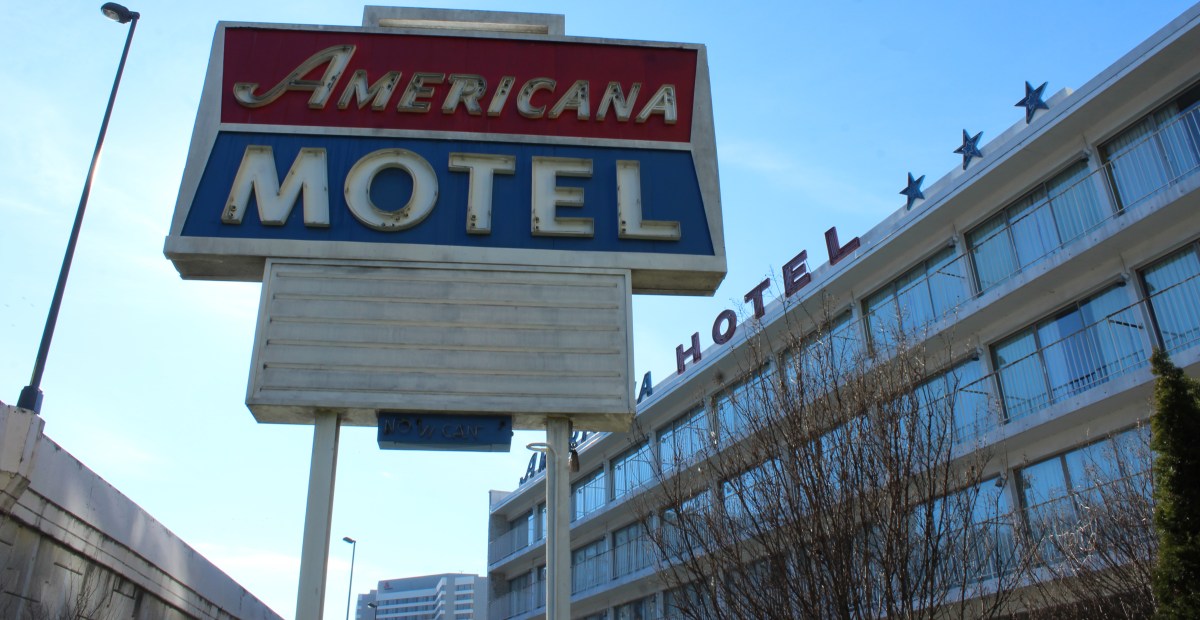
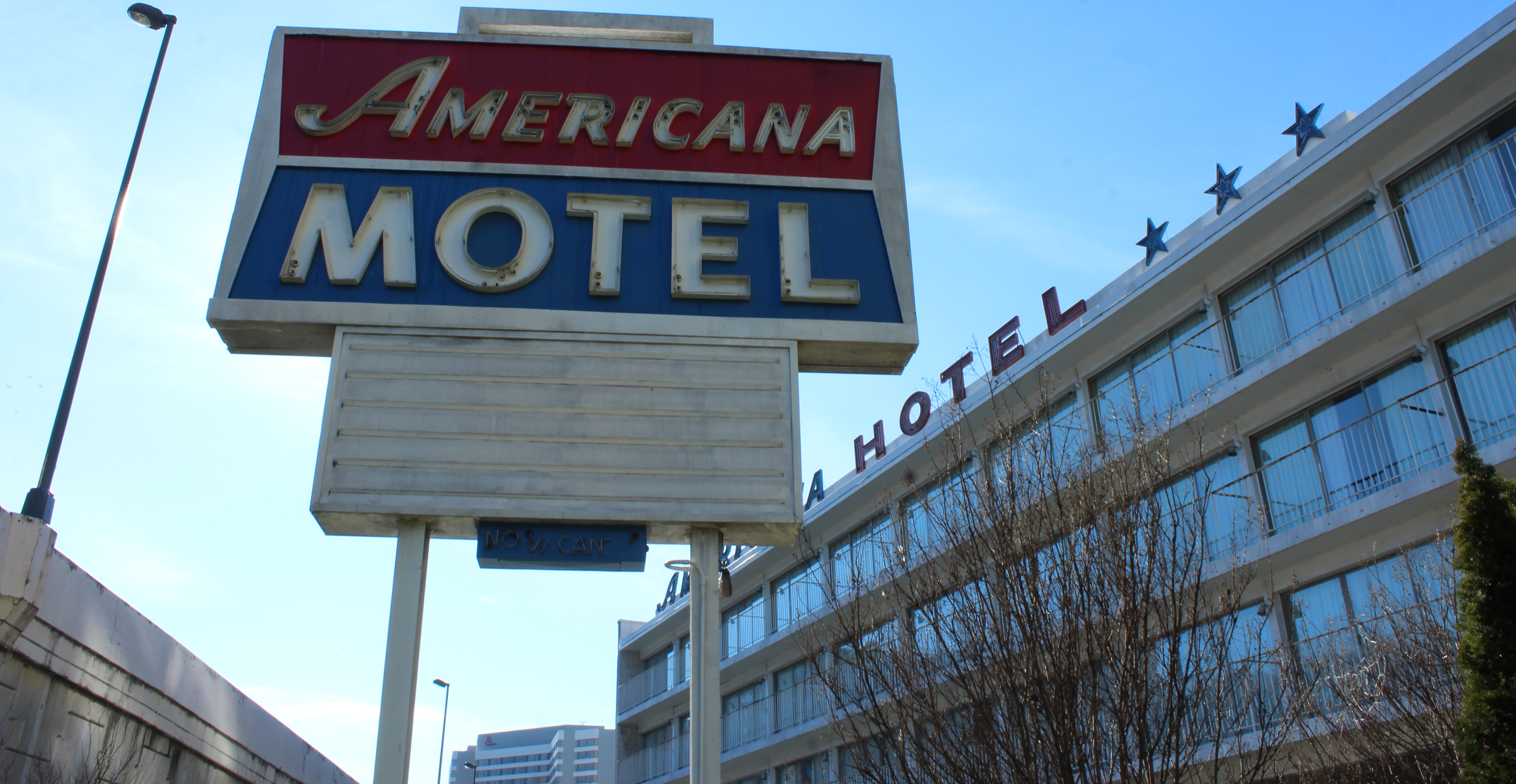
Americana Hotel, Arlington, VA. Photo by Matthew Eng/Offbeat NOVA.
By Angela H. Eng, Offbeat NOVA
I’ve always had an appreciation for all things retro and vintage, but as I grow older, the love deepens. To that end, I’ve always felt a stab of excitement any time I saw a vintage sign still standing. I love the sharp lines, the thoughtful color palettes, and the whimsy of a time gone by.
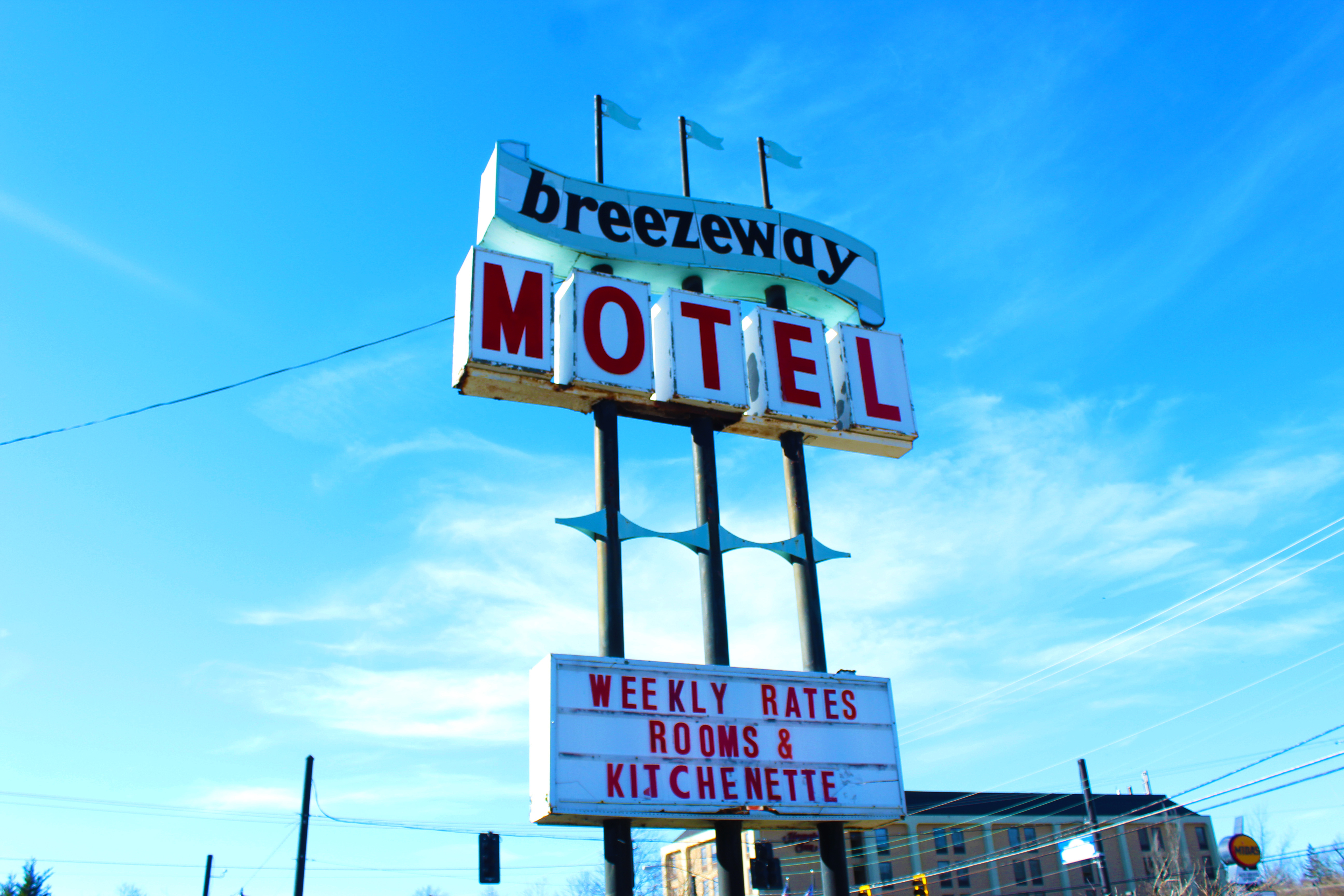
I knew there were several such signs still in Northern Virginia. One day, I decided to try and find as many as I could. My research yielded six signs. Matt and I took a driving tour one afternoon and photographed all of them, which are detailed below.
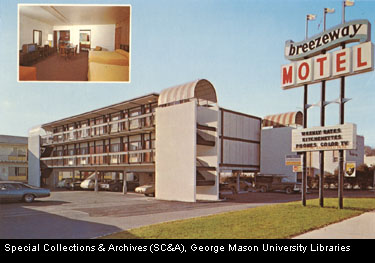
The Breezeway Motel | 10829 Fairfax Boulevard, Fairfax, VA The Breezeway Motel is a mid-century modern relic in Fairfax City. It was built in three separate phases between 1950 and 1960. It is still in operation as a budget motel, but the land it sits on is slated for redevelopment in the near future.
The Lee High Inn | 9864 Fairfax Boulevard, Fairfax, VA The Lee High Inn was formerly the Anchorage Motel, originally built in 1955. The motel’s nautical theme is still discernible in the motel’s sign and building structure. The Anchorage was sold sometime around 2015 and is still in operation as a budget motel.
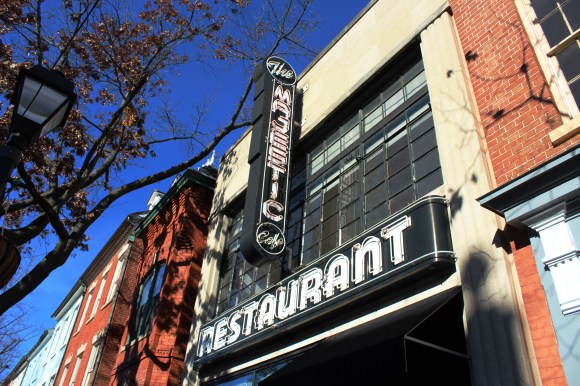
The Majestic, Alexandria, VA. Photo by Matthew Eng/Offbeat NOVA
The Majestic | 911 King Street, Alexandria, VA The Majestic first opened in 1932, at 622 King Street in Old Town Alexandria. It moved to the current location at 911 King Street in 1949. The restaurant operated until 1978 and remained closed until April 2001. Though it has changed hands since then, it remains open. The signs on the front of the building are reproductions, but the sign in the window is original.
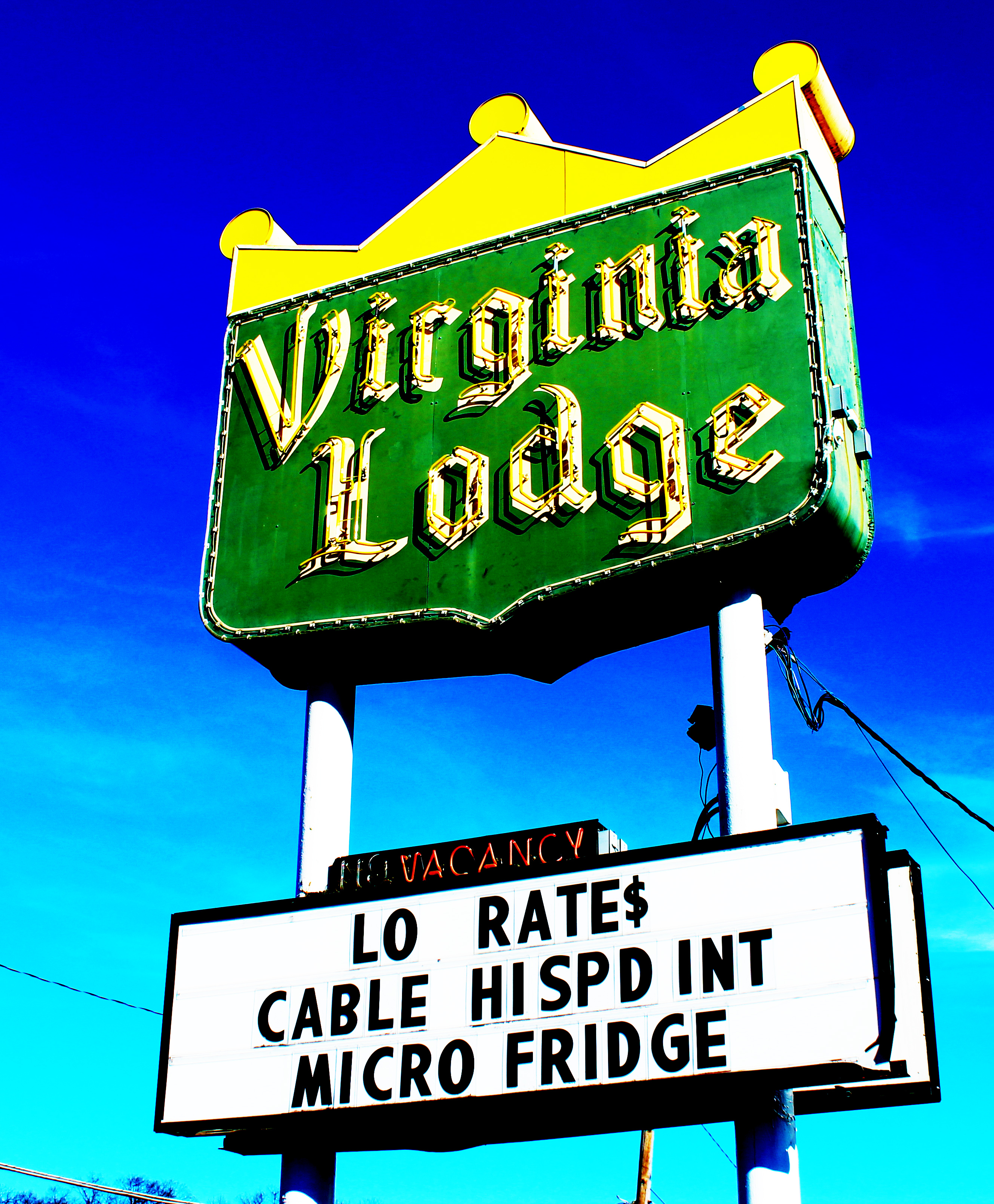
The Virginia Lodge Motel | 6027 Richmond Highway, Alexandria, VA The Virginia Lodge was built in 1952. It is a part of the Route 1 string of motels that had their heyday in the 1950s and 1960s and is one of the few that remain. It is currently still in operation as a budget motel.
The Americana Hotel | 1400 Richmond Highway, Arlington, VA The Americana Hotel opened in 1963 and was one of the first hotels in Crystal City. It appeared in the 2009 political thriller State of Play. it closed in December 2020 and is in talks to be demolished for new apartments or condos.
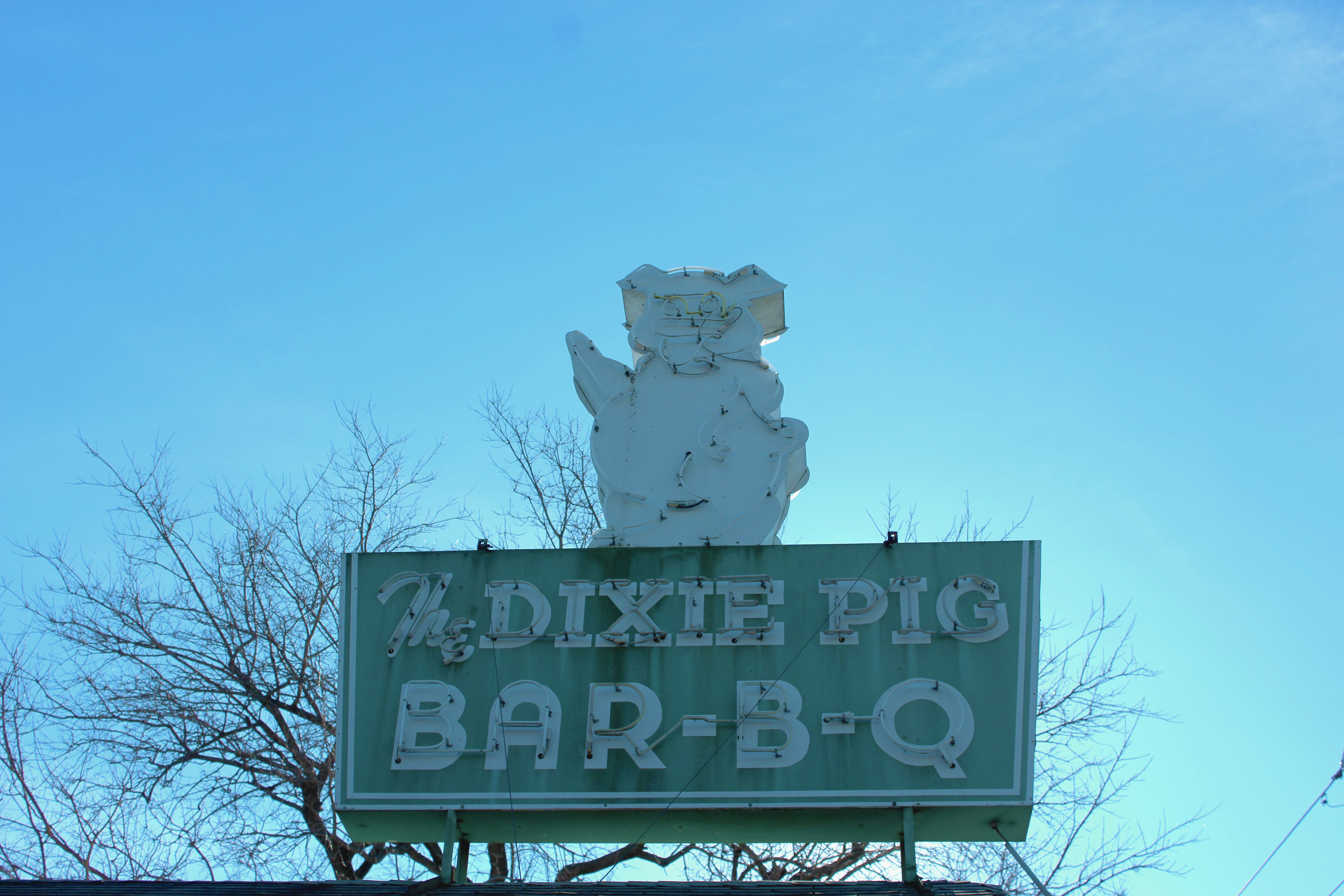
Dixie Pig BBQ | 1225 Powhatan Street, Alexandria, VA The original Dixie Pig BBQ opened in 1924 and was the first of several restaurants to open with that name. The restaurant with this sign opened at the intersection of Powhatan Street and Bashford Lane, Alexandria, in 1949. It was sold in 1984, but the sign remained. It is currently a Greek restaurant named Vaso’s Kitchen. The sign also appeared in the TV show The West Wing and the film Remember the Titans.
Did we miss any other vintage signs in Northern Virginia? Please let us know in the comments, and we will add them to this article!
When I first moved to Northern Virginia six years ago, I didn’t know much about the area—aside from bad traffic and a breakneck pace of life. I first stumbled on the story of the Bunny Man in 2015 and remember posting about it on Facebook. One of my friends, who grew up in the area, commented “Bunny Man Bridge was the shit growing up!” Me, on the other hand? I was properly creeped out. I had visions of Robbie the Rabbit from the Silent Hill series dancing in my head. Yeesh.
Robby from Silent Hill 3 (Konami)
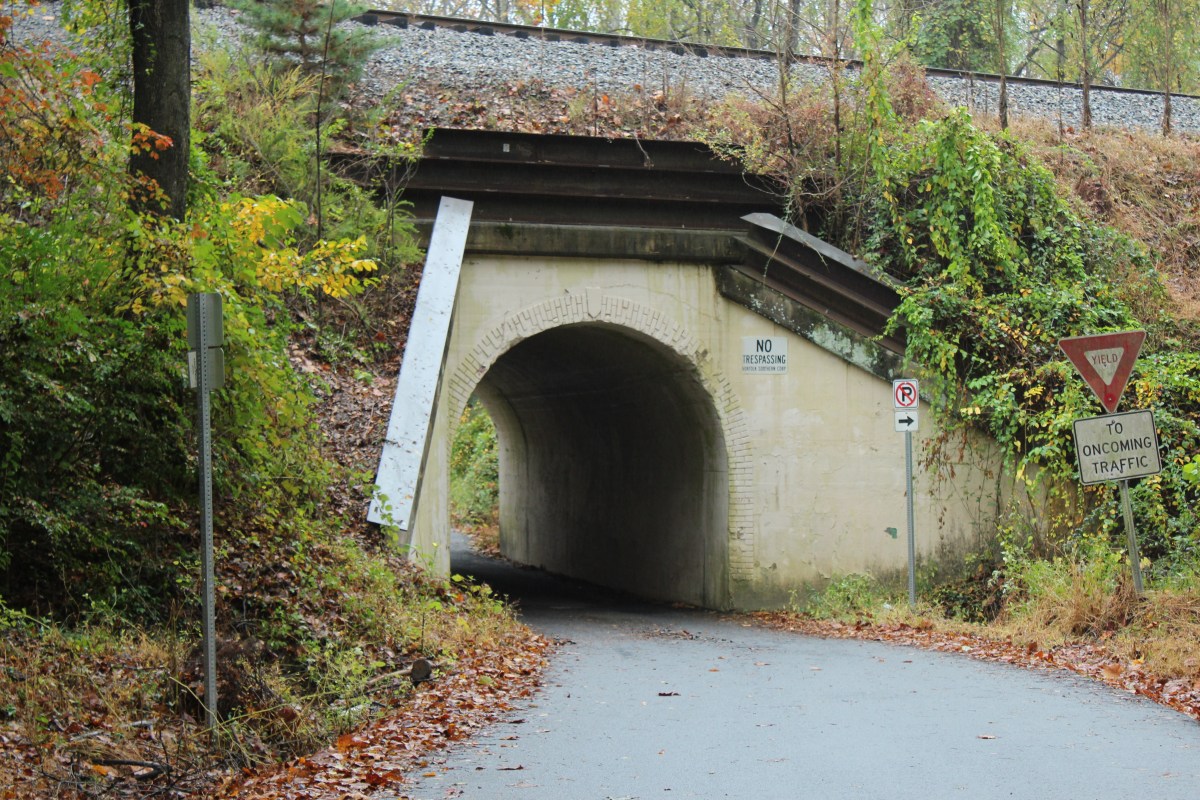
Fast forward to 2020, and I’m revisiting the legend again. Except this time we were actually going to visit the famed bridge. Getting there was interesting: it’s set back in a residential area and is at the end of a single-lane winding road. It was a particularly cold and dreary afternoon the day we went; the atmosphere radiated gloom. When we turned the final corner and saw the bridge for the first time, I uttered a long and drawn-out, but quiet, “Shiiiiiiit.”
The Bunny Man legend seems to be split into two parts: Legend seems split into two parts: the escaped lunatic story and the man in the suit story. The escaped lunatic portion of the story was purported to occur around 1904. Supposedly there was an asylum not far from the bridge in the town of Clifton. However, Clifton residents were wary of an asylum so close to their homes, so it was shut down and the patients were bussed to Lorton prison nearby. However, the bus crashed near the bridge, and the lone survivor, a man named Douglas Griffon (spelled Grifon in some sources), took refuge under the bridge and in the woods.1
This version is just one from many sources, and it contains details that are glossed over or altered slightly in others, such as a train crash, another survivor that Griffon murdered, and bunny carcasses in the woods. One particularly interesting account was posted on a personal website:
One of the most prominent urban legends in the Virginia area tells of the Bunny Man. The Bunny Man is a former patient of an insane asylum who was committed for killing either his parents or his wife and kids on Easter Sunday. After he escaped, he made himself a giant rabbit suit which he constantly wears. He lives in the woods around Colchester Overpass near Clifton, VA (known as “Bunnyman Bridge”) and is known to eat and dismember rabbits. He likes his privacy and will scare away or kill any trespassers with his ax (his weapon of choice). While some legends claim The Bunnyman is a living person, others claim he is the undead spirit that has haunted the bridge since 1904.2
Brandon Coon, “Legend Research. The Bunny Man”
Brian Conley, an archivist who attempted to pinpoint the origin of this tale, cites the “most widely circulated written version” as the “The Clifton Bunny Man,” written and posted to a website by Timothy C. Forbes, of Virginia, in 1999:
This version of the tale is actually quite notable because of the number of specific facts given. Forbes claims that in 1904 inmates from an insane asylum escaped while being transferred to Lorton Prison. One of these escapees, Douglas J. Grifon, murdered fellow escapee Marcus Wallster and eventually became the Bunny Man. Not only is the location identified, but also the names of several victims and the dates of their murders. The story ends with a challenge for the reader to check with the Clifton Town Library for verification of the facts.3
Brian Conley, “Local History: The Bunny Man Unmasked”
However, Conley is quick to debunk this story by pointing out the historical inaccuracies: Lorton Prison wasn’t open until 1916, there’s no Fairfax court record of Douglas Grifon and the “old Clifton Library” never even existed.4 Conley did meticulous research of this story and attempted to verify it through a database of historical Fairfax County Newspapers. He extracted every murder and killing reported by the local press from 1872 through 1973 and ended up with over 550 individual mentions of killings in the study period. Ultimately, he eliminated all of them.
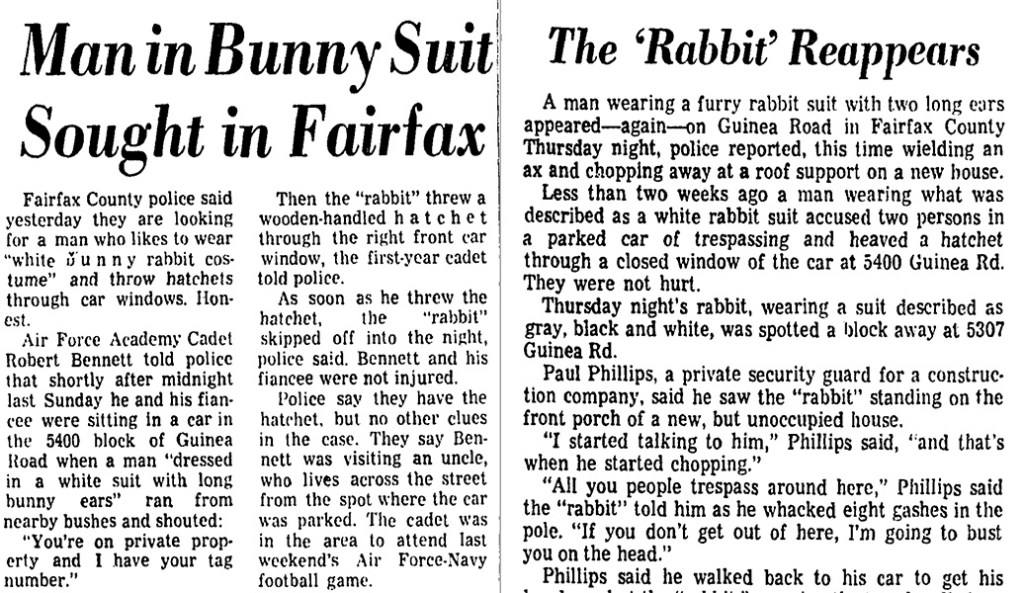
Washington Post articles on October 22, 1970 (left) and October 31, 1970 (right)
Eventually Conley found two documented cases of a man in a bunny suit. The first was a Washington Post article from October 22, 1970 entitled “Man in Bunny Suit Sought in Fairfax.” The second was a Washington Post article from October 31, 1970 titled “The ‘Rabbit’ Reappears.” These two stories, both from the 1970s, are a far cry from the story of the escaped lunatic in 1904. Perhaps the “escaped lunatic” is the reasoning storytellers use for the odd and frightening second part of the story.
The first article mentions an event from October 18, 1970. The Washington Post reported that Air Force Academy cadet Robert Bennett and his fiancée were sitting in a car on the 5400 block of Guinea Road in Fairfax around midnight near Bennett’s uncle’s house when “a man dressed in a white suit with long bunny ears appeared.” He yelled at the couple that they were on private property and he had their tag number. Then, he threw a wood-handled hatchet through the front car window. Luckily, neither of them was hurt.5 This article takes an almost comical tone, starting “Fairfax County Police said yesterday they are looking for a man who likes to wear ‘a white bunny rabbit costume’ and throw hatchets through car windows. Honest.” After yelling at the couple in the car and throwing his hatchet through the right front car window, the “‘rabbit’ skipped off into the night.”6
Bunny Man Bridge, Clifton (Matthew Eng Photo)
Two weeks later, the Bunny Man showed up again about a block away from his original sighting, according to an October 31 Washington Post article. Private security guard Paul Phillips spotted him on the front porch of a new, but unoccupied house. He was holding an ax. In the piece, Phillips recounted what happened next: “I started talking to him and that’s when he started chopping.” Taking several swings at a pole on the porch, he threatened Phillips, “All you people trespass around here. If you don’t get out of here, I’m going to bust you on the head.”7 This article, though just as short, is a little less jovial, mentioning that he “was wielding an ax and chopping at the roof of a new house.” The article also described him as “about 5-feet-8, 160 pounds and appeared to be in his early 20s.”8
The Fairfax County Police Department has no official record of the October 18 assault on Robert Bennett and his fiancé, but they do have an Investigation Report relating to the vandalism incident. The case was turned over to Investigator W. L. Johnson of the Criminal Investigation Bureau. Johnson found no concrete leads, though he got a tip from a caller claiming to have been threatened by an “Axe Man”:
[The] caller claimed to have just received a telephone call from someone identifying himself as “the Axe Man.” The Axe Man allegedly said “Mr. _____, you have been messing up my property, by dumping tree stumps, limbs and brush, and other things on the property.” The Axe Man further stated that “you can make everything right, by meeting me tonight and talking about the situation.” The representative from Kings Park West stated that the caller sounded to be a white male in his late teens or early 20s. The police set up a stake out, but the “Axe Man” never materialized.9
Brian Conley, “Local History: The Bunny Man Unmasked”
Johnson did not find any information that would allow him to pursue the case further, so he marked the case inactive on March 14, 1971. Conley speculates that the stories’ references to trespassing match the rapid development of the area. However, he also points out that the urban legend-like details began to emerge less than two weeks after the events in these two articles were reported. And so the Bunny Man retreated into the mists of legend. To date, there are a number of Bunnyman horror films and published stories with variations of the tale. This variation seems to be those gruesome, and frightening—weaving both aspects of the tale into one:
A couple of teens were driving with their girlfriends, looking to scare them. They decided to go out to the old railroad bridge where the Bunny Man was killed. It was almost midnight. The boys stopped under the bridge and dragged the scared girls out of the car, teasing them that the ghost of the Bunny Man would get them. The teasing became too much for one of the girls, who pushed the boys away and ran out from under the bridge into the road. At that moment, at the exact stroke of midnight, she saw a bright flash of light under the bridge. When the light faded, she saw her friends’ bodies mutilated and hanging from the bridge, and their car had a bloody ax stuck into the windshield. Ever since that night, local kids gather every Halloween at Bunny Man Bridge–but they all scatter before midnight, as none want to be caught under the bridge when the Bunny Man comes.10
Brandon Coon, “Legend Research. The Bunny Man”
It’s never far from the minds of its residents, however. In 2018, a man’s body was found near the bridge:
He was found along the 6500 block of Colchester Road in Fairfax Station by a nearby resident just before 7 a.m. Cooker’s body was about 900 feet from what’s known as the Bunny Man Bridge. The railroad bridge is part of an urban legend, which draws hordes of teenagers to the rural area of Fairfax County every Halloween . . . ‘And certainly it’s ironic it popped up near the Bunny Man Bridge,’ said [a police officer].11
Peggy Fox, Man Found Dead in Fairfax Co. near Urban Legend Spot” (WUSA9)
The article is careful to point out there is no connection between the legend and the man’s death.
Listen to the Uncanny America Podcast featuring Offbeat NOVA HERE.
Footnotes:
Ally Schweitzer, “The True Story Of The Bunnyman, Northern Virginia’s Most Gruesome Urban Legend.” WAMU, WAMU 88.5 – American University Radio, October 31, 2017. Accessed October 30, 2020. LINK.
Brandon Coon, “Legend Research: The Bunny Man.” bulb, n.d. Accessed October 30, 2020, LINK.
Brian Conley, “Local History: The Bunny Man Unmasked,” Research Center Guides. Accessed October 30, 2020, LINK.
Matt Blitz, “The Scary, Weird, Somewhat True Story of the Fairfax ‘Bunny Man’: Washingtonian (DC).” Washingtonian, October 23, 2015. Accessed October 30, 2020, LINK.
Blitz, “Scary, Weird, Somewhat True.”
“Man in Bunny Suit Sought in Fairfax,” Washington Post, Oct 22, 1970.
Blitz, “Scary, Weird, Somewhat True.”
“The ‘Rabbit’ Reappears,” Washington Post, Oct. 31, 1970.
Conley, “Bunny Man Unmasked.”
Coon, “Legend Research.”
Peggy Fox, “Man Found Dead in Fairfax Co. near Urban Legend Spot,” wusa9.com, April 18, 2018. Accessed October 30, 2020, LINK.
When I first came upon the story of the Fairfax Butt-Slasher I thought, this has to be some kind of blown-out-of-proportion urban legend.
We had stories like that where I was from—the Pembroke Mall Leg Slasher or the Lynnhaven Mall Car Stalker. In the Pembroke Mall variation, a person—usually a man—would hide underneath a car. When the owner of the car, almost always a woman, returned her car with her hands full of shopping—almost always Christmas shopping—the man under the car would slash at the woman’s legs, leaving a series of gashes that would require stitches. In the Lynnhaven Mall variation, the victim would be leaving the mall late at night and would be the owner of the only car left in the parking lot. Like the other story, the victim would be juggling shopping bags and be preoccupied with getting home. Of course, someone—almost always a man in these stories as well—would be lurking nearby the car or sometimes IN the car, waiting to attack. We told these stories so much as kids, I can’t remember if they actually happened or not.
Supposedly, the “Mall Slasher” trope has been in vogue since the late 1970s and has some similarities to actual events, but most of these stories have been reduced to urban legend status.1 I think I can be forgiven for thinking the Butt-Slasher was another one of these outlandish stories reduced to middle-school whispers or high-school bathroom conversation.
Turns out, the Fairfax Butt-Slasher was not a punchline—it was totally real. The Butt-Slasher was responsible for a series of attacks on young women during most of 2011.
Johnny Pimentel (ABC News)
The first victim of the Butt-Slasher was a pregnant woman in her 20s. She was leaving Fair Oaks Mall in Fairfax, Virginia, in February 2011 when she noticed someone behind her:
I’m pushing the door open, and then all of sudden, he’s right there behind me, and I felt a pinch on my bottom and I thought he just grabbed me and I was like, ‘Hey, you just cut my leggings,’ and he was like, ‘No, no, no. It was my bag.’ He was carrying a little, yellow bag.2
At first, the victim said, she didn’t even know she was cut. However, the cut was deep and she ended up with a permanent scar.3
The attacks continued: one on March 11 at the Tyson’s Corner H&M, and another on May 16 at the Fair Oaks Mall Ann Taylor. On June 8, a 21-year-old woman was shopping at the T.J. Maxx at Fairfax Towne Center in when she felt a pinch on her buttocks. The woman did not realize that she had been the victim of an assault and did not report the attack to police until later.4
It’s hard to gauge the mood of Fairfax at this time, but perhaps it is best summed up in this 2011 tweet:
(Twitter/kaltizer)
By this time, the police had put a profile together: according to the victims, the suspect was a heavyset, 5-foot-6 Latino man in his late 20s. He was using a box cutter or a razor to slice at women’s buttocks shortly after distracting them.5 Some experts speculated that he may have had a rare sexual disorder known as piquerism.6 A Psychology Today article from 2015 cites Dr. Anil Aggrawal’s definition of the disorder: “sexual arousal from penetrating another person’s body with sharp objects (such as pins, razors, knives, etc.).”7 Though the article names the Fairfax Butt-Slasher as an example of piquerism, is it clear by the other examples that the Butt-Slasher’s case was downright mild.
On June 18, the slasher struck again at the Tyson’s H&M, followed by another attack at a Marshall’s in an area called the Greenbriar Towne Center. All of the attacks followed the same pattern: distracting a young woman, slashing her with a sharp object, then disappearing. On July 25, he attacked an 18 year-old shopping at Forever XXI. She was distracted by a rack falling, then, as the Herald Sun in Australia reported, “felt a ‘sharp pain’ in her backside which she dismissed as a coat hanger. Later she realised her behind was cut and bleeding and her denim shorts had been slashed. The wound was about an inch and a half (4cm) long.”8
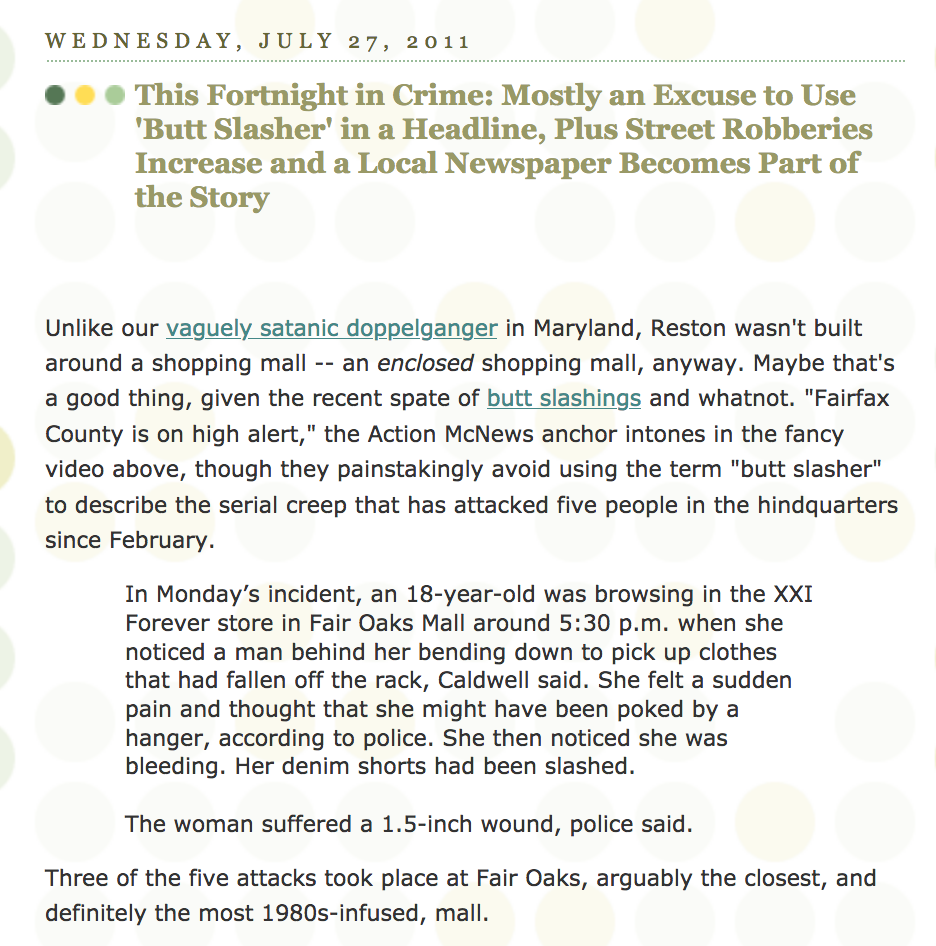
(Post from the Restonian Blog)
The news had reached as far as Australia, where the suspect was known as “the serial bum-slasher.” In late July, following the Forever XXI attack, the Restonian blog made a half-serious, half-joking post about the phenomenon. Though the blog is slightly tongue-in-cheek, the August edition of the Fairfax Connector took a more serious turn:
However, said police spokesman Lucy Caldwell, ‘Women shouldn’t feel this is isolated just to Fair Oaks Mall. This type of behavior could happen anywhere’ . . . police ‘don’t want women to feel unduly afraid to go shopping. But if they feel at all uncomfortable in a store, they should report it to store security. There’s no reason to believe it won’t happen again, so women should stay alert . . . they should also consider shopping with a friend,’ she said. ‘Actually, these are general safety tips women should always use — these incidents just highlight them.’
Being a woman is grand in 21st century America.
Eventually, the slasher was identified as 41 year-old Johnny Pimentel, a former day laborer. The police were able to identify him via an anonymous tip.9 By September, the news reported he had fled Northern Virginia. Eventually, in January 2012, he was arrested near a shopping mall in Peru. One article mentioned that it was unclear how he got to Peru, and it was also unclear whether he could be brought back to the United States to stand trial.10 Eventually, almost an entire year later, he was extradited to the United States in December 2012. He remained in jail, plead guilty to the charges against him, and was sentenced on September 6, 2013. At the hearing, he was reported as saying, “I’m very remorseful for all the things that are occurring, and I ask you to pardon me.”11
However, he was sentenced to 20 years in prison, and the judge suspended all but 7. That would make this year the year of his release, but I couldn’t locate any up-to-date information on him.
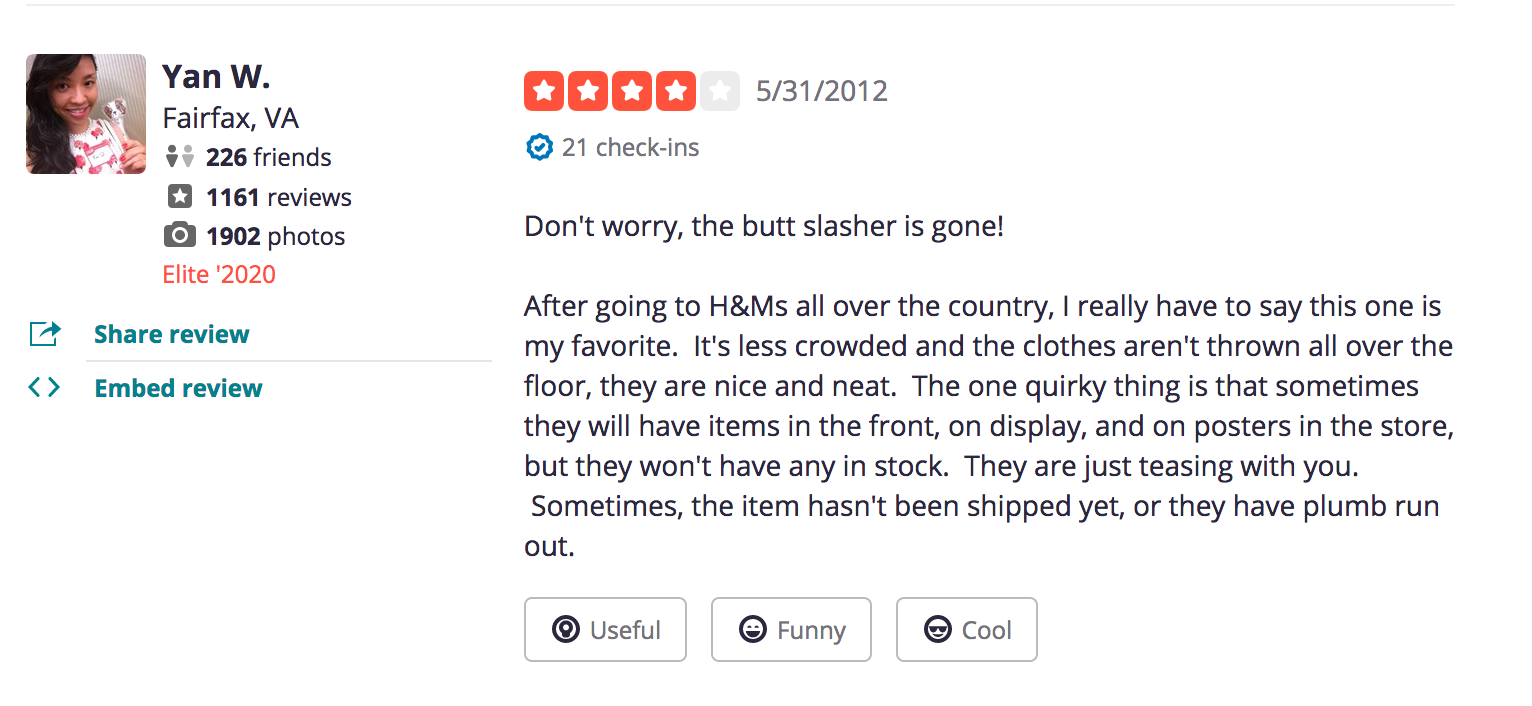
Perhaps a fitting end to the story is at the start of this 2012 Yelp review of the Tyson’s Corner H&M:
(Yelp)
If folklore experts examine stories as cultural artifacts and search them for clues about the attitudes, fears, and beliefs of the cultures they come from, it would be easy to dismiss the stories I heard from my hometown as stories about women’s fears of being vulnerable, or even dismiss it as some kind of anti-capitalist tale.
But the more I read about this story and the attitudes surrounding it, I had to wonder—what happens when the urban legend is true?
Footnotes:
Peter Kendall, “URBAN YARN OF `MALL SLASHER` JUST WON`T DIE,” Chicago Tribune, September 2, 2018. Accessed October 25, 2020, LINK.
Matthew Stabley John Schriffen, “Butt-Slashing Victim: ‘I Didn’t Even Know I Was Cut at First,’” NBC4 Washington, July 29, 2011. Accessed October 25, 2020, LINK.
Stabley and Schriffen, “Butt-Slashing Victim.”
Reshma Kirpalani, “Serial Butt Slasher Blamed for 6 Assaults in Virginia,” ABC News, August 3, 2011. Accessed October 24, 2020, LINK.
Kirpalani, “Serial Butt Slasher.”
Ibid.
Mark Griffiths, Mark, “Life on a Knife Edge.” Psychology Today, Sussex Publishers, 1 Jan. 2015. Accessed October 24, 2020, LINK.
Christina Caron, “Serial Butt Slasher Suspect Is on the Lam From Virginia Cops,” September 8, 2011. Accessed October 19, 2020, LINK.
NBC4 Washington and the Associated Press, “Serial Butt Slasher Located, Police Say,” NBC4 Washington, June 17, 2013. Accessed October 20, 2020, LINK.
NBC4 Washington and the Associated Press, “Virginia ‘Butt Slasher’ Sentenced to 7 Years in Prison,” NBC4 Washington, September 6, 2013. Accssed October 20, 2020, LINK.
In Xanadu did Kubla Khan A stately pleasure-dome decree: Where Alph, the sacred river, ran Through caverns measureless to man Down to a sunless sea.
Samuel Taylor Coleridge, Kublah Khan
I can’t recall where I first heard about the Potomac Arks. I might have been doing some research for another project when some small mention of them caught my eye—the floating brothels of the Potomac. And somehow, when I was imagining these boats, small snatches of Coleridge’s fragmented poem would come to mind: opulence, metaphorical pleasures, and the river.
Intrigued, I decided to research more, and soon found out that the Potomac River was filled with these brothel boats in the years after the Civil War up until sometime between the 1920s and 1940s.
According to John Wennersten’s Historic Waterfront of Washington, “As Washington became a center of military and industrial activity [during the Civil War], it also became a city awash in a tidal wave of cash . . . Prostitution, an activity long associated with the Potomac waterfront, increased dramatically.”1 Around the same time, local boat builders invented the “Potomac Ark,” an inexpensive houseboat that could house fishermen and shipyard workers.2 Frederick Tilp, author of This Was Potomac River, described what these boats were like:
The standard specifications called for a boat 24 feet by 10 feet by 12 inches draft, with a flat bottom and square ends. It would have cedar clapboard siding, red-painted flat-tin roof, two windows, two doors, and would be lighted by kerosene lamps, and would use a coal fired stove for heating and cooking. Arks moored at the water’s edge, rested on the bottom at low tide, and poling and rowing were their only means of propulsion.3
Frederick Tilp, This Was Potomac River
Though these boats were designed for fishermen and shipyard workers, pollution caused fishing and shipbuilding to decline; eventually, the arks were sold to sex workers that operated close to the river.4 In time, the river was filled with hundreds of floating brothel boats. By the early 1900s, the arks began to spread beyond the confines of Washington and to nearby cities in Maryland and Virginia. These states were safe havens for the arks because Alexandria had “sympathetic politicians and influential gentry,” while Maryland State Police were “too busy chasing oyster pirates.”5
Tilp described the ark operations as a “‘one woman” type of enterprise. Each woman ran her own business on her own ark, at whatever location she pleased.6 Parke Rouse, in a Daily Press article about historical bawdy houses in Virginia, quoted the Virginia Canals and Navigations Society’s description of the arks: “small floating houses of prostitution, most of them painted white or blue (the more high-class boats usually were white with blue roofs and shutters) lined the shores and clustered around gambling casino boats.”7
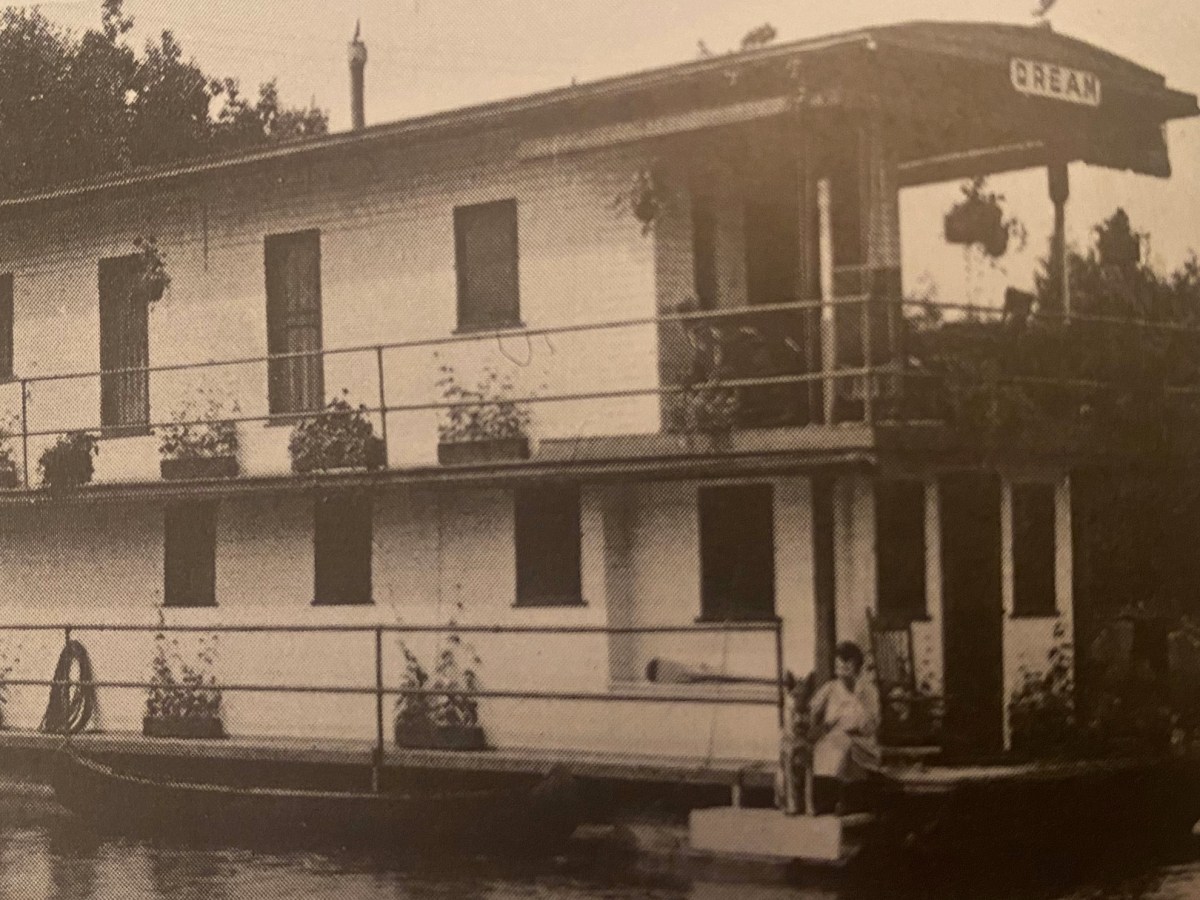
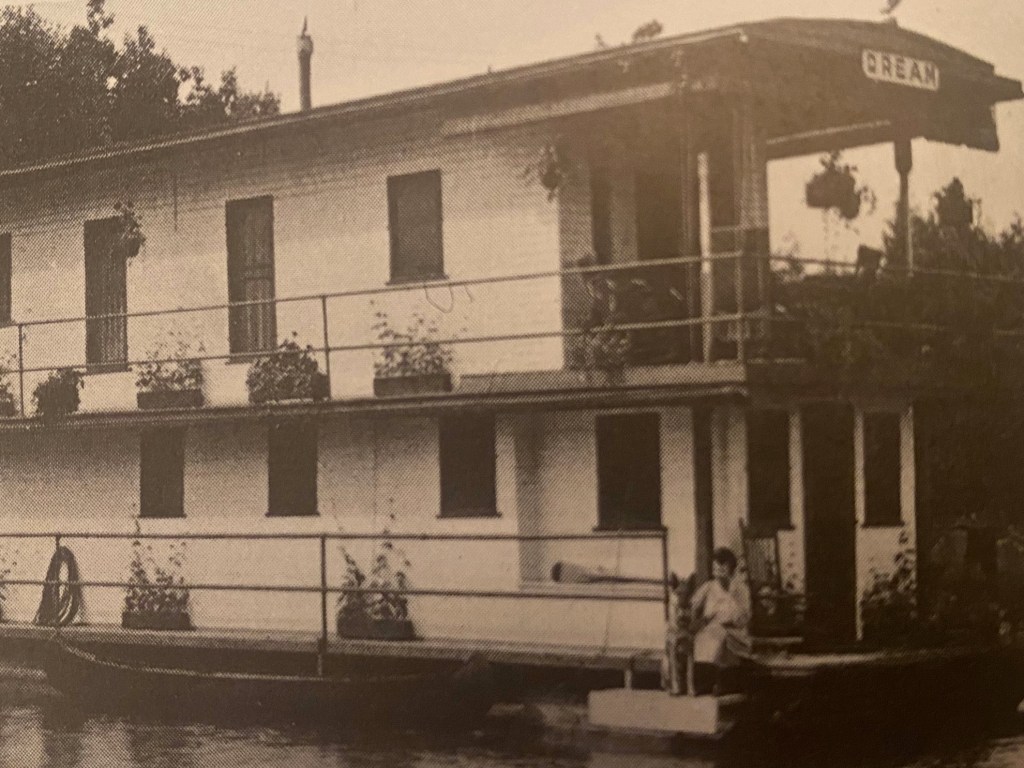
Madame Rose’s “Dream” (Frederick Tilp)
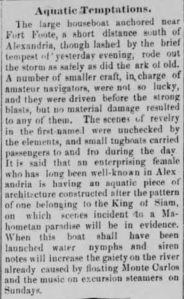
The most famous of these arks, according to Tilp, was the only known two-story houseboat named the Dream, run by a lady named Madam Rose. Though there is little mention of the arks in the press during this time period, the Dream was featured in a 1905 Alexandria Gazette article. The article stated that the infamous brothel survived a “terrible northwest storm” and the “scenes of revelry on board were not checked by the wild outside elements” and small boats “continued during day and night, carrying patrons to and fro.”8 Tilp, when citing the article in his book, also mentioned a second opulent boat the Dream’s owner was building, “patterned after one belonging to the King of Siam.”9 Unfortunately, like the majority of these boats, its fate is unknown.
Alexandria Gazette and Virginia Advertiser, August 14, 1905.
These brothels and gambling arks flourished because Virginia had no jurisdiction over the river and because Maryland and the District ignored them.”10 A Washington Post article from 1905, when describing a gambling ark that frequented the waters just outside of Alexandria, acknowledged that “The Ark is slow but clumsy, but she flirts airingly outside the law . . . If the Ark happens to be lying inside the District line and the metropolitan officers attempt to raid her, the anchor is up in a trice and in thirty seconds she has drifted into Maryland or Virginia, beyond the reach of pursuing officials.”11 Likewise, if Maryland or Virginia police attempted a raid, the boat would then cross back over into the District. Similarly, these brothel arks evaded the law.
A popular spot for these boats was Jones Point, Alexandria. Here, the boundary lines between Maryland, Virginia, and D.C. all intersected, so it was easy for these arks to operate in the waters just beyond the city. Now a park, Jones Point has the original D.C. boundary stones and the point lighthouse preserved. A historical marker at the lighthouse even mentions these arks. The marker specifies that the oil that fueled the lighthouse lamp was red for a time, which coincided with the height of popularity for the arks, thus making the waters of the Potomac a literal “red light district.”12
Jones Point Lighthouse (Matthew Eng Photo)
And so these illicit businesses boomed until the late 1920s, when the surveys for George Washington Highway began.13 Donald Shomette, a Mallows Bay historian,14 notes that the Potomac Arks saw a resurgence during the great Depression, since scavengers would come to the wrecks in Mallows Bay and acquire scrap metal; as a result, the colonies of bootleggers, gamblers, and prostitutes thrived once more.15 Though I can’t recall where I might have read it, supposedly the remains of some of those boats are among the shipwrecks in Maryland’s Mallows Bay. Though the arks would survive through World War II, they were entirely wiped out by the 1960s.16 The last known photograph of an ark is in Tilp’s nautical tome; taken in 1957, the photo shows a small ark in Great Hunting Creek, Virginia.
And so the Potomac Ark disappeared from history. Until 1993, that is. Alexandria city workers had started demolishing a blighted part of the Alexandria waterfront and ceased operations when they discovered that the structure was part of a wooden barge sunken in the dirt.17 The Washington Post continues, “City historians quickly arrived and declared it an ark, probably built about 1900, and the only known survivor among the thousands of houseboats, gambling barges and floating brothels that lined the Potomac River from the Civil War to after World War II.” Though historians could not ascertain what the use of this particular ark was, there’s no doubt it is a unique and priceless part of history on the Potomac.
Alexandria Seaport Foundation (Matthew Eng Photo)
The ark was given to the Alexandria Seaport Foundation. The foundation restored the ark and it now serves as the McIlhenny Seaport Center, the headquarters for the foundation. The foundation assists troubled youth through mentoring and teaching woodworking and boat construction.
It’s funny to think that this ark may have once been a gambling house or brothel, but now serves as a safe haven for troubled youth. That’s pretty cool to me.
Footnotes:
Wennersten, John R. The Historic Waterfront of Washington, D.C. Charleston, SC: The History Press, 2014.
Frederick Tilp, This Was Potomac River (Bladensburg: Tilp, 1987), 306.
Tilp, Potomac River, 306.
Ibid.
Ibid.
Ibid.
Parke Rouse, “Bawdy Houses Abounded in Virginia.” dailypress.com, August 16, 2019. Accessed it September 17, 2020, LINK.
“Aquatic Temptations,” Alexandria Gazette and Virginia Advertiser, August 14, 1905.
Tilp, Potomac River, 308.
Rouse, “Bawdy Houses.”
“Houseboat for Gamblers: Gamesters Revel on Former Ferryboat Moored Near Alexandria,” The Washington Post, Mar 18, 1907.
The historical marker is located just south of the Jones Point lighthouse in Jones Point Park, Alexandria, VA.
Tilp, Potomac River, 308.
Mallows Bay, Maryland, is the marine sanctuary where, per the website, “protects and interprets the remnants of more than 100 World War I-era wooden steamships – known as the ‘Ghost Fleet’ – and other maritime resources and cultural heritage.”
As quoted in Fenston, Jacob and Tyrone Turner, “Ghost Fleet: Exploring The WWI Skeleton Ships Of The Potomac.” WAMU 88.5, October 22, 2019. Accessed September 16, 2020, LINK.
Tilp, Potomac River, 308.
Hodge, Paul. “Discovering a Lost Ark.” The Washington Post. WP Company, February 18, 1993. Accessed September 16, 2020, LINK.
I’m a commuter. I pass by the same landmarks and historical places every single day, and I don’t even know it.
Well, I was a commuter, before COVID. The alarm would blare incessantly at 5 am, and I would reach over in a blind haze to hit snooze just to get a couple of precious seconds of extra sleep. By 6:45am I’d be headed to the metro for my trip to DC.
One of my favorite parts of the metro ride is crossing the bridge into the city. A few times, if I was lucky, I could catch a plane roaring right over me, headed either to some unknown destination in the clouds or coming in for a landing at National Airport. I’ve got a weird fascination with planes—I’ve got a pretty healthy flying phobia, but I love to look at them.
Sometimes my mind works in weird ways. The planes dip so low when they descend, and climb so steeply when they ascend. The pilots steer those planes through the air with an expert hand; they take off and land with an ambient dexterity, no matter how bumpy the landing. So more than once while I crossed over the Potomac, I wondered if there had ever been an accident at National Airport.
It turns out, there was a pretty notable accident at National Airport in 1982: the crash of Air Florida Flight 90.
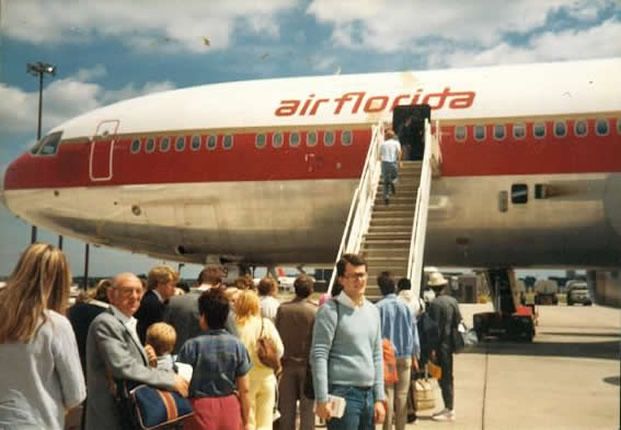
Air Florida Airlines (Aviation Explorer)
Air Florida was a carrier based out of Miami throughout the 1970’s and 1980’s. It began as an intrastate operation, but soon expanded to the east coast and, eventually, international destinations. On the afternoon of January 13, 1982, Air Florida Flight 90 was scheduled to fly from Washington D.C. to Fort Lauderdale, Florida, with a stop in Tampa. The plane was supposed to depart at 2:15 pm, but takeoff was delayed due to heavy snowfall in the area. The airport closed from approximately 1 pm to 3 pm, so Flight 90’s departure was delayed about 1 hour and 45 minutes.
During that time, American Airlines personnel were deicing the aircraft. The National Transportation Safety Board report stated that the “deicing process used was inconsistent with recommended practices” so the plane was not deiced properly. In fact, the plane had visible snow on the wings and the fuselage at the time of takeoff. The Safety Board also noted that the Captain and the first officer did not inspect the outside of the plane before leaving the gate. This oversight was the first of many from the crew that contributed to the accident.
The crew continued to make mistakes throughout the taxiing process. The report continued, “the flight crew’s failure to turn on engine anti-ice was a direct cause of the accident” and suggested the accident may have been avoided had the crew turned it on. The report also notes that the plane’s proximity to another aircraft while taxiing turned the snow on the plane to slush, which then froze in several critical areas. The instruments were not working correctly, which the first officer noted, but the captain brushed him off.
Though all of this, I can’t help but wonder what the 79 passengers aboard were thinking. They had been boarded between 2:00 and 2:30 pm. They had been stuck on the plane for close to two hours. Were they nervous to fly in these conditions, or just dreaming about the sunny weather that awaited them in Florida?
Joe Stiley, one of the survivors, was an experienced pilot. In an ABC News article following the crash, he said he knew something was not right while the plane hurtled down the runway: “You could see out one side, but not really the other side. I wanted out in the worst way.”
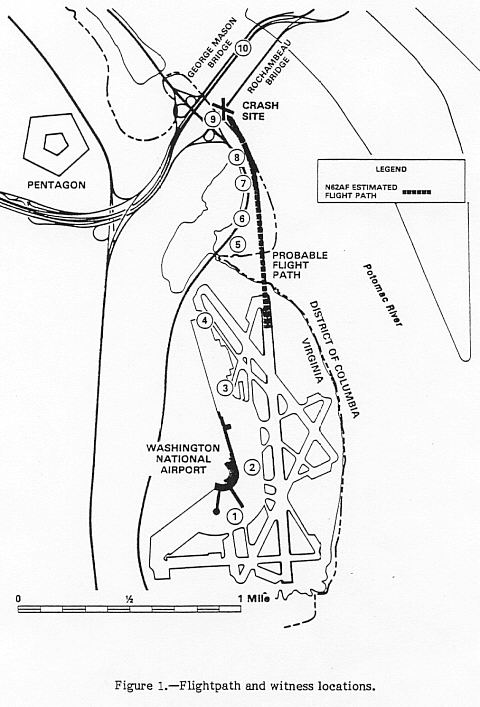
Air Florida Flight 90 Flight Map (NTSB)
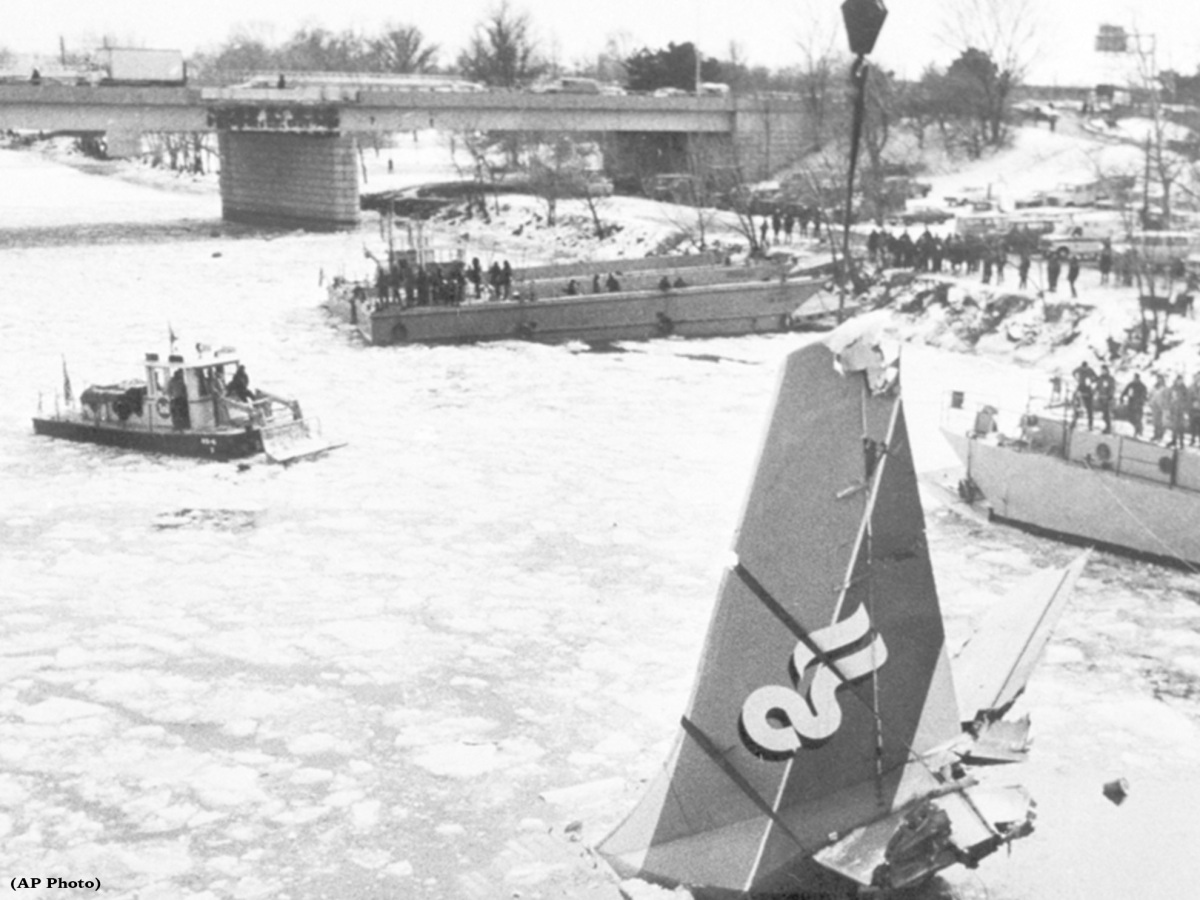
The plane took off and struggled to maintain altitude. It began to descend after reaching between 200 and 300 feet. One eyewitness, a driver on the 14th Street Bridge that day, stated that the plane’s nose was up and the tail was down. The right wing hit the bridge span first as the plane descended, leaving a trail of debris. The point of impact was only approximately 4500 feet from the end of the airport runway. The rest of the plane slammed into west side of the bridge and sank into 25 to 30 feet of water between the 14th Street Bridge and the George Mason Memorial Bridge.
The National Transportation Safety Board report later noted that the “cabin separated from the cockpit and broke into three large sections and many smaller pieces.” None of the cabin floor remained intact; most seats were extensively damaged and separated from the floor. The only part of the plane that held together was the rear of the cabin by the flight attendant’s jump seat.
Air Florida Flight 90 Survivors: Joe Stiley, Nikki Felch, Kelly Duncan, Priscilla Tirado, and Bert Hamilton
In all, there were five survivors: Joe Stiley, his coworker Nikki Felch, flight attendant Kelly Duncan, Priscilla Tirado, and Bert Hamilton. Duncan was only 22 at the time of the crash. According to a New York Times Magazine article, “After hours of delays, when the plane was finally ready to push off, she took her seat, as required, at the back of the plane . . . no one from the front of the plane survived.” In an interview after the crash, Duncan said, “My next feeling was that I was just floating through white and I felt like I was dying and I just thought I’m not really ready to die.” She, along with Stiley and Hamilton, were rescued from a lifeline thrown from a helicopter.
One bystander, Lenny Skutnik, was able to rescue Priscilla Tirado from the icy waters after the rescue helicopter’s failed attempt to tow her to shore. Tirado was 22 and traveling with her husband and 2-month old son. Both her husband and son died in the crash; Other survivors remember hearing her scream for someone to find her baby as they all flailed in the water. Felch was lifted out of the water from rescue personnel aboard the helicopter.
The temperature of the river that day was only 34 degrees Fahrenheit. For comparison, the temperature of the water the night the Titanic sank was 28 degrees. The water in the Potomac that day was only six degrees warmer.
Arland D. Williams, Jr. (Toronto Star)
Initially, there was a sixth survivor that day—46 year old Arland D. Williams Jr. Williams was “trapped in his seat in the partially submerged rear section of the plane by a jammed seat belt.” Though the helicopter’s lifeline came to him several times, he passed it to other survivors. When all the other survivors had been rescued, the helicopter went back for him. However, he was gone. The coroner determined that he had drowned; the only victim of the crash to do so.
In 1985, the 14th Street Bridge was renamed the Arland D. Williams Jr. Memorial Bridge in his honor.
To me, that bridge was always the 14th Street Bridge. I never knew that it actually had a name until now—or that it was named after an incredible man who gave his life so selflessly only a few feet from where thousands of commuters cross into DC every day. There are no markers or plaques commemorating him. I can’t even recall seeing any other name for the bridge other than 14th Street.
Though I wish there was more recognition of the bridge’s true name, I’m grateful I know it now. At least the next time I commute into the city I can reflect on his bravery instead of impending disaster.
National Transportation Safety Board, “Aircraft Accident Report: Air Florida, Inc. Boeing 737-222, N62AF, Collision with 14th Street Bridge, Near Washington National Airport, Washington, D.C., January 13, 1982,” National Transportation Safety Board Aviation Accident Report, accessed August 29, 2020, https://www.ntsb.gov/investigations/AccidentReports/Reports/AAR8208.pdf. Pages 2-3.
Have you ever traveled down a road and wondered if it was named after a certain person or place? That question led me down a rabbit-hole of Northern Virginia history, culminating in a search for nineteenth-century ruins and long-forgotten gravestones.
While my husband and I were driving through Springfield one day, not long after moving to Alexandria, we ended up on a long stretch of highway called Old Keene Mill Road. We noticed that the name “Keene Mill” seemed to have significance: the name showed up on a school, several shopping centers, and apartment complexes.
“I wonder if there really was a mill here,” my husband mused.
The short answer: yes. There was, in fact, a Keene’s Mill.
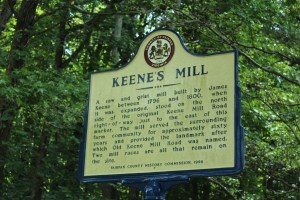
Keene Mill Historial Marker on Huntsman Rd. in Springfield (Matthew Eng Photo)
Keene’s Mill was a saw and grist mill that stood approximately at the intersection of Pohick Creek and Old Keene Mill Road. I found the historical marker for the site online; it states that the mill was built “by James Keene between 1796 and 1800, when it was expanded, stood on the north side of the original Keene Mill Road right-of-way.”1 What caught my attention was the final line on the marker: “Two mill races are all that remain on the site.”
From then on, I had two goals:
Find out more about Keene’s Mill, and
Find out what a mill race was and try to find them.
History of the Mill
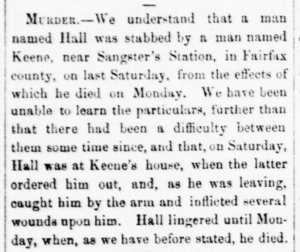
Alexandria Gazette, November 1, 1855
As I searched for information about the mill, I learned something quite shocking: William H. Keene, James Keene’s grand-nephew and owner of the mill from 1849 until 1855,2 was in jail for murder. An Alexandria Gazette article from November 1, 1855, stated that “a man named Hall was stabbed by a man named Keene . . . on last Saturday, from the effects of which he died on Monday.”3 Two days later, on November 3, the Gazette revealed that Keene was in jail. Keene did not appear again in my searches until April 4, 1856. The Gazette briefly mentioned that “Wm. H. Keene, confined in the jail of Fairfax county, for the murder of Lewis Q. Hall, escaped on Wednesday.” Further in the paper was a description:
He is about 45 years old, 5 feet 1C or 11 inches high, broad shoulders and stout made, long hair and bushy whiskers, high cheek bones, large nose turned up and spreading at the end, and depressed about the centre, small grey eyes, and very bad countenance.
Alexandria Gazette, April 4, 1856
It seems, though, that Keene’s freedom was short lived—he was caught the next day and returned to jail. His trial commenced in November, and in a Gazette article on November 15, 1856, he was found guilty of murder and sentenced to hang in January 1857.
Jack Hiller, a Northern Virginia historian, took an interest in Keene’s case in the late 1980s. He meticulously combed through archives and court records to find out exactly what had happened between William Keene and “the man named Hall.” One document he found was an inquisition, held at the house of a woman named Maria Sutherland.4 The inquisition stated that “Lewis Q. Hall came to his death by William Keene on the 27th day of October 1855 by means of a knife in the hands of said Keene.”5
Another document, a statement Lewis Q. Hall signed before his death, gave a few more details: he was accompanied by a man named John Barker, and he was looking for a woman named Maria Hall. He continued, “when I left his door yard followed by said Keene and proceeded at two steps toward his mill he threw his arm around me and inflicted the wound.” He told Barker that he had been cut. A third document, Barker’s testimony, stated that he saw Keene take out the knife and stab Hall; Keene then invited Barker for a drink and Barker accepted, but since Keene could find no liquor and Hall followed, Barker took Hall to Maria Sutherland’s home. The cut was quite bad; Barker said, “the bowels had come out through the cut.”6
Hiller puzzled over this turn of events, asking why Keene would attack Hall for no reason, or why Barker would accept the invitation for a drink, even when he knew Hall was wounded. Hiller suggested that none of them were “rational,” and it turns out he was correct. Hiller recounted several letters from Keene’s family members and acquaintances, all lending their own extra details: drinking may have been involved, “Maria Hall” was a red herring, and it was all an accident.7 One letter even said that one of the jurors had been pressured by the other jurors to give a guilty verdict.8
In light of this evidence, the governor of Virginia at the time, Henry Wise, postponed Keene’s punishment twice. Eventually, Wise commuted Keene’s punishment to ten years in prison. In 1857, Keene went to the Virginia State Prison in Richmond; he was forty-seven at the time. Keene’s fate after that is unknown; any prison records that may have existed were destroyed in the Civil War.9
Keene Mill property drawn by Jack Hiller (Jack Hiller)
The property was sold in 1857, and records indicated that by 1869 the mill was no longer standing.10 Since then, the land had changed ownership several times. Portions of it were abandoned and others developed. One account of the Old Keene Mill Road development read, “What is now Old Keene Mill Road was originally called Rolling Road No. 2. It was built by William Fitzhugh to transport his tobacco to market in Alexandria. In the 1920s, the rise of the automobile led to confusions between the two Rolling Roads. As the Keene Mills had ceased operation, Rolling Road No. 2 was renamed “Old Keene Mill Road.”11 However, I could not locate any other sources or information about it, though Hiller mentioned that Old Keene Mill Road, once two lanes, was converted to four lanes in 1979.
Currently, the land is that contains the mill races is part of the Fairfax County Park Authority.
Searching for the Mill Races
When I began my research, I had no idea what a mill race was. However, I was intrigued that such an odd part of history still had some visible traces, and I wanted to find them. I found out that mill races were man-made channels that essentially run water to and from mill wheels, so we’d be looking for ruts in the land, essentially. One other person had looked for—and found—the mill races in the winter of 2009 and provided photos, so I was convinced we’d be able to find them.12 The same person also noted that a Keene family graveyard was nearby, in a subdivision.
I’d underestimated how tough it would be to find the mill races in the summertime. Also, the day before we’d had tropical-storm-level wind and rain, so the ground was soft, wet, and extremely muddy. Nevertheless, Matt and I entered the Pohick Trail one hot afternoon. The trail ended as fast as it began. From the end of the trail on, there was a carpet of green and fallen branches with no indication of where to go. Matt forged ahead, though, and moved deeper into the woods.
“What direction should we go?” he asked.
“The guy in the article said he walked in the direction of Pohick Creek,” I answered. So we moved on. Nothing resembling what we’d seen in the photos was visible. I tried to remember that the photos were taken over a decade ago and in the dead of winter, so they’d definitely look different by now. Our feet squished in the earth and thorns ripped at our jeans. I walked into multiple spiderwebs, which reminded me I was definitely not an outdoorswoman.
I did, however, feel an appreciation for the history that had happened on this land. Somewhere nearby, Lewis Hall and William Keene had gotten into a fight. Hall had died and the course of Keene’s life had changed forever—and the mill for which the road was named would only exist another ten or so years.
We eventually came upon the creek. It was a pretty, quiet space. The water ran clear, an indication that human hands hadn’t meddled with it too much. However, the beer cans nearby suggested that we weren’t the only ones who had ventured this far into the woods. We both recalled Hiller’s hand-drawn map of the mill races, and walked up the creek trying to find one of them.
Possible section of mill race off Pohick Creek (Matthew Eng Photo)
Eventually we came upon a small rut in the earth that fed into the creek. If our map calculations are correct, this was one of the mill races. We decided to walk further down along the creek and see if we could find the other one. We found piles of hand-cut stones, and, after consulting the map and a couple of other sources, surmised that they may have been pieces of the original Old Keene road.13
We blundered around for a bit and thought we may have found the other mill race, but as we walked, we realized it was just a man-made runoff. Along the way, we found a large rusted-out car, more beer cans, and deer tracks.
Keene family plot, Fairfax County (Matthew Eng Photo)
When we emerged from the woods, a storm was threatening. There was no way we could venture back in, so we decided to review our photos when we got home. We did, however, track down the Keene graveyard. It sat right in the center of a townhome complex about a mile and a half away—a small fenced-in plot with two visible gravestones, one of which read “Addison Keene.” A couple of yards away, a kid played on a basketball court and watched us with a wary eye.
Conclusion
I met both the goals I set for myself. I did find out more about Keene’s Mill—most notably that the final Keene that owned the mill was tried for murder, found guilty, sentenced to hang, escaped from prison, and eventually had his death sentence commuted. I do have to wonder if anyone who named the road, the school, the shopping centers, and the residential complexes knew of this history. It’s a subtle reminder that roads and other places could be named after people or events with a dark past.
As for the mill races, I’m not completely sure we found one. However, having the opportunity to hike through the woods and experience something I wouldn’t have otherwise was a treat—mosquito bites and all.
Footnotes
“Keene’s Mill Historical Marker,” HMdb.org: The Historical Marker Database, last modified July 29, 2016, Link.
Hiller, Jack. “Murder at the Mill: My Search for William H. Keene,” Online PDF. According to Hiller, Keene turned the mill over to a Fairfax attorney in 1855 and gave him the power to sell it pay off legal and personal debts.
Alexandria Gazette, Nov. 1, 1855.
Hiller, “Murder,” 57. The house where Barker took Hall after the stabbing.
Hiller, “Murder,” 55.
Hiller, “Murder,” 56.
Hiller, “Murder,” 58-60.
Hiller, “Murder,” 61.
Hiller, “Murder,” 78.
Hiller, Murder,” 77.
John Pasierb, “Was There Ever a Mill on ‘Old Keene Mill’ Road?” accessed on August 1, 2020, Link.
Andy99. “Suburban Archaeology 1: On the Trail of Keene’s Mill,” March 22, 2009, Link.



























 Offbeat NOVA