
Angela H. Eng, Offbeat NOVA
It’s not hard to grab a newspaper in the Old Town section of Alexandria, Virginia. Stroll down King Street and you’ll see a number of newspaper and circular boxes: pamphlets for things to do and see in Old Town, ads for ghost tours, copies of the Alexandria Times and the Zebra. However, at the intersection of King and Union Street is a lone newspaper box for the Alexandria Gazette Packet. The Gazette is an unassuming, small paper that averages about 15 pages per issue and costs a quarter. It also has the distinction of being one of, if not the, longest-running newspaper in the United States.

Alexandria’s history of printing dates to 1784. The city’s first printing plant belonged to George Richards and Company, and it stood at the intersection of Princess and Fairfax Street.1 This plant produced Northern Virginia’s first paper, titled The Virginia Journal and Alexandria Observer.2 The present-day Alexandria Gazette can trace its origins to this first paper.
The year 1800 marked the arrival of Samuel Snowden to Alexandria. Snowden, a New Jersey native, began a paper that same year with another collaborator and called it the Alexandria Adviser. However, Snowden soon bought the Columbian Mirror and Alexandria Gazette,from William Fowler in December of 1800.3 Snowden initially called this combined paper The Alexandria Advertiser and Commercial Intelligencer, he changed the name multiple times before settling on the Alexandria Gazette sometime between 1826 and 1828.4 Snowden continued to run the Gazette until his death in 1831; Snowden’s 21 year- old son, Edgar Snowden, resumed ownership of the paper.
In 1860, the United States was on the brink of war. Lincoln was elected President in November. Not long after his inauguration in March 1861, the Civil War began with the firing on Fort Sumter on April 12. A little over a month later, on May 23,Virginia seceded from the Union. On the morning of May 24, Union soldiers marched to Alexandria from Washington, D.C. and occupied the city. At the time, Snowden and his son, Edgar Snowden Jr., were running the Gazette. There was one rival newspaper, The Virginia Sentinel, which had begun the previous year.5 It is unclear whether the editors of the Sentinel disbanded or fled, but when the Union occupation began, the Gazette was the only remaining paper in Alexandria.6

Under Union occupation, the Gazette did not thrive. Snowden and Edgar Jr. continued to print the paper, but “telegraph communications were denied the publishers and Alexandria had become stagnated economically.”7 By the summer of 1861, the paper had disappeared. However, that fall, Edgar Jr. began a small paper called The Local News. It was a “small non-committal sheet with almost no editorials.”8 Overall, it had varied content: news stories, advertising, current events—it could even report on the crimes of Union soldiers, such as fights and break-ins.9
The Local News ran smoothly and without incident until February 1862. Then, on Sunday, February 9, an event occurred that caused Snowden to publish—what was for the time—an inflammatory editorial.
“ARREST OF A MINISTER WHILE AT PRAYER IN A CHURCH—GREAT EXCITEMENT”
The headline of the first column in the February 10 edition of the Gazette hints at a wild story to follow. However, the story is recounted in an objective, straightforward manner. St. Paul’s Episcopal Church, founded in 1808 and currently at 228 South Pitt Street, was the site of a disturbance between Union soldiers and Alexandrians. The Reverend K.J. Stewart conducted Sunday services at the church, and at the services on February 9, he began to read the litany. However, several Union soldiers in the congregation, including Captain Elon Farnsworth, noticed that the Reverend did not recite the prayer for the President of the United States. The soldiers demanded he read the prayer, but he ignored them. Farnsworth then decided to arrest the Reverend, so “the prayer book was taken from Mr. Stewart’s hand, he was seized and conducted out of the church, followed by bis little daughter who clung to her father, and was held by one of the soldiers.”10 Michael Lee Pope’s account of the event adds a bit of flair: when soldiers removed the Reverend’s prayer book, he continued to recite the litany from memory. Also, as the Reverend was dragged out the church door, a lady in the choir gallery threw a book at a Union soldier.11 A history of the church on the St. Paul’s website also acknowledges, “ a warning was issued to ‘females and others,’ threatening arrest for offensive remarks and demonstrations prompted, no doubt, by the actions of several St. Paul’s ladies, including one who is said to have dropped her prayer book from the gallery onto the head of an offending officer.”12

The Reverend was taken through the streets of Alexandria, in his clerical robes, to Farnsworth’s quarters. The General Montgomery was summoned from the services he was attending at the nearby Christ Church to deal with the situation. He later released Reverend Stewart at the direction of government in Washington, D.C.
However, the column on the far right of that paper’s edition tells the same story—with less objective details. The editorial describes the event as never having “a parallel among civilized nations, certainly not in the history of this country.”13 The story continues, “an interruption occurred of the character which the law designates as ” brawling”—that is, the intervention of noise and tumult by certain persons, who had come to the church with the intention of interrupting the service should it not proceed according to their wishes.” When the Reverend refused to read the prayer for the President, Farnsworth “undertook to officiate in prayer (if prayer it can be called) by reading the prayer for the President of the United States.” Then he demanded the arrest of the Reverend and called him “a rebel and a traitor.”14 The column continues to deplore the actions of the Union soldiers and declares, at the end, “It will, however, be well to state that Mr. Stewart only insists upon the right of all ambassadors to communicate with their King, untrammeled by civil or military interference.”
So incensed from the event was Snowden, that he ends the column with a listing of prominent men present in the church and states that they will “testify to the facts as above stated.” He then ends the column with a statement that copies of the paper have been sent to the President and George McClellan, the Commanding General of the Union forces.
Though the event ended peacefully, the Union unrest was far from over.
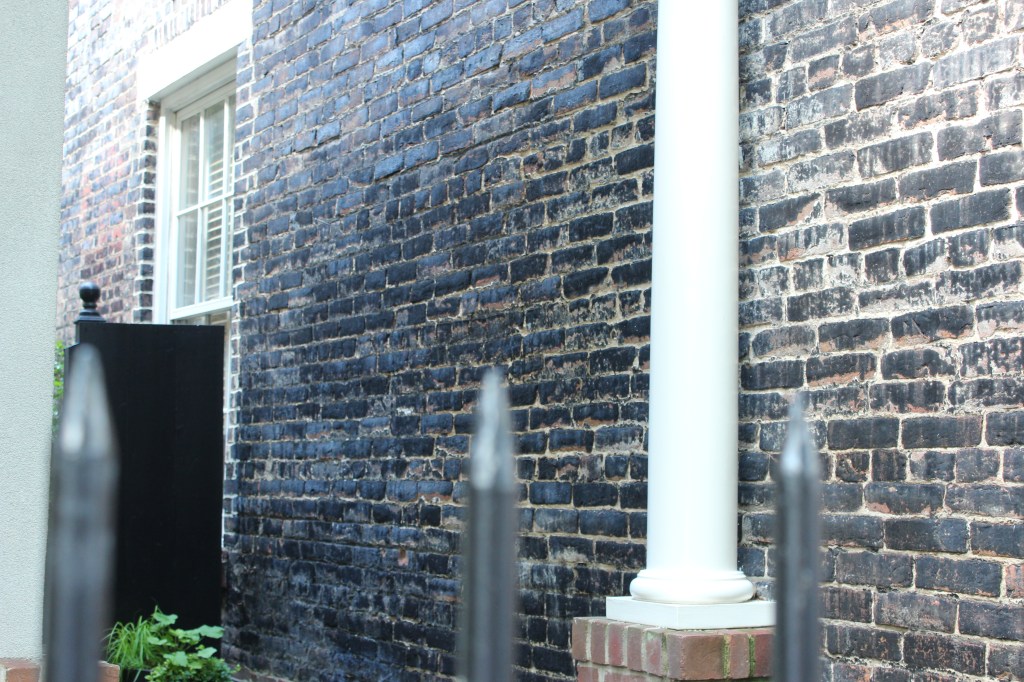
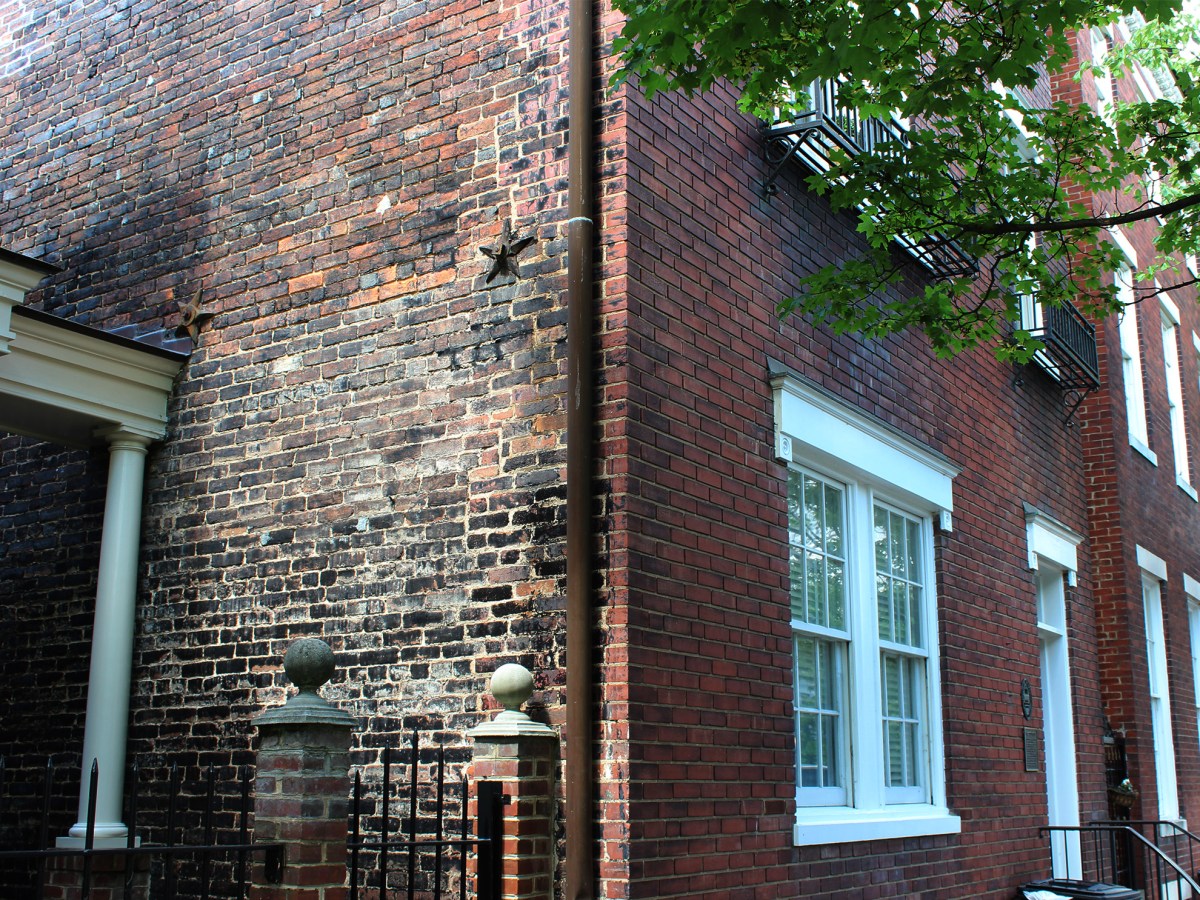
That evening, the offices of the Alexandria Gazette at 310 Prince Street caught fire and burned. How the fire began remains unknown. Several sources call the fire “mysterious,” but other sources claim that the fire was started by Union soldiers as retaliation for the editorial.15 Regardless of origin, the scars from the fire remain on the side of the building to this day, a testament to the historical event that occurred on this spot.
On May 13, 1862, Edgar Snowden Jr. revived the Gazette from the ashes. The paper’s offices were moved to 104 King Street, over a local bookstore. The May 13th edition of the paper states it as “a continuation of domestic annals commenced by the Alexandria Gazette in 1799, and, together with the sheets of ‘The Local News,’ completes the connection between the sixty-second and sixty-third volumes of the Gazette.” The text describes the summaries as “necessarily brief” and “without details.” The first item listed is the fire on February 10: “The Alexandria Gazette office burned, and further issue of “The Local News” suspended.” In the opposite column, in a brief yet somehow triumphant fashion, the last item reads: “May 13.—Alexandria Gazette resumed.”
And resume it did. The Alexandria Gazette runs to this day. While hunting for the location of 104 King Street, I spied the old, battered newspaper box in front of Mia’s Italian Restaurant with a plain sticker plastered on the side: Alexandria Gazette Packet.18 I jumped out of the car and ran to see if there were any old copies inside. Lo and behold, I pulled out a July 16, 2020 edition of the Gazette. While we were never able to pinpoint exactly where 104 King Street sat, it crossed our minds that the newspaper box sits the closest it can to the original office.
At the top of the paper, in small letters, is a brief and powerful tagline: “Serving Alexandria for over 200 years.”
Footnotes
- Anderson, Robert Nelson. “A History of Printing in Arlington (Alexandria) County.” Arlington Historical Magazine Vol. 1 Issue 3 (1959): p. 11, http://arlingtonhistoricalsociety.org/wp-content/uploads/2016/02/1959_2Printing.pdf
- Anderson, “Printing,” p. 11.
- Rawson, David. “Samuel Snowden.” Index of Virginia Printing, http://indexvirginiaprinting.org/bio/393/. Rawson notes that Fowler had the publication for only two months and it was financially troubled.
- Rawson, “Index.” The name Alexandria Advertiser and Commercial Intelligencer only lasted until 1803. The succession of names included: Alexandria Daily Advertiser, 1803-1808; Alexandria Daily Gazette, Commercial and Political, 1808-1812; Alexandria Gazette, Commercial and Political, 1812-1817; Alexandria Gazette and Daily Advertiser, 1817-1819; Gazette and Daily Advertiser, 1819-1821; Alexandria Gazette and Daily Advertiser, 1821-1822; Alexandria Gazette and Advertiser, 1822-1824; and Alexandria Phenix Gazette, 1825-1833. At some point between 1833 and 1834 the “Phenix” portion of the name was dropped.
- Cappon, Lester. “The Yankee Press in Virginia, 1861-1865.” The William and Mary Quarterly. Vol. 15 No. 1 (1935): pp. 81-88. The Sentinel only lasted from 1859-1861. Cappon describes it as “pro-secession and radical.”
- Cappon states the paper “disbanded,” but Anderson, citing a different publication by Cappon, states that the editors “escaped” to Warrenton, Virginia.
- Anderson, “Printing,” p. 18.
- Cappon, “Yankee Press,” p. 81.
- Tuyull, et al. “Sic Semper Tyrannis: The Alexandria Gazette under Union Occupation.” Journalism in the Fallen Confederacy (New York: Palgrave, 2015), pp.18-41.
- The Local News, (Alexandria, VA) February 10, 1861.
- Pope, Michael Lee. Wicked Northern Virginia (Charleston: History Press, 2014), p. 107.
- “St. Paul’s History.” St. Paul’s Episcopal Church, n.d., https://stpaulsalexandria.com/start-here/#1540312179561-b3069e59-ff71
- The Local News, (Alexandria, VA) February 10, 1862.
- Interesting side note: Captain Elon Farnsworth later died at the Battle of Gettysburg on July 3, 1863.
- Anderson and Pope claim that Union forces set the fire, as does the historical marker at 310 Prince Street. However, Jeremy Harvey (author of Occupied City: Portrait of Civil War Alexandria, Virginia) states the fire began under “mysterious circumstances.” https://www.hmdb.org/m.asp?m=41832
- Anderson, “Printing,” p. 18.
- Alexandria Gazette, (Alexandria, VA) May 13, 1862.
- Mia’s address is 100 King Street. We could not locate 104 King Street, but we assume it was on the second floor (since Anderson points out it was above a bookstore) and probably absorbed into the restaurant space.
 Offbeat NOVA