Have you ever done something out of sheer spite? If the answer is yes, have you ever taken it to the next level? Like building a house?
A “spite house” is built with the intention of irritating a neighbor or as an act of revenge against another landowner.1 You’d think these sorts of houses would be rare, but it turns out there’s a lot of spite going around—especially in Old Town Alexandria, which has not one but four spite houses.
Not to burst anyone’s bubble, but these spite houses actually have another name: alley houses. As Alexandria Living points out, a lot of these “spite houses” are actually alley houses. Alley houses were built between two existing structures in an alleyway. In fact, “an alley house would have been a cheap way to build, since the owner would only have to construct the rear and front walls and a roof.”2
We stumbled on a 2018 blog post that not only highlighted the famous spite house on Queen Street, but three more alley houses that were hidden in plain sight. Built out of spite or not, they sounded interesting. So we decided to check them out.
By far the most famous of the spite houses, 523 Queen Street has the distinction of not being the narrowest spite house in Alexandria; it is the narrowest house in America, period.3 Prior to the home’s construction, there was an alleyway between the two houses. However, as the story goes, the owner of the homes, a Mr. John Hollensbury, was tired of the riffraff hanging out in the alleyway and the oversized carriages leaving gouge marks in the buildings when they tried to squeeze though.4 So, to keep people out, he put brick walls up and a roof over the alleyway. Though this version of the events is probably the most well-known, a couple of local bloggers did a wonderful job of researching the three different stories they’ve heard. Supposedly, however, you can still see the pockmarks from those wagon wheels on the walls in the living room.5
Spite House, 823 Queen St., Alexandria, VA (Offbeat NOVA)
The Old Town Home bloggers actually visited the home and measured the width with a laser. The width came in at 7 feet, 6 inches.6 Absolutely tiny. If you Google the home, you can find photos of people standing in front, their arms stretched wide to show just how small the home is. According to Realtor.com, it is only 480 square feet and has one bathroom. It was last sold for $130,000 in 1990 and currently has an estimated value of $579,400.
This home is what the Old Town bloggers believe is the oldest. In their research, they found that it was constructed sometime in the late 1700s or early 1800s.7 It is now not a residence, but the She’s Unique jewelry and gift shop. It was measured as 11 feet, 9 inches—the biggest of the Alexandria alley houses.8
Spite House, 205 King St., Alexandria, VA (Offbeat NOVA)
The business has favorable reviews, with one saying, “I love this store! They have some really nice pieces and great design. The staff is very friendly and it’s a cute little shop.”
We had to backtrack a little bit to find this one. It’s possible I was just distracted because it’s so close to my favorite yarn shop, or it just blended into the homes around it. This house is the only one story dwelling of all the Alexandria alley houses, and is described as a “mini-me” of the surrounding buildings.9 The Old Town Home bloggers didn’t dig much up on it, only that it might have been built sometime in the early 1900s and it may have been absorbed into an adjoining home. Another source, after consulting Sanborn Fire Insurance Maps, states that it was built between 1891 and 1895.10 The bloggers measured it at 8 feet, 2 inches wide.11
Spite House, 1401 Prince St., Alexandria, VA (Offbeat NOVA)
Even though this home is the newest of the alley homes, apparently the late 1800s was a common time alley houses were built.12
The last home we visited, at 403 Prince Street, was a pretty brick home that stood out from the ones on either side. Supposedly built around 1800, Realtor.com lists this home as 608 square feet, with 1.5 bathrooms. It was last sold for $424,000 in 2016 and currently has an estimated value of $618,600. It was measured at 7 feet, 9 inches.13 By comparison to the Queen Street home, it is only a matter of inches—but it has at least more square feet and an extra half bath.
Spite House, 403 Prince St., Alexandria, VA (Offbeat NOVA)
Apparently, it is also well known for its holiday decorations.
So what do you think?
Could you build and live in a tiny home out of spite?
Footnotes:
Samantha Grindell, “10 unique homes that were built just to annoy people,” Insider, Nov. 10, 2019. Accessed February 20, 2021, LINK.
Sara Dingmann, “The Other Three ‘Spite’ Houses in Alexandria,” Alexandria Living, Oct. 8, 2020. Accessed February 20, 2021, LINK.
Meghan Overdeep, “You Can Find America’s Skinniest Home in this Charming Southern City,” Southern Living, April 2, 2018. Accessed February 20, 2021, LINK.
Overdeep, “Skinniest Home.”
Overdeep, “Skinniest Home.”
Alex Santantonio, “Which of Old Town Alexandria’s Spite Houses is the Narrowest? It’s a Game of Inches!” Old Town Home Blog, February 23, 2018. Accessed Feb. 13, 2021, LINK.
“This is the way the world ends Not with a bang, but a whimper.” – The Hollow Men, T.S. Elliot
By Matthew T. Eng, Offbeat NOVA
When I was a kid, I didn’t eat out that often. Most of the meals I ate in the late 1980s and early 1990s were served by my parents at home, often around 6:00 pm with military precision. If we did go out to eat on an evening that: 1. Wasn’t someone’s birthday, 2. Wasn’t a parental work celebration, or 3. Wasn’t an easy alternative with friends our family from out of town, then we would most likely go to a chain restaurant. And you know what, I was okay with that. I’m still okay with it. Hell, even in these times of Corona, our favorite go-to is TGI Friday’s (don’t sleep on the cobb salad).
At some point between going off to college and starting a job, I noticed a large number of these restaurants began to vanish like a Marty McFly polaroid. While some of these establishments are still around and going relatively strong (Chili’s, TGI Friday’s, Outback), others are struggling (Applebees, Ruby Tuesday, Red Lobster). There are a few from my childhood, like Bennigan’s, ShowBiz Pizza, Pargo’s, and Chi-Chi’s, that are no longer around at all—relics of a forgotten past.
These are, of course, just establishments that are from my own personal life. A cursory look on Wikipedia shows nearly 100 now-defunct restaurant chains in the United States alone.
One of these chains that have not weathered the financial storms of the past two decades was Steak and Ale.
First opened in Dallas, Texas, in 1966, Steak and Ale was billed a casual dining steakhouse chain that would offer “an upscale steak experience at lower prices.” Popular dishes over the years included the New York strip, Hawaiian chicken, and Kensington club. Notably, it was also one of the first chain restaurants to have a salad bar. Several opened in Northern Virginia over the years, including at least one in Alexandria on the busy intersection of Kenmore Avenue and Seminary Road near Interstate 395.
Abandoned Steak and Ale in Alexandria, VA (Matthew Eng/Offbeat NOVA)
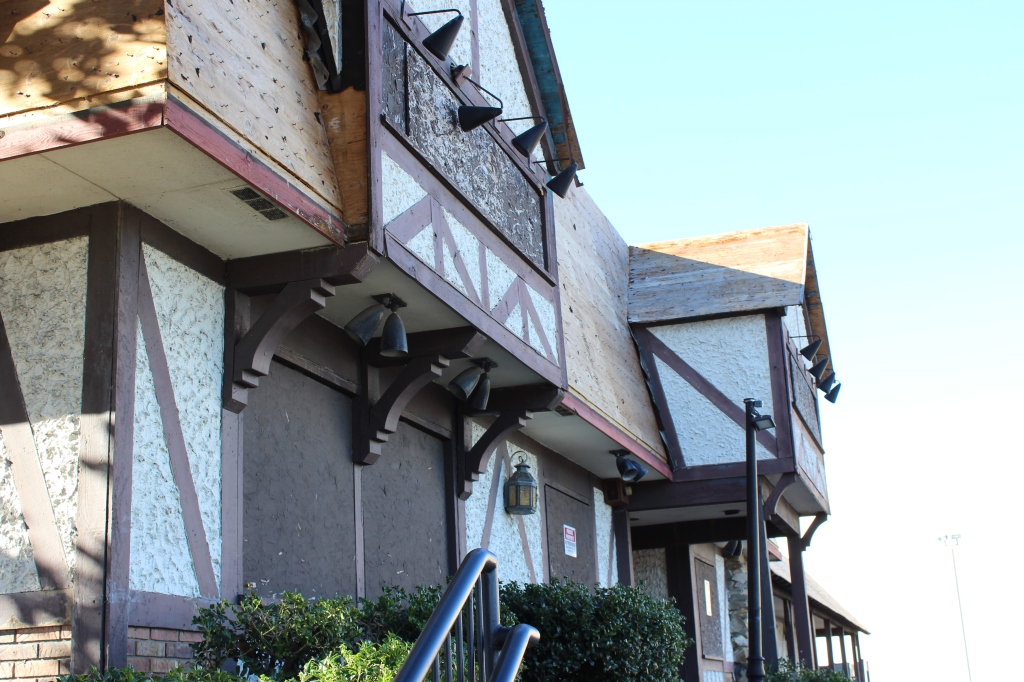
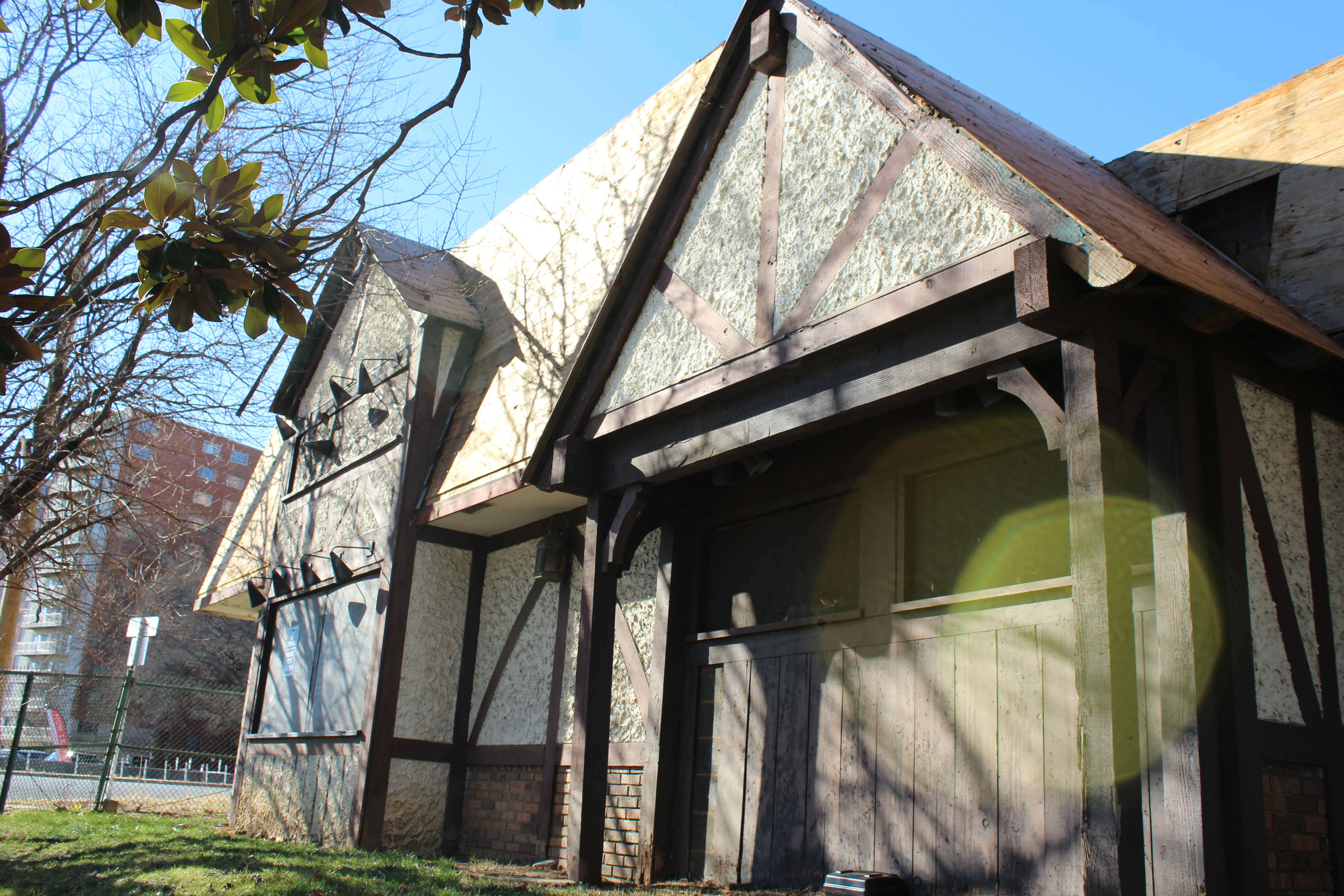
Unfortunately, there isn’t much information available online about that particular Steak and Ale Restaurant. One source about the property’s history said the familiar tudor-style facade was built in 1975, which was likely when the restaurant opened. The entire plot measured 34,848 feet, which included 91 parking spaces. one commenter on a website called menuism.com had this to say about the former establishment:
“Great location for a new restaurant. I say keep the building and decor and do something interesting with it. German Bierhaus?”1
menuism.com
The restaurant likely closed around 2008 when the company that owned Steak and Ale, the S&A Restaurant Corp, filed for Chapter 7, 2008. By the end of July 2008, all of the remaining Steak and Ale locations closed as part of the Chapter 7 bankruptcy proceeding.2
Although the restaurant chain folded over twelve years ago, the building and adjacent parking lot still stand today. The restaurant plot is located in the Mark Center area of Alexandria, an area that has no doubt seen better times. Much of the Mark Center of Alexandria is on the verge of reinvention and construction, which are just fancy words in Northern Virginia for “gentrification.”
The 6,800-square-foot building and its attached parking lot property, according to realty website XOME, is worth approximately $4,667,781 and was last sold in November 2013 for an amount of $3,835,348. The owner is a real estate company known as HSRE-Capmed Alexandria Land, LLC. The plot of land is now known simply as “Colonial Parking Station 483.” The increase in price and the eventual construction of Amazon just a few miles away in the upcoming years almost guarantees that the projected demolition will not only occur, but will occur soon.3 According to the Construction Journal, as of February 13, 2020, the project demolition of the Steak and Ale building on 4661 Kenmore Avenue is delayed still to this day. One other source online has put in an approved request to turn the area into valet space for the 91 car parking lot.4
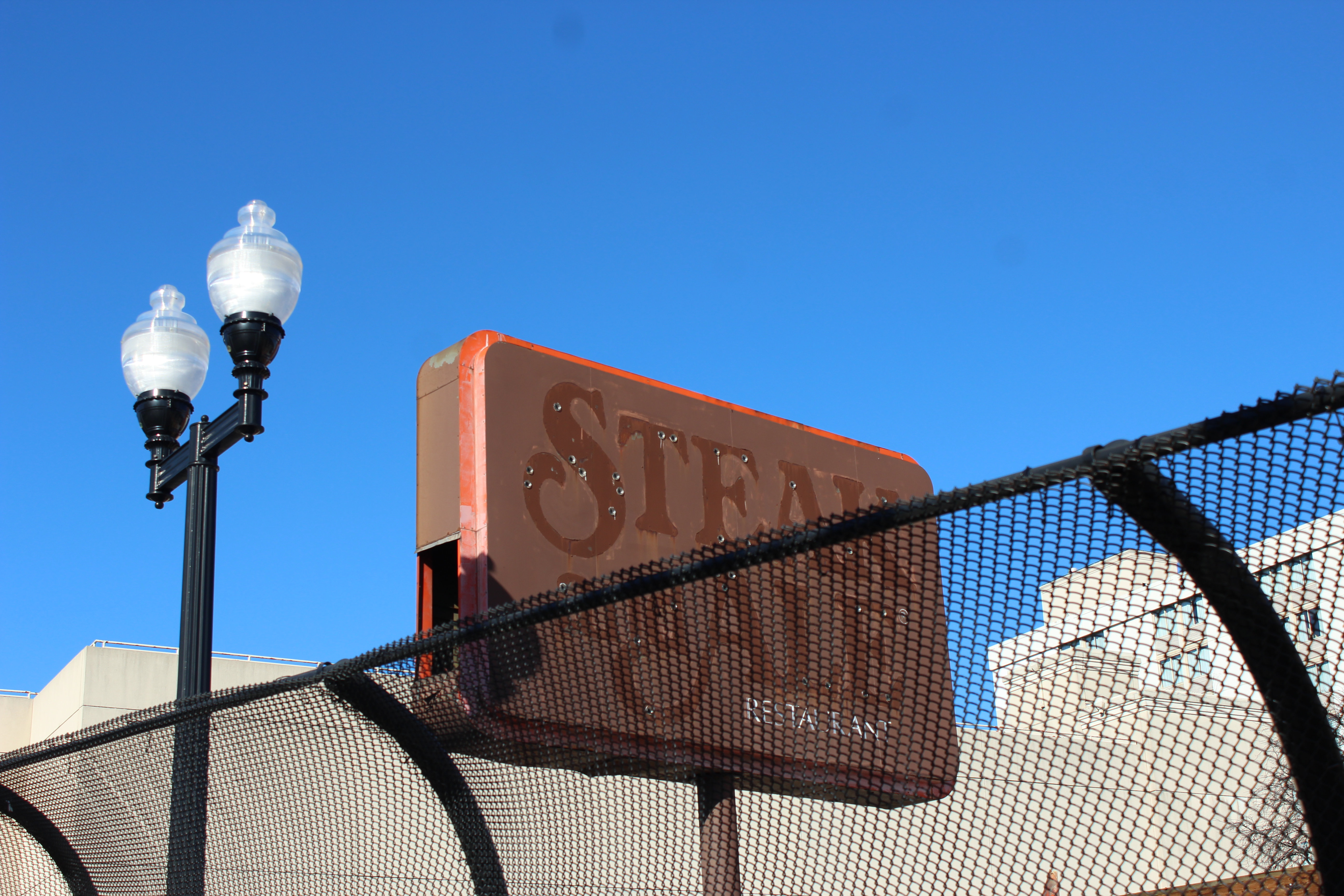
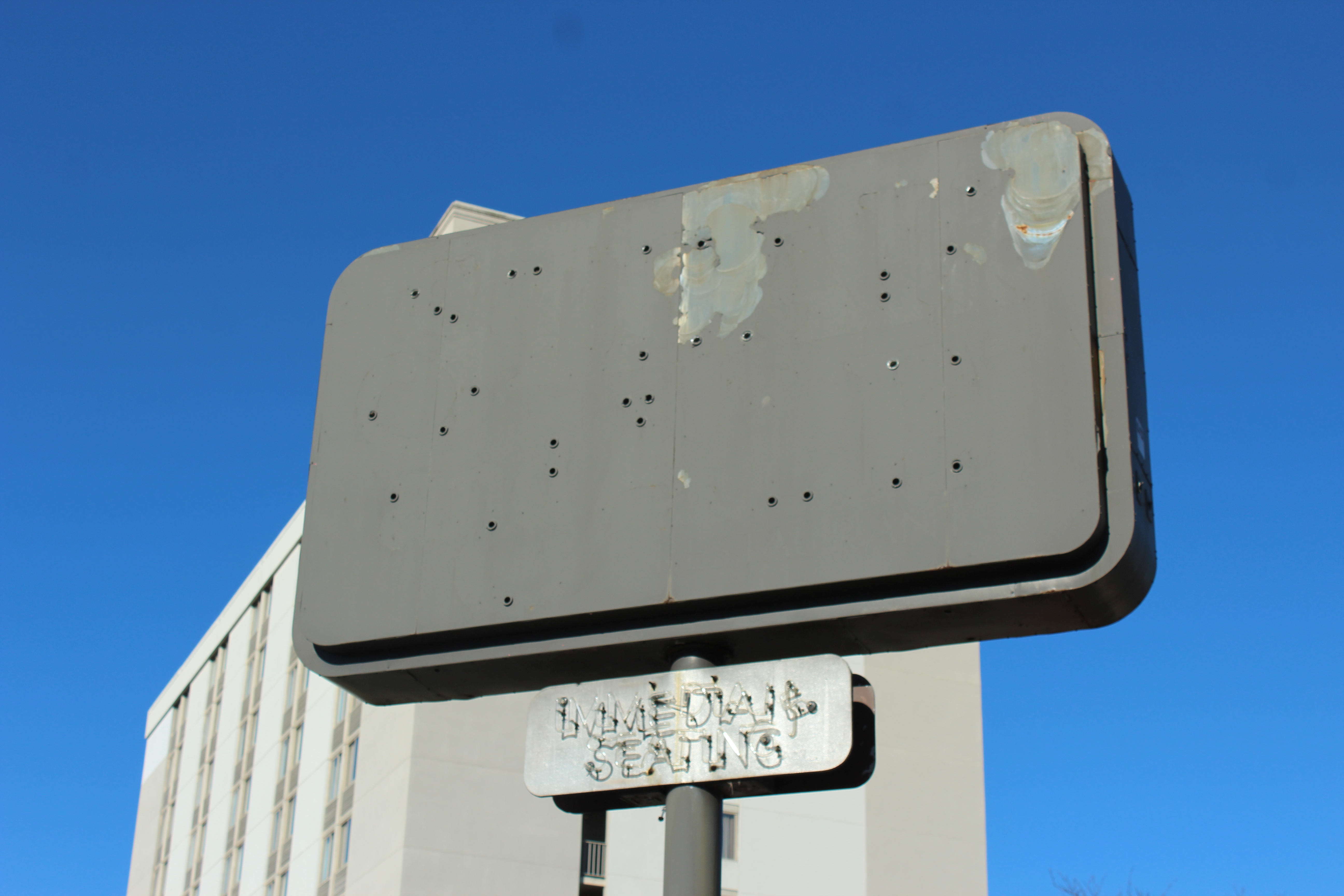
Visiting the location today is eerie. The lot sits abandoned with a hotel, medical officers, and a shopping center nearby. Several apartment buildings can be seen across from Seminary Road near the interstate. Evidence of the valet parking is already evident, as there is one Colonial Parking sign near the vacant valet stand directly under the still-standing Steak and Ale neon sign. Any visible lettering has been removed from the large sign near the valet stand, but you can still see the rivets where the neon lighting for “Steak and Ale” must have connected to circuitry. Still visible beneath it, a smaller sign reads “Immediate Seating.”
The facade is in fairly remarkable condition, considering it has been closed and vacant for over a decade. The windows are boarded up and much of the roof has been stripped down to the wood. One can only assume there is massive mold and water damage inside. Signs for no trespassing dot the front facade of the building where so many happy families like mine once entered its doors to share a meal.
There is a elevated walkway leading to the other side of Seminary Road around the back side of the building. Walking up it gives you a great view of the still visible “Steak and Ale” sign, albeit faded, as it once displayed on the roadside. The lettering has been removed, but you can still see evidence of what it once was. in a way, that statement is reminiscent of the entire restaurant — with everything removed, those familiar with the restaurant chain could still pick it out easily.
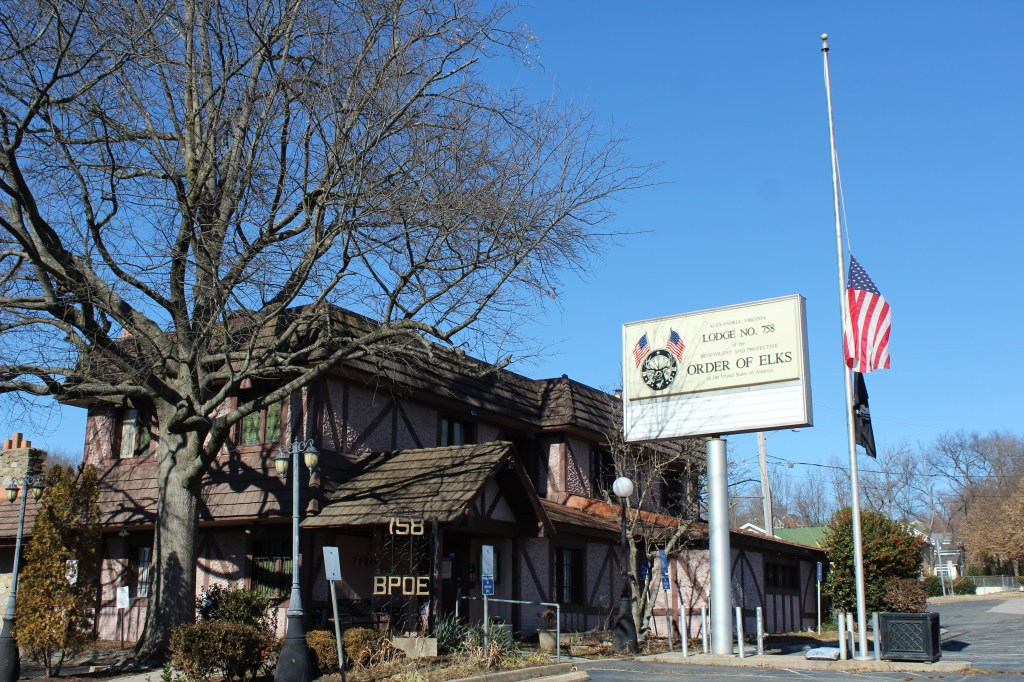
Elks Lodge #758, formerly the Jolly Ox (Matthew Eng/Offbeat NOVA)
You will be incredibly hard pressed to see the inside of a Steak and Ale restaurant nowadays. Although the company, which also owns Bennigan’s, had made plans to revitalize the chain, we have yet to see anything of that bearing much fruit. Thankfully, one such establishment does exist bearing the bones of a former Steak and Ale off Interstate 1 in Fairfax County, Alexandria (7120 Richmond Highway). Back then, the restaurant was known as the Jolly Ox, as it was custom to remove the “ale” from the name in Virginia. Driving by it, however, you can see all the old familiar tudor-style facade wrapped around the building. The building is now the Elks Lodge #758. A look at the Lodge’s facebook page shows that they have retained much of the restaurant’s facilities, including its kitchen and horseshoe bar. Even during a pandemic, the Elks Lodge #758 regularly hosts weekly events, although it mostly sits vacant and unassuming during the day.
The Steak and Ale in Alexandria will eventually go away entirely. It’s property will be swallowed up by gentrification. For businesses, this is the circle of life. COVID has only accelerated the process.
I don’t get to see my parents much because of COVID, so whenever we do get together safely, it is an event. My daughter counts down the days before we head over there to spend some quality time with her grandma and grandpa. They recently moved into a Gainesville semi-retirement community from Hampton Roads at the end of 2019 when my father (thankfully) retired.
The first time we visited their house in Gainesville back in pre-COVID times at the end of 2019, we decided to go out to eat and celebrate their new and exciting future in Northern Virginia. The problem was we didn’t know where to eat. We did what anybody does in an area they aren’t familiar with: go immediately to Yelp and see what restaurant is rated best. For the area, the highest rated place in the vicinity was a barbecue joint called “JIMBO’s.” We figured we would give it a try. Hey, maybe it would be our new favorite spot to come when visiting mom and dad. Right?
Wrong.
We walked in, and the place was crowded. It smelled of smoke and the music was too loud. It looked like somewhere I would love to go to when I was younger and dumber. It definitely wasn’t somewhere you take your three-year-old. We walked out of there and kept looking in the shopping center off Heathcote Boulevard. It was cold in December 2019, so we knew we had to make some fast decisions. Thankfully, there was an asian restaurant right next to JIMBO’s called Taste of Asian. There were a few people in there, thus passing my dad’s “won’t go anywhere that is COMPLETELY empty, so we decided went inside out of the cold.
The first meal there was fantastic. Enthusiastic service. Hot food. They even gave Zelda some fried donuts, most likely because my father ordered so much food. THAT became our go-to place every time we visited my parents. It still is. The more we went, the more dishes we tried, until I found the one I can’t live without when I make a visit. Every time I visit my parents in Gainesville, I only have one thing in mind off their menu: egg foo young. I’ve eaten this particular Chinese-American fusion dish in almost every Chinese takeout place I frequent. I can confidently say, without reservation, that Taste of Asian in Gainesville has the best egg food young I have ever had.
What makes it so special and delectable for casual Asian-American diners and Chinese food purists alike? Well, it turns out that answer is a bit complicated.
As chef and food blogger Melissa Joulwan said in her excellent writeup on egg foo young, the dish has a “deliciously confused identity.” I won’t bore you with the history, mostly because she has already written an incredibly succinct one on her website HERE.
I like to get rid of the stigma that eggs are only for breakfast. Culinarily, that seems distinctly American, doesn’t it? Look, James Bond ate eggs for dinner quite often in the novels. You can, too.
As unique as the dish is, egg foo young falls in line with a lot of strikingly similar egg-centric dishes in Asian cuisine. The Filipino torta. Japanese okinomiyaki. Malaysian roti john. Indian masala omelette. Korean gyeran jjim. The list goes on.
While there are obviously variations to each of these, they all follow a similar pattern of some sort of egg omelette or pancake with vegetables, meat, and a sauce. Think of what you would normally get at your Chinese takeout place as another version of Americanized Chiense food, like Chop Suey or a crab rangoon (sorry if you think people from China people eat that).
The traditional ingredients include several eggs, onions, bean sprouts, cabbage, and some sort of meat to help bind everything together. The version at Taste of Asian skips a lot of the vegetables and focuses more on the cabbage, onion, and egg. In a sense, it somewhat resembles the okinomyaki previously mentioned. It is then fried in hot oil until crispy on the edges and soft and fluffy in the center. A gravy is made from the leftover oil using a simple flour mixture and served on the side to pour over the hot and greasy egg pancakes over rice.
It truly is a dish to die for, and you very well may die from it.
Let’s get one thing straight. This dish is absolutely delicious, but it does have its unintended (or intended?) consequences. The calorie count is not for the feint of heart. Looking online at a single serving of egg foo young will give you a sticker shock to say the least. Add in a healthy amount of steamed white rice and you have, at least for me, a once every few months guilty (and I mean guilty) pleasure. And trust me: it tastes MUCH better than it looks.
Egg Foo Young from Taste of Asian
When we first got the pork egg foo young from Taste of Asian, I was expecting to eat only a half piece. After all, the pancakes are as large as the circumference of a traditional round Chinese restaurant takeout container. I ate a full piece, complete with two helpings of gravy. I wanted more, but knew that would probably be a bad idea. Nowadays, I limit myself to a half piece on top of my rice with gravy. You can’t give a junkie a full fix all the time, right? By the end of the meal, my dad and I are fighting over the remaining pieces to take home for leftovers.
D E S T R O Y E D
I know this doesn’t need to be said, but if you are in the area, you should check out this restaurant. In fact, if you are looking for takeout, get one from an asian-run business. One thing that isn’t talked about is the negative stigma of COVID against asians, especially for Chinese. I shudder to think how many Asian-owned businesses have been negatively impacted by the Coronavirus pandemic. So, do yourself a favor and order yourself this heartbeat-racing comfort food (and a few others) and enjoy it with your family.
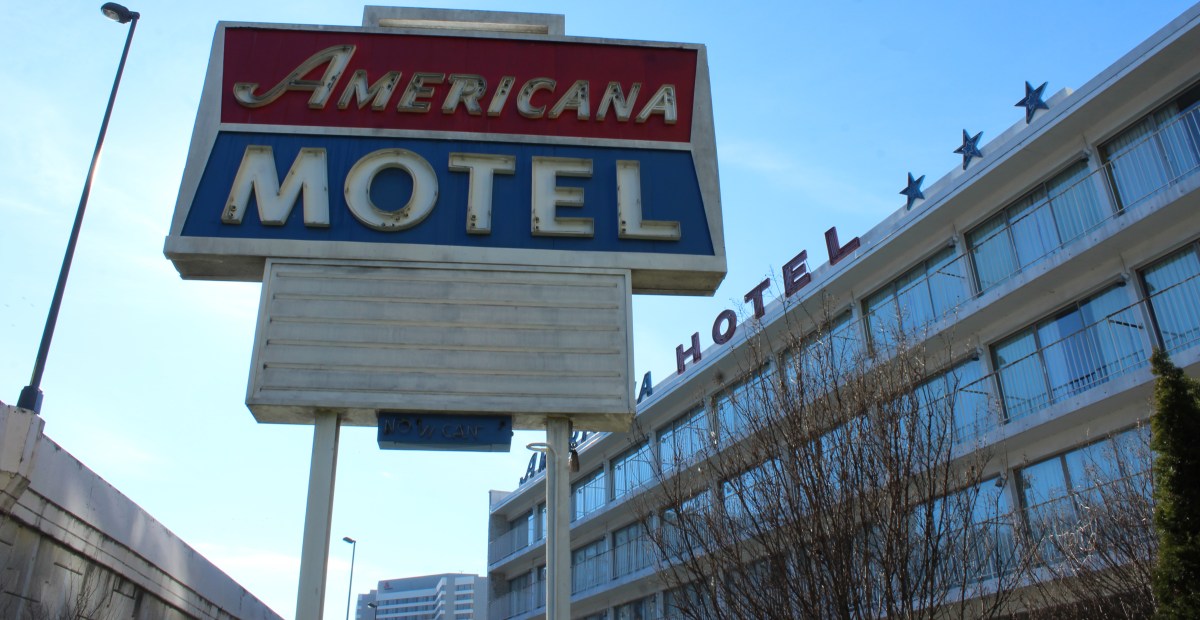
Americana Hotel, Arlington, VA. Photo by Matthew Eng/Offbeat NOVA.
By Angela H. Eng, Offbeat NOVA
I’ve always had an appreciation for all things retro and vintage, but as I grow older, the love deepens. To that end, I’ve always felt a stab of excitement any time I saw a vintage sign still standing. I love the sharp lines, the thoughtful color palettes, and the whimsy of a time gone by.
I knew there were several such signs still in Northern Virginia. One day, I decided to try and find as many as I could. My research yielded six signs. Matt and I took a driving tour one afternoon and photographed all of them, which are detailed below.
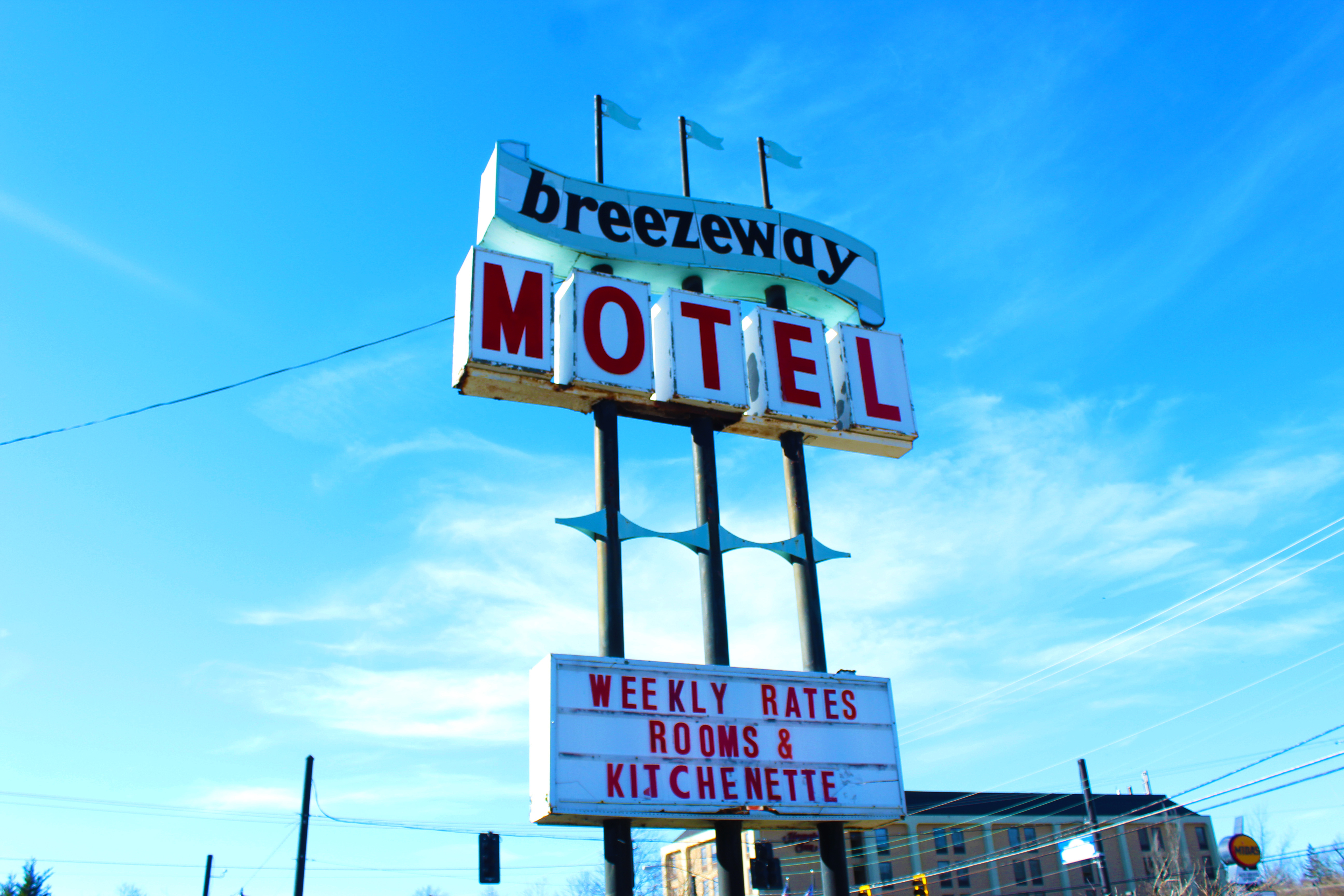
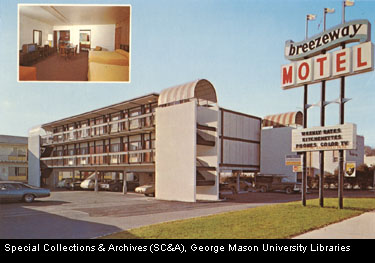
The Breezeway Motel | 10829 Fairfax Boulevard, Fairfax, VA The Breezeway Motel is a mid-century modern relic in Fairfax City. It was built in three separate phases between 1950 and 1960. It is still in operation as a budget motel, but the land it sits on is slated for redevelopment in the near future.
The Lee High Inn | 9864 Fairfax Boulevard, Fairfax, VA The Lee High Inn was formerly the Anchorage Motel, originally built in 1955. The motel’s nautical theme is still discernible in the motel’s sign and building structure. The Anchorage was sold sometime around 2015 and is still in operation as a budget motel.
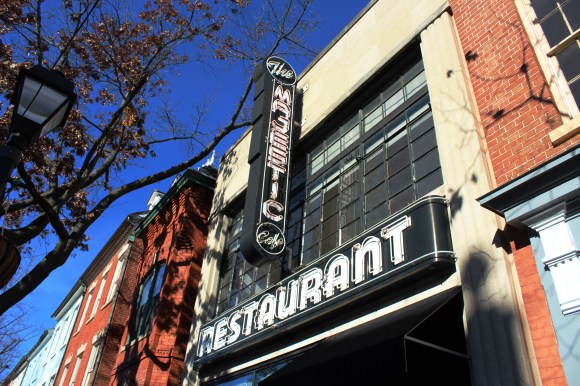
The Majestic, Alexandria, VA. Photo by Matthew Eng/Offbeat NOVA
The Majestic | 911 King Street, Alexandria, VA The Majestic first opened in 1932, at 622 King Street in Old Town Alexandria. It moved to the current location at 911 King Street in 1949. The restaurant operated until 1978 and remained closed until April 2001. Though it has changed hands since then, it remains open. The signs on the front of the building are reproductions, but the sign in the window is original.
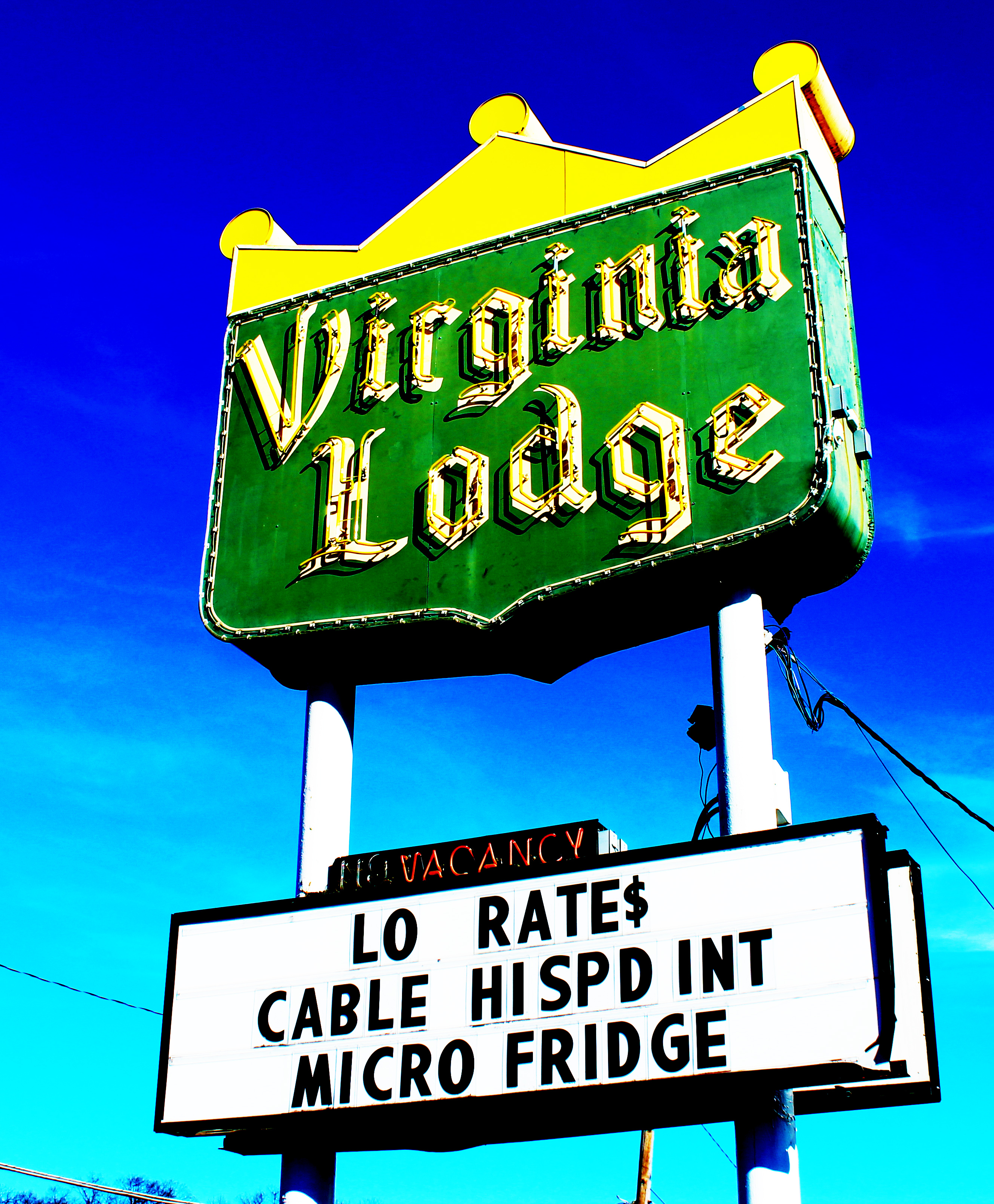
The Virginia Lodge Motel | 6027 Richmond Highway, Alexandria, VA The Virginia Lodge was built in 1952. It is a part of the Route 1 string of motels that had their heyday in the 1950s and 1960s and is one of the few that remain. It is currently still in operation as a budget motel.
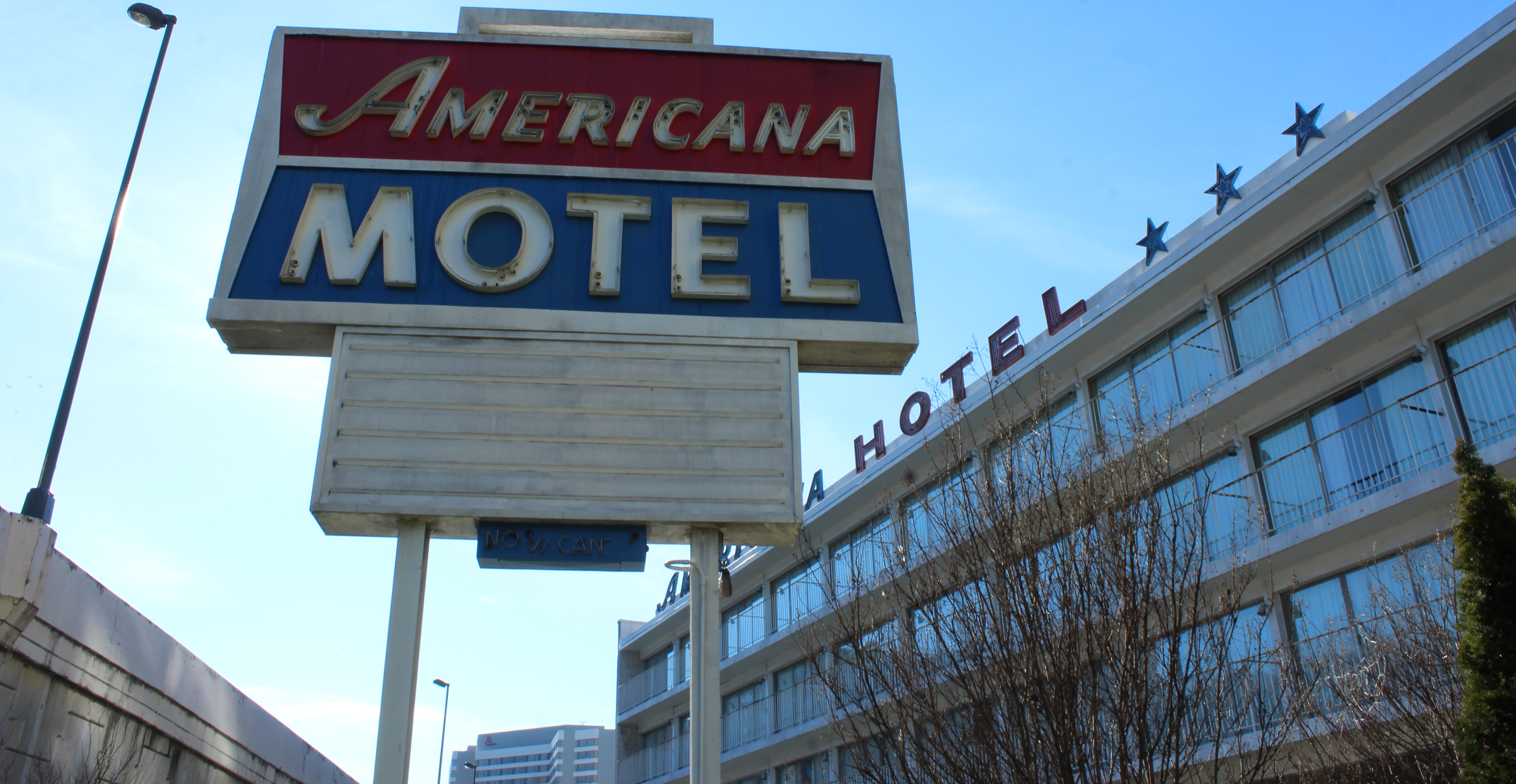
The Americana Hotel | 1400 Richmond Highway, Arlington, VA The Americana Hotel opened in 1963 and was one of the first hotels in Crystal City. It appeared in the 2009 political thriller State of Play. it closed in December 2020 and is in talks to be demolished for new apartments or condos.
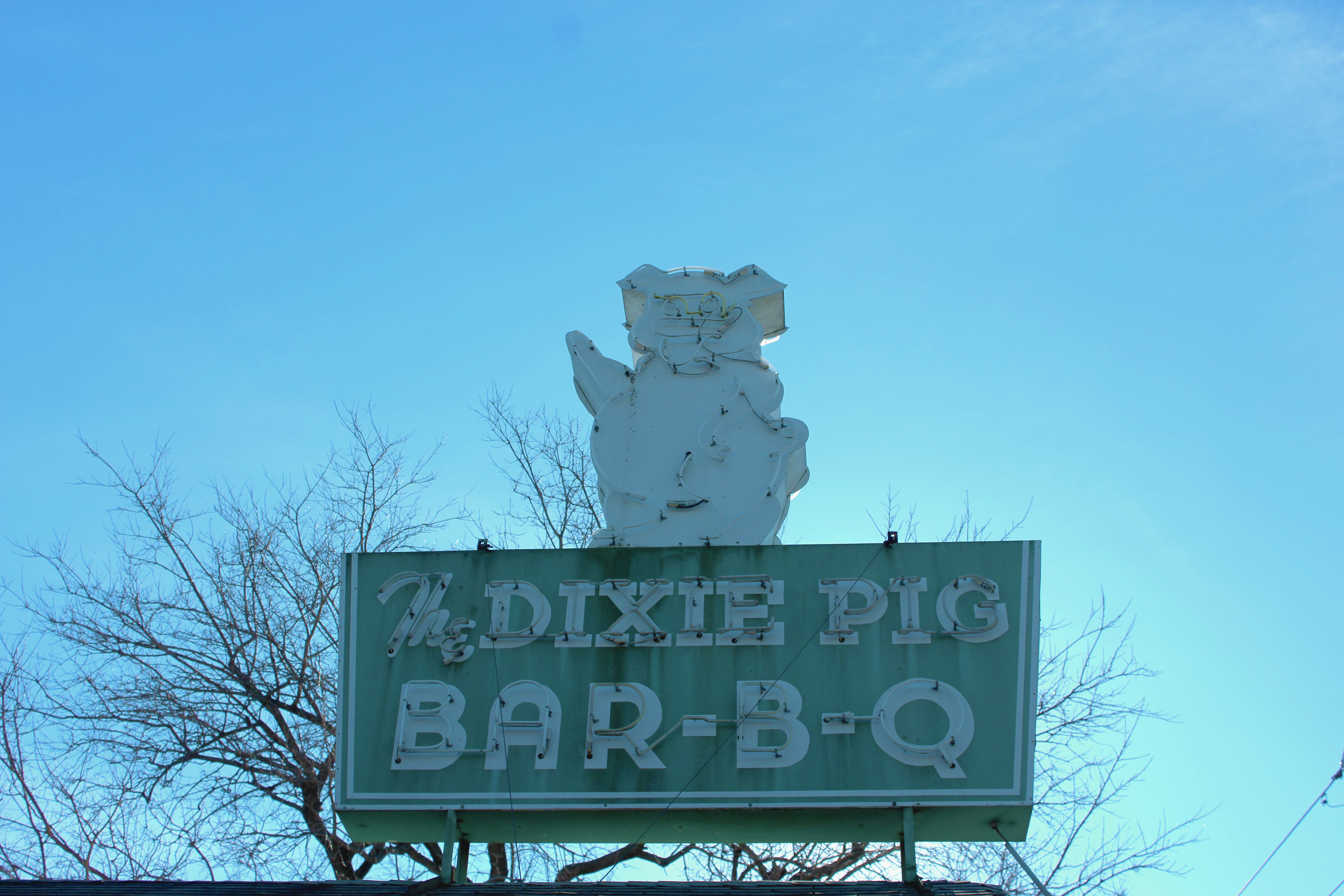
Dixie Pig BBQ | 1225 Powhatan Street, Alexandria, VA The original Dixie Pig BBQ opened in 1924 and was the first of several restaurants to open with that name. The restaurant with this sign opened at the intersection of Powhatan Street and Bashford Lane, Alexandria, in 1949. It was sold in 1984, but the sign remained. It is currently a Greek restaurant named Vaso’s Kitchen. The sign also appeared in the TV show The West Wing and the film Remember the Titans.
Did we miss any other vintage signs in Northern Virginia? Please let us know in the comments, and we will add them to this article!
I’ve never been a big fan of golf. I think it’s honestly how I feel about most sports. I understand the appeal, and I can certainly appreciate it at times. But that does not make exactly like them. That goes double for golf.
I’ve tried. I’ve honestly made several attempts to like golf, either to make conversation with people at work or to impress my father in law. But I can’t. The closest I ever got to appreciating “the gentlemen’s game” is Tiger Woods Golf on the Nintendo Wii or Happy Gilmore.
Mostly Happy Gilmore.
When I first heard about the Topgolf brand of hybrid driving range and entertainment complex, I gave it little attention. I couldn’t get into what amounts to a modern day batting cages for upper middle class suburban whites. One recently closed right down the street from where I live across the street from the busy Kingstowne shopping center. I chalked it up to the economy at first. As it turns out, that specific Topgolf has an interesting history to the company itself, and the reason behind its closing highlights a much deeper symptomatic problem of northern Virginia businesses.
Brothers Steve and Dave Joliffe began the Topgolf enterprise in 2000 after opening its first location in Watford, United Kingdom. The brothers were fed up with the inefficiencies of traditional driving range and felt that a new, larger design would attract large groups of people would be better. They installed microchips into the golf balls and guests would hit them into large targets on the driving range field. The idea was simple: build a large driving range and turn it into a video game. While you’re at it, have a giant entertainment complex complete with televisions, food, and booze. Bingo. It’s a similar concept to the Lucky Strike bowling alley franchise.
(Alexandria Living Magazine)
They would quickly go on to develop two other locations in the UK. As excited as the golf community was for the redesigned driving ranges, the PGA was not. Eventually, an American investor was brought in, the WestRiver Group, to create Topgolf locations overseas in the United States. In 2005, they selected the first location stateside in the Washington, D.C., suburb of Alexandria, Virginia.
The WestRiver Group chose Alexandria as its location due to its close proximity to Washington, D.C. and the myriad government officials who frequented golf courses.1 They were right. There is no shortage of golf courses in the D.C. metro region, especially in northern Virginia. They built out a a facility in an already established driving range in the Kingstowne neighborhood of Alexandria in Fairfax County. The facility featured 70 hitting bays an two adjacent 18-hole mini golf courses. The total cost of the build was reportedly $4.5 million. The official opening date was Friday, August 5, 2005. An article on the opening of Topgolf Alexandria in the Washington Post pontificated on the joys of competing with your friends in a golf game while gorging yourself on “chicken fingers and glasses of wine.”2 God bless America.
It quickly grew to become a popular weekend destination for amateur golfers looking to improve their game and friends and family members looking to have a little fun. The modest 17.4 acre location was the perfect place for a date night or casual outing. The location prospered through the early 2000s. Unlike newer locations, this specific location ran on how the UK locations were run, which charges individuals per game rather than per hour.
By 2015, there were 28 locations located around the United States. Only one had the title for the first, and that was in Alexandria. It was the only location in the area. That is, until it wasn’t.
In August of that year, Topgolf opened its second location in Virginia, and the 21st overall, in Ashburn. The new 65,000-square-foot facility in Loudon County had 102 climate-controlled hitting bays, a full-service restaurant, three bars, and 250 flat-screen TVs. The rooftop terrace even had a fire pit.3 In essence, Topgolf Alexandria was stylistically obsolete. The Washington Business Journal reported to no surprise in October of 2015 that the landowner of the establishment had decided to end their lease with Topgolf, leaving the future of the establishment in flux. Then-Fairfax County Supervisor Jeff McKay noted how many complaints he received about the location’s noise and parking issues. He noted how “Topgolf needs a bigger facility but cannot expand on the heavily constrained current site,” As the report noted in the end of its litany of issues, Topgolf “had simply outgrown its property.”4
Things slowly deteriorated from there. There were complaints.
You can track the slow decline of Topgolf Alexandria by looking at its business page on Yelp. One person online commented that they “never felt more like my business wasn’t wanted.” Most people online were perplexed at the old system compared to newer ones they had already visited around the country. Some apparently just felt they were straight up confused with what to do once they walked in.
Top Golf Alexandria Complaint (Yelp)
The eventual nail in the coffin for the location came with the announcement of a brand new Topgolf facility in nearby National Harbor, Maryland. The location opened in the summer of 2019. A few months later, in November, the Washington Business Journal reported its closure of the Alexandria location, which included laying off nearly two hundred employees.
Apparently, the owner of the land on South Van Dorn Street filed plans a year before with Fairfax County to replace the site with townhomes, multifamily units, and commerce space.
In an official statement, Topgolf said the following about the future of their first location:
“In January, Topgolf Entertainment Group will be consolidating operations of Topgolf Alexandria with our nearby, modernized venues at National Harbor and Loudoun, as well as at our soon-to-be-opened, technology-equipped venue in Germantown — all serving the Greater Washington D.C., Northern Virginia and Maryland-area communities.”5
Topgolf Corporate Announcement (2019)
If Topgolf ran a driving range like a video game, then Alexandria’s location had the two words nobody wants to hear flashing across its building: Game Over.
Land is a premium anywhere in northern Virginia, and the parcel on Van Dorn street next to a busy shopping center is prime real estate for another mixed use development. You can almost see real estate developers frothing at the mouth.
(Washington Business Journal)
The announcement came with the caveat of laying off 198 employees by January 2020 at the Alexandria location. Naturally, the work ethic at the location slackened. One Yelp commenter as late as December 28, 2019, left a long comment on her one-star rating of the location.
“our sever sniffed our pitchers– like she put her nose in our pitcher– to determine which was the miller lite and which was the cider. What a disaster. Go to Maryland.”6
The lot has sat abandoned since January of 2020. In the new era of COVID, driving by the location is especially ominous. The Ruby Tuesday, under separate ownership, closed its adjacent location. This was not due to Topgolf’s closing necessarily, as it was announced in July 2020 that the restaurant group that owns Ruby Tuesday had quietly closed 150 of its restaurants since the beginning of the year, including the Van Dorn Street location.7
I recently back to work for three days a week. On my way to my work destination, I happen to travel down Van Dorn Street to hook up with the 495/I-95 interchange to points south. Every time I drove past the empty lot, I noticed more and more of it going away. Signs disappeared. Grass grew in unwelcome places. I didn’t know how long I’d have before it was either gone to development or swallowed up by the poor decisions of reckless teenagers bored in quarantine.
Somebody in the NextDoor app posted images inside the abandoned TopGolf on the grounds and in the hitting bays. From the picture he posted, it looked like the wear and tear was beginning to manifest. Although I was not as adventurous as this individual, I decided to bite the bullet and drive into the abandoned establishment’s parking lot to see what I could find.
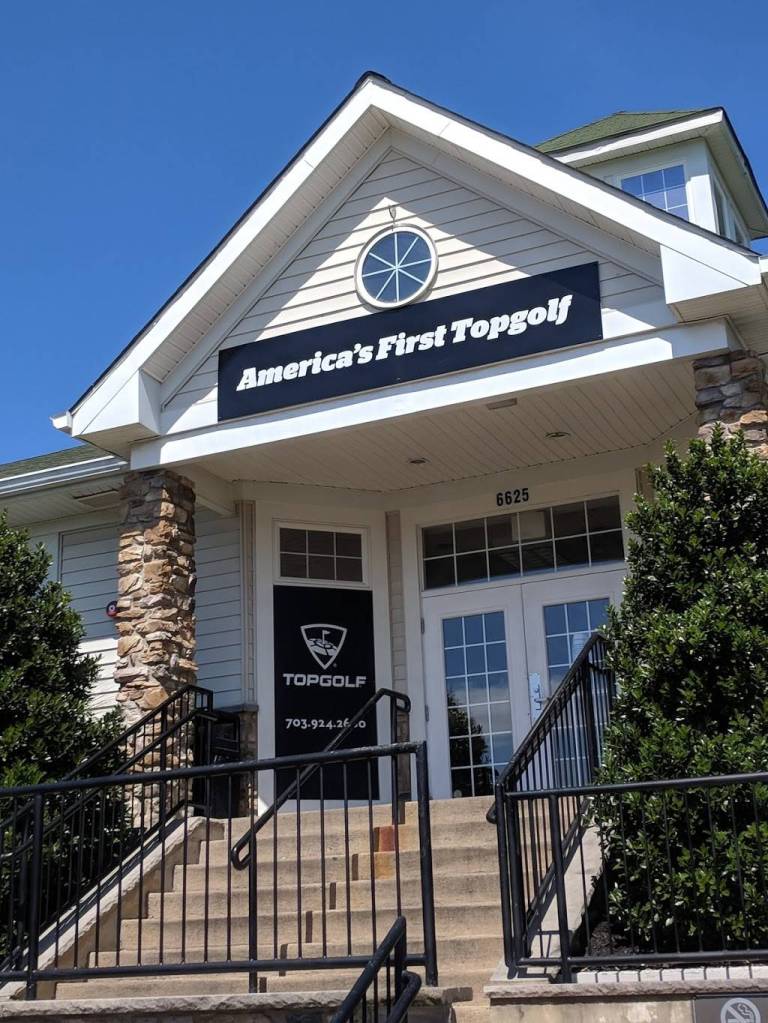
In the halcyon days of Topgolf Alexandria’s glory, the clubhouse proudly displayed a sign that said “America’s First Topgolf.” The sign no longer exists.
(Matthew Eng/Offbeat NOVA)
I noticed a lot of visible graffiti on the side walls of the establishment. Thankfully, most of the front looked relatively in tact, all save a few windows on the top floor of the driving range. The miniature golf course is completely overrun with weeds and debris. Some of the sculptures and course obstructions are beginning to rapidly decay from misuse.
The landscaping looked decent enough with the beginning signs of neglect. You could see the neglect more in the areas around the parking lots, which were completely derelict. Ironic, given the headache it was to park at this place on a Friday or Saturday night.
(Matthew Eng/Offbeat NOVA)
Even though the walkway leading up to the driving range level of Topgolf was completely open, I didn’t necessarily feel completely comfortable doing so. I knew I would be the one guy who would get caught, so I stayed within the confines of a casual visitor instead of somebody violating trespass.
The Ruby Tuesday nearby is also completely abandoned. Unlike Topgolf, the signs still exists. Looking into the building, you can still see the seats and a few menus scattered about. No word on what will happen to that building, as it is owned by a separate landowner than the former Topgolf.
(Matthew Eng/Offbeat NOVA)
There is a police cruiser or security vehicle holding court at the end of the parking lot nowadays. I’m glad I got some footage when I did. Honestly, I bet the only reason it hasn’t been completely demolished by now is the ongoing pandemic. For now, you can still drive by the first Topgolf in the United States and remember the good days when the chicken fingers were in abundance and servers didn’t smell your beer. Maybe she was right. Just go to Maryland.
If you have a personal experience from Topgolf Alexandria, let us know in the comment section. We’d love to keep it as a document to an interesting piece of northern Virginia business history.
Footnotes:
Jason Notte, “The Topgolf Founders Fought Through Countless Rejections — and Built America’s Favorite New Game,” Entrepreneur, September 19, 2018. Accessed January 4, 2021, LINK.
Ellen McCarthy, “In Alexandria, TopGolf Livens Up the Driving Range,” The Washington Post, August 4, 2005. Accessed December 30, 2020, LINK.
Topgolf, “Topgolf Opens Thursday Thursday Morning in Loudon County,” Topgolf, August 31, 2015. Accessed December 28, 2020, LINK.
Michael Neibauer, “More information on the likely future of Topgolf Alexandria,” Washington Business Journal, October 20, 2015. Accessed December 27, 2020, LINK.
Michael Neibauer, “Topgolf Alexandria to close, lay off nearly 200,” Washington Business Journal, November 30, 2019. Accessed December 27, 2020, LINK.
Irene Jiang, “Ruby Tuesday has quietly closed over 150 restaurants since later January. Here’s a list of closures.,” Business Insider, July 8, 2020. Accessed December 30, 2020, LINK.
Offbeat Postscripts is a series of short posts where we cover small topics of offbeat history in Northern Virginia.
By Matthew T. Eng, Offbeat NOVA
Hello again.
The absence of posts for Offbeat NOVA is 100% due to the purchase of a house and subsequent move during the month of November and the first half of December 2020. It’s been an exhausting month and a half, to say the least. Now that everything and everyone is settled in (for the most part), we can continue getting back creating. A Christmas miracle, indeed.
In the week since the hysteria reached a necessary plateau, we kicked around several ideas about a Christmas-themed posting. A cursory search on the Internet about Christmas in Northern Virginia yielded more dark and macabre results at first: Christmas morning murders in Falls Church from 2015, and a murder-suicide pacts in Stephens City. There was also quite a bit of information about the Mt. Vernon Antique Center fire from three years ago in Fairfax County. None of that really spoke to us on the timeliness of the holidays season. In a year where the shitter has been perpetually full, we decided to focus on something a bit happier: Christmas lights. In the age of COVID, Christmas lights are a refreshing way to find happiness and joy from a safe and secure distance.
An internet search on the craziest Christmas lights in the area brought me to one woman: Holly Zell. She is currently the web producer at the NASA Goddard Space Flight center in Greenbelt, Maryland. Her original website, “Historical Tacky Christmas Lights,” began in 2003 as a database for the best and tastefully tacky Christmas lights in Northern Virginia. The site includes a map and addresses of the best lights, as well as suggested driving routes. This woman has remained a dedicated and organized purveyor of all things dealing with exterior illumination for nearly twenty years. She know runs “Holly’s Tacky Christmas Lights” over at FairfaxChristmasLights.com. Her LinkedIn page noted that the current website was part of her grad project at Strayer University as a showcase for scripting languages like PhP and MySQL. Whether intentional or not, the current site looks remarkably similar to the simplistic-yet-effective tripod site from sixteen years ago.
We found ourselves going back to the original site. Would the same addresses still have lights up, nearly two decades later? We took a look at the original 2004-2006 list and found the houses closest to our current neighborhood on the Fairfax County side of Alexandria. We were not disappointed.
3912 Lincolnshire Street, Annandale, VA — LIGHTS
Of the four we checked, this one was by far the most extravagant. (Holly Zell/Offbeat NOVA Photo)
5811 Ash Drive, Springfield, VA — LIGHTS!
This one still has all of the “plastic fantastic” displays that we love. (Holly Zell/Offbeat NOVA Photo)
7704 Wilbur Court, Springfield, VA — LIGHTS!
This was the classiest of the four we checked. There are significantly LESS reindeer than from fifteen years ago. (Holly Zell/Offbeat NOVA Photo)
6283 Wills Street, Alexandria, VA — DARK
This was unfortunately dark this year. (Holly Zell/Offbeat NOVA Photo)
We didn’t make it to the Collingwood house in Alexandria to take a picture because it was getting late, but we already knew that a recent injury stopped the owner from putting on a display this year. If you want to see the famous Collingwood Lights in their majestic glory, Covering the Corridor (RIP) captured the magic from two years ago:
Know any other great places? Let us know in the comment section.
Check out the rest of the pictures/video on our Instagram page HERE.
Happy Holidays. More Offbeat NOVA coming — stay tuned.
Ah, yes. Thanksgiving. The unofficial start of the holiday season. For many of us in the United states, it is that time-honored day when friends and families come together to share stories and a wonderful meal. Political arguments are forcibly made. An invisible 38th Parallel of maturity is drawn once the kids table is set out downwind of the adults. Somebody’s uncle gets drunk. Everyone eats enough carbohydrates to easily pass out on the couch in the early evening while the opening credits to Willy Wonka & the Chocolate Factory comes on the television screen for the children who ate their body weight in sugar-soaked pies.
Magical.
Well, that was all before COVID. 2020 is a different year altogether, for a variety of reasons we don’t need to get into. With the pandemic reaching some of its highest numbers in Northern Virginia to date, hopefully most around the beltway will stay safe and hold their family meals in virtual form.
Even without COVID, there are some who do not have the option to head home to break bread with friends and family. For members of the United States military, having a meal at home is a luxury reserved for few individuals. The United States Marine Corps, an organization headquartered in Washington, D.C., but regionally centered thirty miles down I-95 in Quantico, have historically eaten their Thanksgiving dinners in locations all around the world in conditions we can only dream of. Whether it be on the tropical island of Guadalcanal in the Solomons in 1942, the frozen mountain landscapes of Chosin Reservoir in 1950, or the deserts of the Middle East, Marines have always made the best of whatever situation they encounter, especially during the holidays. They are the embodiment of their unofficial slogan,“Semper Gumby,” or “always flexible.”
But what do Marines eat stateside in Quantico? This year, the Clubs at Quantico and Crossroads Events Center is holding a special Thanksgiving brunch for families on base that want to have their meal taken care of. The menu includes all the trimmings, plus champagne for adults and even omelette station for those who shy away from the usual fare. Thinking about the hardships endured by Marines eating their special meal on the front lines, I find it hard to believe that there would be an omelette station back then.
Luckily, vintage copies of Thanksgiving menus exist thanks to the diligent work of historians and archivists. There is a menu from a Thanksgiving dinner held by the First Signal Company in Quantico on Thanksgiving 1937 that speaks to what Marines ate long ago.
Thanksgiving in Quantico, 1937 (USMC Archives/Flickr)
Looking through the menu, there are several items that stick out as either unusual or a remixed version of what is classically placed on tables today. The first (and most obvious) is the roast young turkey, a smaller version to the much larger male version (roast tom turkey). Oyster dressing has an interesting connection to military history, specifically with the Navy and Marine Corps. Oyster dressing was a common menu item on U.S. Navy menus throughout the 1920s-1940s. It’s origins in America dates back to the 18th century when oysters were the most commonly eaten shellfish in America. Oysters were stuffed inside turkeys as an inexpensive source of protein. Other dressing options for similar menus during the time period included caper dressing or giblet gravy. Snowflaked potatoes were a special form of mashed potatoes made with sour cream and cream cheese. According to the New York Public Library website “What’s on the Menu,” snowflake potatoes were included in restaurant menus between 1928 and 1954. The mince pie, a British-inspired sweet fruit pie, were traditionally served to service members throughout the 1930s and 1940s at the start of the holiday season. The “hot rolls” were most likely a mimic of the famous parker house rolls, a staple across all military branches since the early twentieth century.
There is one item missing from this 1937 menu that was often included during that time period: cigarettes or cigars served during the dessert course.
The following year, Quantico served similar fare, but switched up the young turkey for the “roast Maryland turkey” with oyster dressing. From what I have gathered, a “Maryland turkey” is cooked and served with roasting vegetables. Some other menus found on the NYPL website have the turkey served among the cold dishes. The mince pie was swapped for the marble cake, a far better choice.
If you are interested in tracing the culinary history of Marines and Thanksgiving, the USMC Archives Flickr page is an excellent resource. I also did something similar in a different life for U.S. Navy menus (of course, not specific to Northern Virginia) back in 2014 for the Naval Historical Foundation.
Happy Thanksgiving from Offbeat NOVA. Wear a mask.
Offbeat Postscripts is a series of short posts where we cover small topics of offbeat history in Northern Virginia.
Confederate monument removal in Alexandria, now completely gone (Offbeat NOVA Photo)
By Matthew T. Eng, Offbeat NOVA
There was another march/protest yesterday.
For the DMV region, that’s nothing new. There is always somebody protesting something, especially in Washington, D.C. The 1963 Million Man March during the Civil Rights era, however, made making your voice heard and proving a point en masse a popular concept with national media attention. Much like the women’s suffrage movement growing from Seneca Falls to the steps of the White House decades earlier, the noise and activism started by a few noteworthy individuals grew to a collective effort of a large segment of the population.
Most recently, there have been a wave of protests, marches, and demonstrations in response to the Donald J. Trump presidency. In a grand wave of irony, they are marching for the same exact things they did previously: women’s rights, racial equality, and the unnecessary violence that stems from poor policy making.
And then there was the march yesterday: The Million MAGA March. In completely unoriginal fashion, the organizers literally took one of the most important names in Civil Rights history, the Million Man March, and added “MAGA” to it. Over a week after the 2020 election was called in favor of Joe Biden, Trump supporters flocked to the aptly named Freedom Plaza near the White House to protest the election results in support of the ideologue watching from his television. It’s like they are still yelling at people for sitting at a lunch counter. The lunch counter is just a lot longer with more seats.
Are you sitting or standing?
Despite the misgivings of Trump supporters, change has happened. Joe Biden will be the 46th president. After January 20, 2021, the government can officially begin to undo all of the harm the previous administration has done to large segments of the population in the United States. That being said, the activism of many have already made changes, especially with regards to the removal of the racist effigies of the Confederacy that feature so prominently in the state of Virginia.
Changing the Lee High School in Springfield to John Lewis (Offbeat NOVA Photo)
Monuments are coming down all around in Northern Virginia. Fairfax County. Loudon County. Alexandria. Symbols of hate are being removed. The Robert E. Lee High School in Springfield turned into John R. Lewis High School this summer. JEB Stuart Park is now called Justice Park. The Washington-Lee High School is now called the Washington-Liberty High School. The Fairfax High School mascot is a lion, not a rebel. It’s not removing history. It’s correcting a mistake. As a student of history by trade and profession, you can’t kid a kidder.
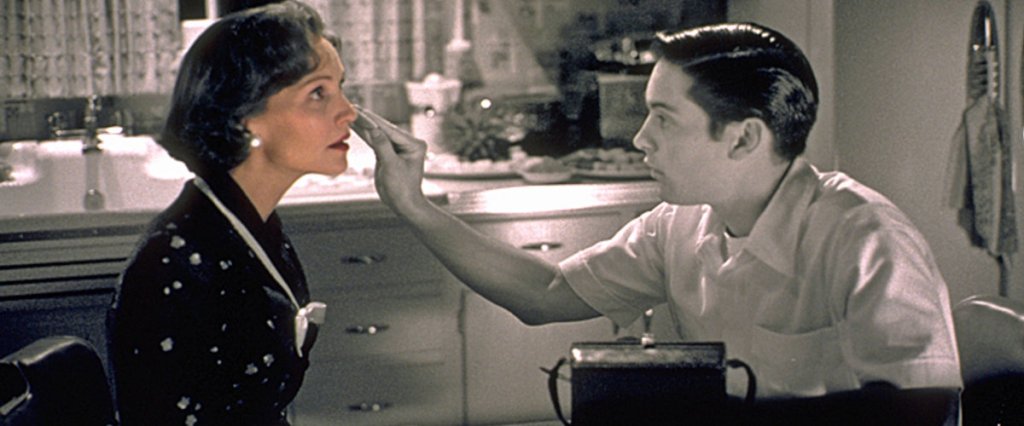
Thinking about everything that is going on, one of the things that pops in my head regularly is the film Pleasantville. In the film, the two protagonists are transported to a seemingly idyllic small midwest town set within a tv show, only to realize that their lives in black and what are anything but perfect.
(Pleasantville/New Line Cinema)
Slowly, citizens in the town slowly gain “color” as they come to dramatic realizations and new emotions and world views. Naturally, the townspeople react by rioting by destroying property, burning books, and harassing the “colored” people in the streets. They were angry, violent, and self-centered. Yet despite that emotion, there is no realization; no change in perception. They remain in black and white.
It’s been less than one hundred years since the Klu Klux Klan marched in a parade on the same streets where MAGA hopefuls did yesterday. Let that sink in. The irony would be dripping if it wasn’t so sad and terrifying. So where can we improve?
Many places in Northern Virginia. In case you were wondering where, I’ve come up with a list for you. If we just focus on removing the racist remains of the Confederacy, here is a list to start with:
GENERAL
Jefferson Davis Highway (various)
Lee Highway in Fairfax and Arlington
Lee Jackson Memorial Highway, Chantilly
PLACES
Alexandria:
Lee District Rec Center
Matthew Maury Elementary School
Manassass:
Stonewall Jackson Volunteer Fire and Rescue Dept.
Fairfax:
Lanier Middle School
Lees Corner Elementary
Mosby Woods Elementary School
Springfield:
Sangster Elementary
ROADS
Alexandria:
Beauregard Street
Bragg Street
Braxton Place
Breckinridge Place
Chambliss Street
Dearing Street
Donelson Street
Early Street
Floyd Street
French Street
Frost Street
Gordon Street
Hardee Place
Hume Avenue
Imboden Street
Iverson Street
Jackson Place
Janney’s Lane
Jordan Street
Jubal Avenue
Lee Street
Longstreet Lane
Maury Lane
Pegram Street
Quantrell Avenue
Reynolds Street
Rosser Street
Van Dorn Street
Wheeler Avenue
Annandale:
John Marr Drive
Lanier Street
Rebel Drive
Centreville:
Confederate Ridge Lane
General Lee Drive
Chantilly:
Mosby Highway
Old Lee Road
Fairfax:
Confederate Lane
Mosby Woods Drive
Old Lee Highway
Pickett Road
Rebel Run
Manassas:
Beauregard Avenue
Lee Avenue
We’re in the middle of a historical moment, and one day the existence of these roads and monuments will be an offbeat coda to a long-standing fight to eradicate symbols of hate and racism. Like the MAGA march, they will exist as a footnote to an embarrassing moment in our history.
One day soon. Here’s my favorite quote from Pleasantville:
“There are some places that the road doesn’t go in a circle. There are some places where the road keeps going.”
Offbeat Postcripts is a series of short posts where we cover small topics of offbeat history in Northern Virginia.
By Matthew T. Eng, Offbeat NOVA
We were going to wait until January 20, 2021, to write this short piece on Richard Spencer and his short stay in Old Town Alexandria. After recent events, however, it just felt like the right time.
On February 5, 2017, the Eng clan got into the family truckster and headed into Old Town Alexandria for a relaxing morning of shopping. It was cold that day, with the temperature hanging somewhere in the forties. Our daughter, Zelda, was just a few days shy of her first birthday. With two teeth poking out of the bottom of her mouth, she was very much the vision of a fussy 1-year-old. Admittedly, Angela and I were also a little fussy too. That morning was less than two weeks after the inauguration of President Donald Trump. As proud as I was for Angela and her friends to take part in the Women’s March the day after Trump took office, we still had to settle into the grim reality of a Trump presidency. We both thought the fresh air would do all of us some good.
You can basically separate Old Town Alexandria in a two sections, split between the north and south of King Street cut off along its Washington Street intersection. Everything across Washington Street towards the Potomac is the heavy-traffic area of Old Town where most of the restaurants and tourist traps are. Do you want to go to the Old Town Alexandria ghost tours or eat at a restaurant with overpriced appetizers? Head to the water. The other side towards the King Street Metro is much quieter with less foot traffic. There’s still a lot of cool shops and restaurants, just not in the same frequency.
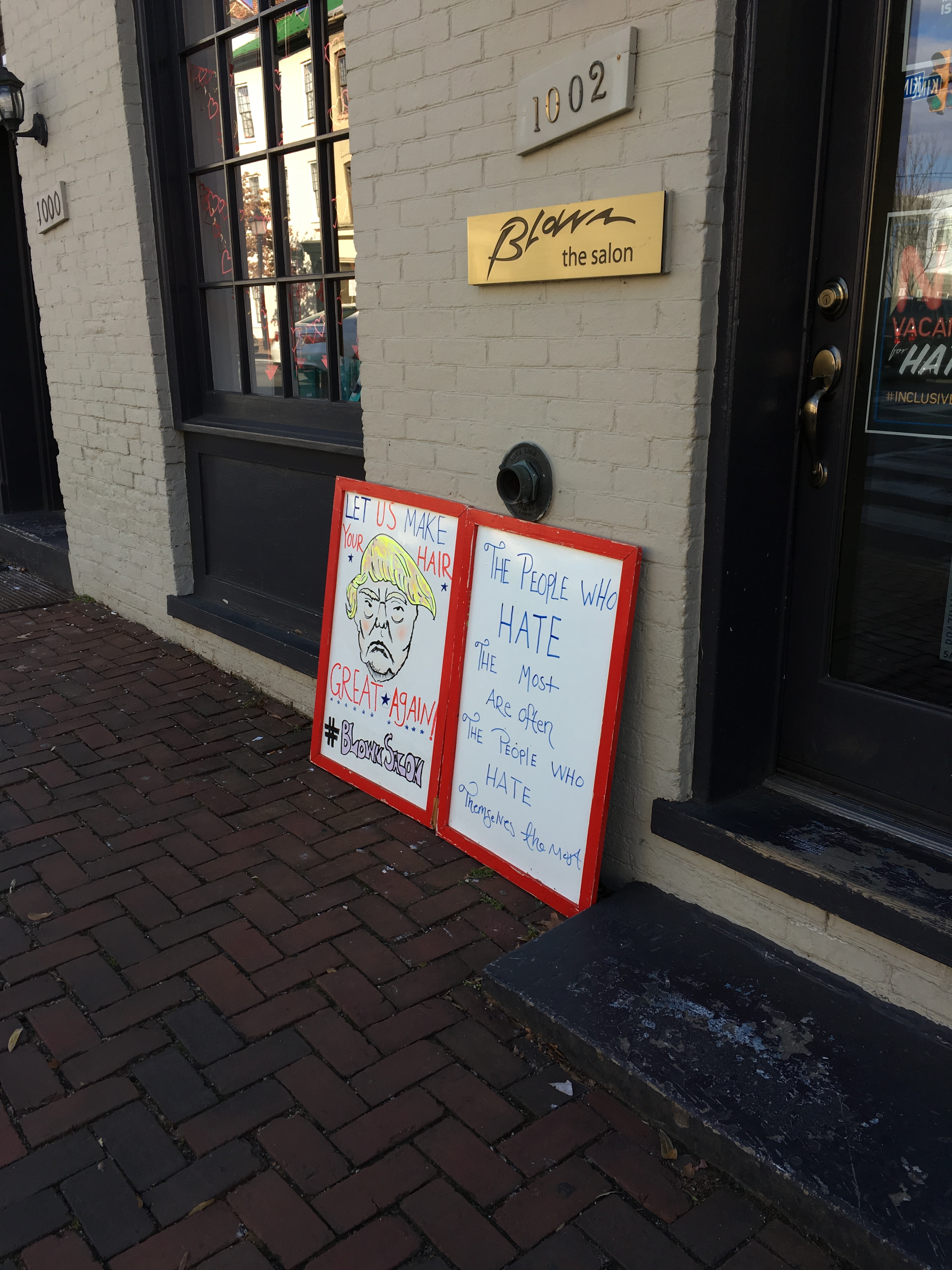
Sign in front of BLOW Salon (Matthew Eng Photo/Offbeat NOVA)
That morning, I parked on a side street off the main road. Our first stop was the former location of Fibre Space, an excellent place for all your yarn needs if you are thinking about getting into knitting or crocheting. I waited patiently with Zelda as Angela shopped for supplies she needed for an upcoming project. After finishing up there, we decided to stroll up King Street to Misha’s Coffee on the corner of King Street and South Patrick St. Walking on the right side of the road on King, we kept noticing “No Vacancy for Hate” and “Everyone is Welcome” signs in the windows and doorways of shops and businesses. Almost every shop had at least one of these signs. A large dry-erase board in front of a salon called BLOW finally tipped us off to what was going on:
“The people who HATE the most are often the people who hate themselves the most.”
The sign included a tongue-in-cheek “Let Us Make Your Hair Great Again” slogan complete with a Trump caricature. It was then that it finally clicked why all the signs were up. It wasn’t just because of the recent tenant in the White House. Old Town Alexandria also had a new member to its population: notorious white nationalist Richard Spencer.
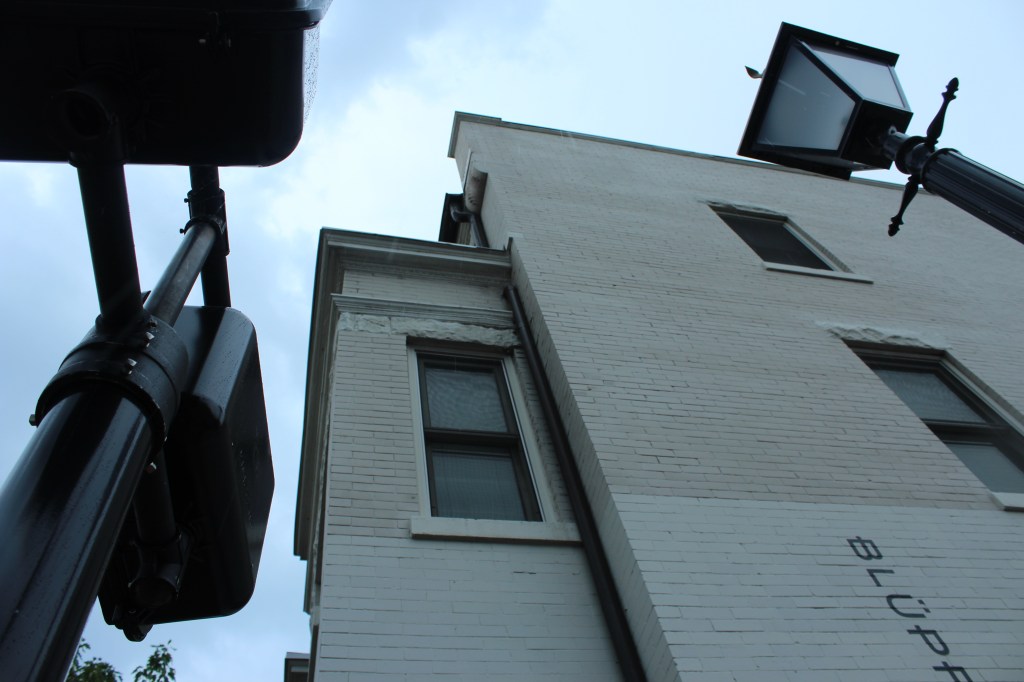
Richard Spencer rented the top two floors of a large white building at 1003 King Street, on the corner of N. Patrick Street, in early 2017. The bottom floor tenant at the time, Blüprint Chocolatiers, had no say in her landlord renting Spencer the space. According to a Washington Post article, however, the owners quickly made it known to residents and visitors that she had nothing to do with their upstairs neighbor. She adorned the front of their shop with red and white ribbons and a sign that read “Everyone is Welcome Here,” which many others in the surrounding area had also done. This, along with the newest addition to Alexandria, was likely in direct response to the then-recent Executive Order banning foreign nationals from seven predominantly Muslim country from visiting the country for ninety days, and suspending entry of all Syrian refugees into the country indefinitely.1
Of course, we all remember what happened to Spencer on Inauguration Day:
Previously, Spencer and the National Policy Institute, his white nationalist think tank, were headquartered in neighboring Arlington, Virginia. Perhaps Trump taking the Presidency gave him the idea to seek classier accommodations on the busy Alexandria intersection.
Throughout his time there, Spencer had to endure a stable group of protestors and demonstrators below his apartment. He had plenty of time to nurse his wounded face and pride as he watched the throng of protestors through closed blinds and darkened rooms from above like a pathetic “man in the high tower.” According to WTOP, they would congregate to protest twice a month. The protests were organized by Grassroots Alexandria, a citizen-led group advocating for the safety and security of fellow Alexandrians.
So why did he move there? The Washingtonian said it best:
Why would Spencer, when he relocated from Montana, choose to pitch his tent in a deep-blue city whose diverse population is 51 percent minority? The answer is quite basic, actually. “It’s just a nice place,” he says. Spencer thinks Old Town is beautiful. He likes the restaurants. He likes “how it feels—the whole look.”2
The Washingtonian (August 1, 2017)
Spencer only stayed in Old Town for a year and a half. Throughout the course of his time there, we never saw much movement in the upstairs rooms of the white building any time we walked by or drove through the area. Hopefully he got the hint that he wasn’t welcome. There must have been a strong indication in May of 2017 when Spencer had his membership at the Old Town Sport & Health club revoked after the owner made a “business decision” to pull it. Spencer protested the decision, telling Buzzfeed that he was a “model gymgoer” who didn’t bother anyone. When the general manager, a professor at Georgetown’s School of Foreign Service, asked Spencer if he was in fact the same person, he denied it. She published photos of the confrontation in a blog post, adding, “not only are you a Nazi, you’re a cowardly Nazi.” Protests only increased in the wake of the Charlottesville “Unite the Right Rally,” which Spencer attended.3
Today, the shop beneath the apartment is a sock shop called the Old Town Sock Co. Blüprint Chocolatiers closed their doors on Easter Sunday 2020 after five-years. As of November 5, 2020, the floors above the sock sheet remain without a tenant.
Jonathan Krall of Grassroots Alexandria had no sympathy after Spencer’s exit from his prime real estate in Alexandria on King Street. In fact, he felt he played a part in him leaving. “Oh, I think we had an effect,” he said in the closing words of a 2018 interview with the Alexandria Gazette Packet. “We did our best.”4
Donald Trump has been voted out of office. People like Spencer no longer has a platform almost anywhere. His National Policy Institute was banned by YouTube in June of this year for not following the platform’s policies against hate speech. Free speech still (rightfully) exists, but thankfully fewer people are listening to his ilk.5
For others before him, like George Lincoln Rockwell, their presence was not welcome in this area. Northern Virginia can be many things. A cesspool of traffic. A white liberal cross-section of society filled with unaffordable houses. The bedroom community of government workers. The ends of the yellow, blue, orange, and silver Metro lines. And, most importantly, a suitable substitute for “D.C.” when you tell people you don’t know ask where you’re from because it’s easier geographically.
It is not, however, a place for fascists, bigots, and small minds. That goes double for the big white house just up the road from Old Town.
But it’s not over. For now, we can be happy and breathe for the first time in four years. Tomorrow, let’s put our masks on and get back to work.
Donald Trump: You’re Fired (Angela H. Eng Photo/Offbeat NOVA)
Footnotes:
Patricia Sullivan, “The chocolatiers and the white nationalist, coexisting in Old Town Alexandria, The Washington Post, February 17, 2017. Accessed November 5, 2020, LINK.
Kim Olsen, “This Virginia Town Can’t Get Rid of Richard Spencer, and It’s Driving Locals Crazy,” The Washingtonian, August 1, 2017. Accessed November 5, 2020, LINK.
NBC4 Washington, “‘Alt-right’ Leader Loses Gym Membership After Confrontation,” NBC4 Washington, May 22, 2017. Accessed November 5, 2020, LINK.
James Cullum, “A Vigil to Bid Farewell in Alexandria,” Alexandria Gazette Packet, August 20, 2018. Accessed November 5, 2020, LINK.
Kaya Yurieff, “YouTube removes Richar Spencer and David Duke a year after saying it would ban supremacists,” CNN (online), June 20, 2020. Accessed November 5, 2020, LINK.
It’s hard to think of Arlington, Virginia, as a hotbed for hate. Living near it has a remarkably price tag. According to one website, Arlington ranks as the eighth-most expensive city in the United States, with the 2020 cost of living sitting at 53% above the national average.1 As you drive through its premiere neighborhoods like Bluemont, Clarendon, and Ballston, you realize why it’s one of the most desirable locations to live in not only Northern Virginia, but the entire country. It is only a stone’s throw from DC, the houses are beautiful, and the landscaping is perfect. Where there are no houses, there are meticulously built high-rises and lush public spaces. As they say, location is everything.
But Arlington has not always been beautiful and perfect. It was know for darker things . . . other things that lived quietly inside its utopian ecosystem like a virus entering a new host.
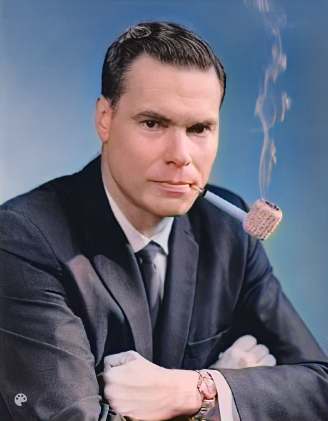
George Lincoln Rockwell (Wikimedia Commons)
Arlington was the former epicenter of the Neo-Nazi/white power movement in the United States for over two decades beginning in the early 1960s. Less than two decades after the end of the Second World War, Washington’s premiere suburb became an enclave for a reincarnation of Nazi Germany’s beliefs when George Lincoln Rockwell came into town. For seven years, Rockwell ran the American Nazi Party from his headquarters on 928 N. Randolph Street in the busy Ballston neighborhood of Arlington. He also ran a barracks for his “storm troopers” at the top of the hill in a mansion farm house called “Hatemonger Hill” by local residents.
It was from there that he drove the short distance to the Dominion Hills Shopping Center to visit the EconoWash laundromat on August 25, 1967. As Rockwell sat in his car, a disgruntled former party member fatally shot him from the roof of the building. Rockwell’s death marked a critical halt in his march towards white racialism at a time when the Civil Rights movement had reached its strongest point. It also stands as a bleak reminder of the resurgence of hatred into modern life today.2
George Lincoln Rockwell was born in Bloomington, Illinois, in 1918. He lived a privileged childhood, and was talented in many subjects. While studying philosophy at Brown University, Rockwell dropped out of school to accept a commission as an officer in the United States Navy in 1938, just three years removed from the United States’ entry into the conflict. He served as a naval aviator during the Second World War, operating in both the Atlantic and Pacific Theaters. As a lieutenant commander living in San Diego with his family during the Korean War, he became acquainted with Adolf Hitler and Nazism. He also applauded American figures like anti-Communist stalwart Senator Joseph McCarthy and General Douglas MacArthur. It was from the latter that he adopted his signature corncob pipe, an accessory he held onto until the day he died.
Later, he divorced his wife and married another woman with similar interests and sympathies of his own. By 1955, he was back stateside in Washington, D.C., publishing a periodical called U.S. Lady, a magazine made for U.S. service member’s wives that doubled as his mouthpiece for his racist ideologies. His racist attitudes and words grew more vocal and more popular in the latter half of the decade, gaining a following in and around his new home in Arlington County, Virginia. He gathered his thoughts for a new vision of racial purity. He called it the American Nazi Party. By the end of the decade, he had his first headquarters in Arlington inside a brick rambler at 6512 Williamsburg Boulevard. As author Charles S. Clark noted in his exposé on Rockwell, “through the window, neighbors could see his lit-up swastika on a red flag.” The home is now a private residence estimated in value at $758,000.3
ANP Headquarters on 928 N. Randolph Street, now high-rise luxury apartments (lindseybestebreurtje/Google Street View)
In 1960, Rockwell’s American Nazi Party moved to a new location at 928 N. Randolph Street, today the site of high-rise apartments. In front of the near-derelict building was a large sign that everyone could read from the road: “White Man…Fight! Smash the Black Revolution Now.” His numbers of followers continued to grow into the early 1960s. He eventually set-up a “stormtrooper barracks” inside a large hilltop farmhouse two miles away from his headquarters at 6150 Wilson Boulevard. Local residents came to call the location “Hatemonger Hill.”4
The American Nazi Party (ANP) spewed their racist vitriol inside the beltway and beyond. Rockwell used the party as a platform for advocating deporting Black Americans back to Africa, sterilizing Jews, and executing race traitors like President Eisenhower and Chief Justice Earl Warren. Famously, Rockwell and several of his followers drove a swastika-clad Volkswagen van from Arlington to New Orleans to protest the “Freedom Rides” like some low-rent, racist pilgrimage to Bonnaroo.5
Despite their media attention, the ANP was small. One estimate had them numbering only thirty “hardcore followers” and just over three hundred total during the Rockwell era. One of those followers was John Patler, a former United States Marine who was honorably discharged after being arrested at an ANP rally. Born John C. Patsalos, he changed his last name to Patler to sound phonetically like “Hitler.” He joined the party officially in 1960 and served as the editor and cartoonist for the organization’s magazine, Stormtrooper. He was expelled from the group in 1967 for harboring “Bolshevik leanings” after a disagreement with Rockwell over policy. Although Patler claimed he loved Rockwell “like a father,” and he to him “like a son,” Patler grew unwilling to see a world where the two were separated. Rockwell sullied on, spending most of his time atop Hatemonger Hill. Patler festered until the anger, frustration, and disappointment reached a boiling point in the summer of 1967.6
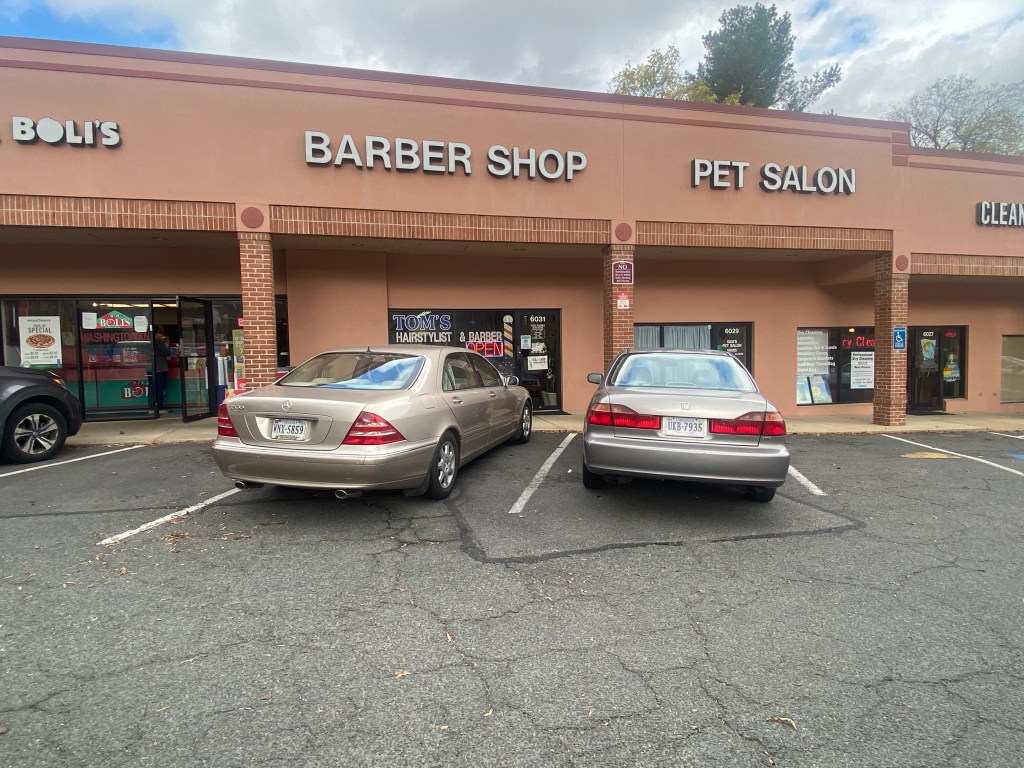
Dominion Hills Shopping Center Today. The silver sedan in the distance is where Rockwell was killed. (Matthew Eng Photo)
Around noon on Friday, August 25, 1967, Rockwell went down the hill with his laundry to visit the EconoWash, one of the many establishments in a small strip mall called the Dominion Hills Shopping Center. He was dressed in a white shirt and dark slacks. Parking his 1958 Chevrolet in front of a barber shop owned by Tom Blakeney, the two waved at one another before Rockwell exited his car and entered the laundromat. He appeared moments later, having forgotten his bleach. As he returned to his car, as Tom Blakeney remembers, he heard two shots ring out. “I thought a car had backfired,” he said. He continued:
“I saw Rockwell kind of jumping around in the front seat, and I thought he was having a seizure. I saw him point at the roof and then slump over the steering wheel.”7
Tom Blakeny, Tom’s Barber Shop Owner
Two shots traveled through the windshield. One landed into Rockwell’s heart and the other ricocheted off the seat and into the roof of the vehicle. His car knocked into another nearby vehicle. According to Charles S. Clark, Rockwell “fell and landed face-up in the parking lot, splayed beside his box of Ivory Snow and a copy of the New York Daily News.” The leader of the ANP was gone. A coroner later pronounced him dead at the scene.8
Where Rockwell died (Matthew Eng Photo/Offbeat NOVA)
Rockwell’s final gesture was for a very good reason. He was pointing at his killer, John Patler. Patler had used the vantage point from the top of the roof of the Dominion Hills Shopping Center to aim down and shoot Rockwell. Patler was a former Marine, who are as a rule expert in their marksmanship. Arlington police arrested the 29-year-old half an hour later on Washington Boulevard. A discarded raincoat and cap believed to be Patler’s was found in a nearby yard, and a German Mauser Semiautomatic pistol was recovered in the water along nearby Four Mile Run below a footbridge. He was convicted of first-degree murder in December 1967, and sentenced to twenty years in prison. He was later paroled in 1975, serving less than half of his original sentence. As for Rockwell, he was given a military burial at Culpepper National Cemetery. Although the agreement for his military burial stipulated that there be no Nazi insignias to be displayed during his burial, his followers violated these conditions. He was secretly cremated the next day.9
Today, very little evidence of the assassination exists. There are no historical markings, only businesses that have come and gone since 1967. The facade of the entire complex has changed. The one business that still exists is the barber shop, now called Tom’s Hairstylist & Barber. As of 2010, Tom Blakeney, the original owner, was still alive, retired and living in Fredericksburg, Virginia. Looking through several pictures for references, we were able to pinpoint the exact spot that Rockwell died in August 1967. Neo-Nazi sympathizers have come to the strip mall’s parking lot for years to pay homage to Rockwell.
Hatemonger Hill is now a picnic area in Upton Hill Regional Park (Renegade Tribune/Parks Rx)
Hatemonger Hill, less than a mile away, is now a picnic pavilion where families eat in between trips to the batting cages, mini-golf courses, and swimming pool. The land was demolished and annexed to Upton Hill Regional Park in 1973, as the party members soon lost their lease after Rockwell’s death.10
Unfortunately, Rockwell’s death would not the end of the city’s relationship with hate and division.
As recently as 2016, Arlington resurfaced again as a nucleus for hate when WTOP reported that alt-right talking head/inauguration punching bag Richard Spencer and the National Policy Institute, a white supremacist think tank, was based in town before moving to neighboring Old Town Alexandria a few years later.11 Charlottesville may be a few hours’ drive from Arlington, but I do not believe what transpired there was lost on residents who lived through the tumultuous years of the ANP in their city.
On August 25, 2017, a small group of Nazis showed up to the very spot where Rockwell was killed. Dressed in white shirts, black slacks, and black ties, they paid their respects to the former American Nazi Party leader. A guest at the nearby barber shop took a photo of the six individuals giving the requisite “sieg heil” salute, with one holding a large Nazi flag in the middle. The bottom of the flag touches the asphalt and the darkened motor oil stains left there over the years…well maintained machines slowly oozing out their excess and leaving an indelible mark for future generations. I can think of no better metaphor for the arrogance of the individuals in the photograph. As one Twitter user responded to the photograph with, “I count 6 losers & a flag.”
Six losers and a flag (NBC4/Aki Peritz Twitter)
I understand that journalistic integrity is built on a foundation of objectivity. That is clearly out of the window for this article. It was painful enough to expose the old wounds of such a great city once again, so close to a time when we are all near-broken and politically fragile. So if you are upset with the bias in this article because Offbeat NOVA is taking a political stance against the creeping Kudzu of fascism in the United States, we only have a few words to say. Like Rockwell, there will come a time when the hate will end, either by their own hand or the genuine good of others.
Today is election day, when the very soul of the nation is at stake. Whether you like it or not, this year is a mirror to Charlottesville in 2017. Arlington in the 1960s. Nuremberg in 1938. But like those other events, those involved will fail. Why? Because in the good words of Woody Guthrie, all you fascists are bound to lose.
Footnotes:
Kat Tretina, “10 Most Expensive Cities to Live in for 2020,” Education Loan Finance. Accessed November 1, 2020, LINK.
United Press International (UPI), “Rockwell, U.S. Nazi party leader, slain,” United Press International, August 25, 1967. Accessed November 2, 2020, LINK.
Charles S. Clark,”Close-Up Of An American Nazi,” Northern Virginia Magazine, November 28, 2010. Accessed November 2, 2020, LINK.
Clark, “Close-Up;” Mark Jones, “Nazis in Arlington: George Rockwell and the ANP,” WETA Boundary Stones, January 2, 2013. Accessed November 2, 2020, LINK.
Jones, “Nazis in Arlington.”
Frederick James Simonelli. American Fuehrer: George Lincoln Rockwell and the American Nazi Party. Champagne: University of Illinois Press, 1999.
Charles S. Clark, “Death of an Arlington Nazi,” Northern Virginia Magazine, December 30, 2010. Accessed November 2, 2020, LINK.
Clark, “Death of An Arlington Nazi;” UPI, “Slain.”
Michel E. Miller, “The shadow of assassinated American Nazi commander hangs over Charlottesville,” The Washington Post, August 21, 2017. Accessed November 2, 2020, LINK.
Mark Jones, Nazis in Arlington.”
Dick Uliano, “White nationalist, alt-right group calls Arlington home,” WTOP News, November 22, 2016. Accessed November 1, 2020, LINK.



























 Offbeat NOVA