Categories
Civil War spottsylvania county

Offbeat Postscripts: The Minister of Pestilence

Offbeat Postcripts is a series of short posts where we cover small topics of offbeat history in Northern Virginia. 
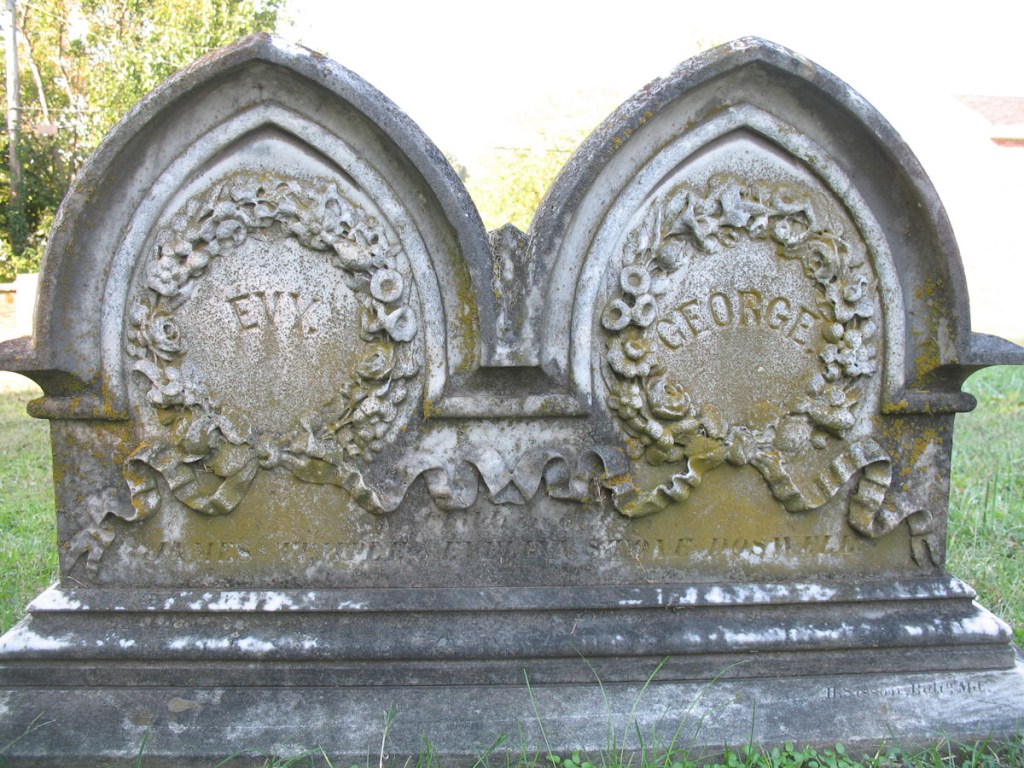
George and Evy Doswell, Fredericksburg City Cemetery (John Hennessy/FredericksburgHistory)

By Matthew T. Eng, Offbeat NOVA

In a year that seems like twenty, I catch myself thinking about what life was like before Coronavirus. At the beginning of March, I can faintly remember hearing about the first reported case of Coronavirus in Virginia from a Marine in Quantico. That particular individual was of course not “Patient Zero,” but the first of many that tested positive for the deadly virus in the months since.

I remember talking to others at work in January and February about how the virus had isolated itself in the Pacific Rim, and it would never make its way over here. Boy, was I wrong. I’m sure nervous Americans felt the same thing about the A/H1N1 “Spanish Flu” happening overseas in 1918, even if the first cases were likely in the United States. Well, no one ever said Americans were ever right, or could believe their own naivety. 

But what do you do when it’s inescapable? Movies featuring deadly worldwide viruses treat it like some invisible monster wreaking havoc over populations, leaving death and destruction in its wake. It’s the Motaba virus in Outbreak. Captain Trips in The Stand. The T-Virus in Resident Evil. And now we have Coronavirus. But it’s not Hollywood. It’s actually happening, and the reality is far different and more terrifying. 

I began to think about other epidemics in American history and their connections to Northern Virginia. Talking about the “Spanish Flu,” while tragic, is not necessarily offbeat. 

Then I found a story first written about by John Hennessy, Chief Historian of the Fredericksburg and Spotsylvania National Military Park. 

The story involves a short outbreak in Civil War-era Fredericksburg of scarlet fever, a disease that acts much like Coronavirus, and the man who performed a large number of burials for the unfortunate children who fell victim to it between 1861 and 1862. 

The worldwide pandemic of scarlet fever was among many of the deadly epidemics that occurred in Europe and North America in the early to late 19th century (one report approximates the years between 1820 and 1880). Symptoms of the streptococci bacteria in a human body include a sore threat, fever, inflammation of the lymph nodes, and, in some cases, abscesses of the throat and tonsils. Unfortunately, the majority of those who developed the sickness were young children, who would often succumb to the virus within two days of the onset of symptoms.2 

Scarlet fever came to Fredericksburg beginning in September 1861. According to Hennessy, the first known death was Wilmer Hudson, an eight-year-old son of John and Pamela Hudson. The deaths continued to increase into the winter of 1861. Countless parents had to watch their children die in large numbers. The only respite for their anguish was the ferocity of the virus, taking those affected quickly. In all, there were forty-one known victims of scarlet fever from September 1861 to February 1862. The devastation of it was so bad that NPS historian John Hennessy said it might have been “the greatest human disaster to ever befall the residents of Fredericksburg.” That was, of course, until December of 1862.3

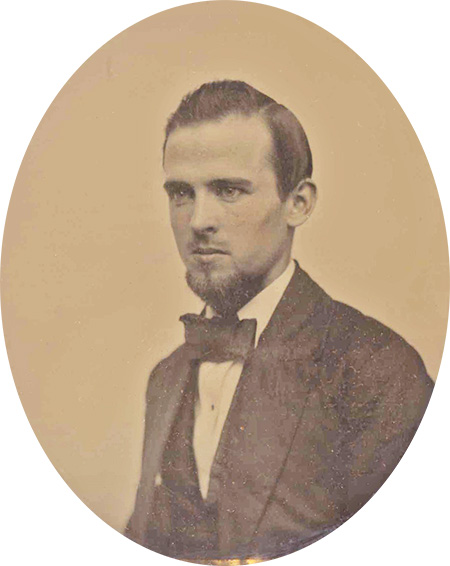
Alfred M. Randolph (Wikimedia Commons)

Either out of grief or worry of spreading disease, the majority of children were buried the following day in cemeteries around Fredericksburg. One of the most popular spots was the Fredericksburg City Cemetery, a small plot of land on the corner of Washington Street and Amelia Street in the heart of downtown Fredericksburg. Most people know the area next to it simply as the “Confederate Cemetery,” an equal parcel of land separated by an invisible dividing line that that splits the area. At least seven of the children who died of scarlet fever were buried there. These burials were performed by one man, a young minister named Alfred Magill Randolph of St. George’s Episcopal Church, less than a half mile away from the burial site. His position at St. George’s was his first after graduating from the Virginia Theological Seminary. He quickly climbed the ladder at St. George’s, becoming a rector after he was officially ordained at the age of twenty-two in 1860.4   

When the war began in April 1861, the burials he presided over took a different tone. Sporadic fighting was occurred near Fredericksburg in Spotsylvania County, so the likelihood for Randolph to bury soldiers became a reality in the fall of 1861. The first soldier he administered a burial for was Francis Lewis of Company G., 1st North Carolina Infantry Regiment, on October 12, 1861. By the end of the month, Randolph also began burying children from the scarlet fever epidemic. 

The rector’s first burial was Sidney Cavell, a two-year old child of Charles Cavell and Emma Huckey, who died on October 27th and was buried the following day. His next two burials were by far the most heartbreaking. Two prominent figures of the Fredericksburg community, J. Temple and Evelina Doswell, lost two of their children within nine days of each other. Randolph presided over the burial of five-year-old George Doswell on November 11, 1861. He did the same for his sister, two-year-old Evy Doswell, nine days later on November 20th. The Doswells were not the only family to lose more than one child, but Rector Randolph presided over the pair.

In all, Alfred Randolph performed burial rites for seven children between October 1861 and February 1862. The last was two-year-old John Edward Haydon.5 

  • Sidney Cavell (2 years) – Buried October 28, 1861 (Death 27 October)
  • George Doswell (5 years) – Buried Nov. 11, 1861 (Death Nov 10, 1861)
  • Evy Doswell (2 Years) – Buried Nov. 20, 1861 (Death 19 November 1861)
  • Malvina Meade Hart (5 years, 7 mos.) – Buried December 7, 1861 (Death Dec 6, 1861)
  • Susan Gill Mander (2 years, 6 mos.) – Buried Dec. 11, 1861 (Death Dec. 9, 1861)
  • Anne B.H. Scott (10 years, 9 mos.) – Buried Jan 5, 1862 (Death Jan 3, 1862)
  • Thomas Wolfe (6 years) – Buried February 7, 1862 (Death Feb 5, 1862)
  • John Edward Haydon (2 Years, 2 Mos.) – Buried February 24, 1862 (Death Feb 1862)

By February, scarlet fever had dissipated in Fredericksburg and Virginia in other hotspots like the Confederate Capital in Richmond. Today, you can see many of the gravestones and pay your respects to these children in the Fredericksburg City Cemetery. 
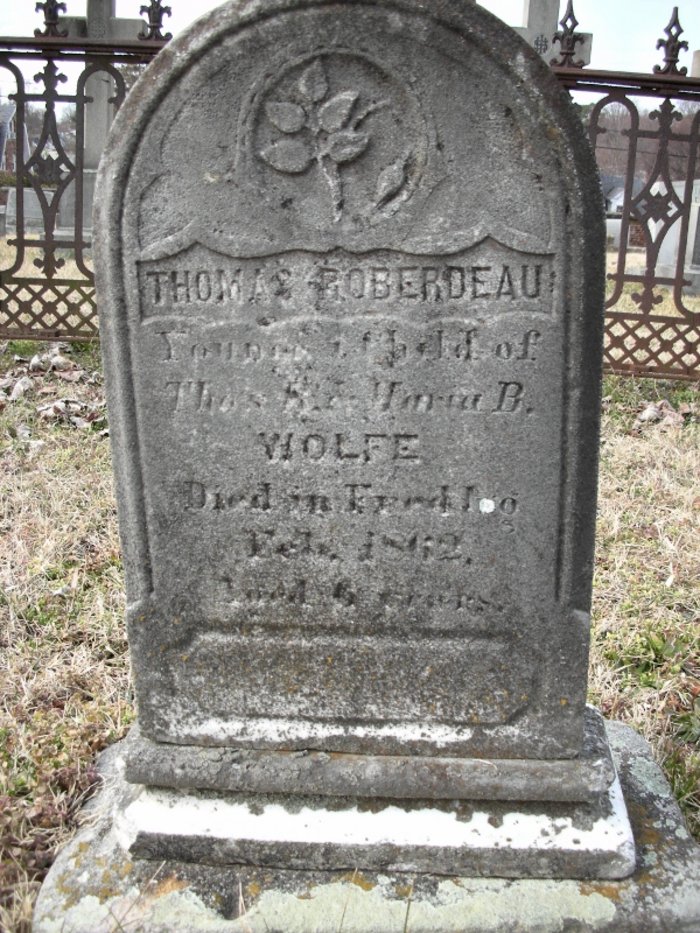
Six-Year-Old Thomas Wolfe (FindaGrave)

The woes for Fredericksburg only had a brief respite once cases and deaths began to dissipate after Alfred Randolph presided over the burial of John Edward Haydon in February 1862. By autumn of that year, Federal forces were beginning to descend in and around Fredericksburg. A major battle seemed imminent in November. With forces at their doorstep, residents were given the order to evacuate on November 21, 1862. Randolph and his young family departed his wife and day-old son for Danville, where he became a Post Chaplain for the Confederacy until the remainder of the war. He held a number of positions in Alexandria, Baltimore, and Norfolk before passing away after a long career of service to God (and unfortunately the Confederacy) in 1918. He is buried at Hollywood Cemetery in Richmond. No doubt he kept his thoughts on the turbulent winter of 1861-1862 in the back of his mind for the rest of his life, and the many poor children he buried as a result of an unforgiving disease. 

Reading about this tiny event puts our current troubles into perspective. We cannot justify any death, but the loss of those younger than us are the hardest to bear. 

Stay healthy and wear a mask. 

Footnotes:

  1. NBC Washington Staff, “US Marine in Virginia Tested Positive for Coronavirus, in State’s First Case,” March 8, 2020. Accessed October 2, 2020, LINK.
  2. Alan C. Swedlund and Ann Herring, Scarlet Fever Epidemics of the Nineteenth Century: A Case of Evolved Pathogenic Virulence. New York: Cambridge University Press, 2009), 159-177.
  3. John Hennessy, “The 1861 Scarlet Fever Epidemic,” Remembering, October 15, 2010. Accessed October 2, 2020, LINK.
  4. St. George’s Episcopal, “Alfred M. Randolph.” Accessed October 2, 2020, LINK.
  5. St. George’s Episcopal, “St. George’s Burials, 1859-1913.” Accessed October 2, 2020, LINK.
Categories
Angela H. Eng blog Civil War

A Holy Dispute: The Alexandria Gazette Burning of 1862

Angela H. Eng, Offbeat NOVA

It’s not hard to grab a newspaper in the Old Town section of Alexandria, Virginia. Stroll down King Street and you’ll see a number of newspaper and circular boxes: pamphlets for things to do and see in Old Town, ads for ghost tours, copies of the Alexandria Times and the Zebra. However, at the intersection of King and Union Street is a lone newspaper box for the Alexandria Gazette Packet.  The Gazette is an unassuming, small paper that averages about 15 pages per issue and costs a quarter. It also has the distinction of being one of, if not the, longest-running newspaper in the United States. 

Alexandria Gazette Newspaper Box on Union Street, Alexandria. The box sites nearby the location of its post-fire offices. (Eng Photo)

Alexandria’s history of printing dates to 1784. The city’s first printing plant belonged to George Richards and Company, and it stood at the intersection of Princess and Fairfax Street.1  This plant produced Northern Virginia’s first paper, titled The Virginia Journal and Alexandria Observer.2 The present-day Alexandria Gazette can trace its origins to this first paper. 

The year 1800 marked the arrival of Samuel Snowden to Alexandria. Snowden, a New Jersey native, began a paper that same year with another collaborator and called it the Alexandria Adviser. However, Snowden soon bought the Columbian Mirror and Alexandria Gazette,from William Fowler in December of 1800.3 Snowden initially called this combined paper The Alexandria Advertiser and Commercial Intelligencer, he changed the name multiple times before settling on the Alexandria Gazette sometime between 1826 and 1828.4 Snowden continued to run the Gazette until his death in 1831; Snowden’s 21 year- old son, Edgar Snowden, resumed  ownership of the paper. 

In 1860, the United States was on the brink of war. Lincoln was elected President in November. Not long after his inauguration in March 1861, the Civil War began with the firing on Fort Sumter on April 12. A little over a month later, on May 23,Virginia seceded from the Union. On the morning of May 24, Union soldiers marched to Alexandria from Washington, D.C. and occupied the city. At the time, Snowden and his son, Edgar Snowden Jr., were running the Gazette. There was one rival newspaper, The Virginia Sentinel, which had begun the previous year.5 It is unclear whether the editors of the Sentinel disbanded or fled, but when the Union occupation began, the Gazette was the only remaining paper in Alexandria.6 

Edgar Snowden, Jr. (sparedshared3)

Under Union occupation, the Gazette did not thrive. Snowden and Edgar Jr. continued to print the paper, but “telegraph communications were denied the publishers and Alexandria had become stagnated economically.”7 By the summer of 1861, the paper had disappeared. However, that fall, Edgar Jr. began a small paper called The Local News. It was a “small non-committal sheet with almost no editorials.”8 Overall, it had varied content: news stories, advertising, current events—it could even report on the crimes of Union soldiers, such as fights and break-ins.9

The Local News ran smoothly and without incident until February 1862. Then, on Sunday, February 9, an event occurred that caused Snowden to publish—what was for the time—an inflammatory editorial. 

“ARREST OF A MINISTER WHILE AT PRAYER IN A CHURCH—GREAT EXCITEMENT”

The headline of the first column in the February 10 edition of the Gazette hints at a wild story to follow. However, the story is recounted in an objective, straightforward manner. St. Paul’s Episcopal Church, founded in 1808 and currently at 228 South Pitt Street, was the site of a disturbance between Union soldiers and Alexandrians. The Reverend K.J. Stewart conducted Sunday services at the church, and at the services on February 9, he began to read the litany. However, several Union soldiers in the congregation, including Captain Elon Farnsworth, noticed that the Reverend did not recite the prayer for the President of the United States. The soldiers demanded he read the prayer, but he ignored them. Farnsworth then decided to arrest the Reverend, so “the prayer book was taken from Mr. Stewart’s hand, he was seized and conducted out of the church, followed by bis little daughter who clung to her father, and was held by one of the soldiers.”10 Michael Lee Pope’s account of the event adds a bit of flair: when soldiers removed the Reverend’s prayer book, he continued to recite the litany from memory. Also, as the Reverend was dragged out the church door, a lady in the choir gallery threw a book at a Union soldier.11 A history of the church on the St. Paul’s website also acknowledges, “ a warning was issued to ‘females and others,’ threatening arrest for offensive remarks and demonstrations prompted, no doubt, by the actions of several St. Paul’s ladies, including one who is said to have dropped her prayer book from the gallery onto the head of an offending officer.”12

The Local News (February 10, 1862)

The Reverend was taken through the streets of Alexandria, in his clerical robes, to Farnsworth’s quarters. The General Montgomery was summoned from the services he was attending at the nearby Christ Church to deal with the situation. He later released Reverend Stewart at the direction of government in Washington, D.C. 

However, the column on the far right of that paper’s edition tells the same story—with less objective details. The editorial describes the event as never having “a parallel among civilized nations, certainly not in the history of this country.”13 The story continues, “an interruption occurred of the character which the law designates as ” brawling”—that is, the intervention of noise and tumult by certain persons, who had come to the church with the intention of interrupting the service should it not proceed according to their wishes.” When the Reverend refused to read the prayer for the President, Farnsworth “undertook to officiate in prayer (if prayer it can be called) by reading the prayer for the President of the United States.” Then he demanded the arrest of the Reverend and called him “a rebel and a traitor.”14 The column continues to deplore the actions of the Union soldiers and declares, at the end, “It will, however, be well to state that Mr. Stewart only insists upon the right of all ambassadors to communicate with their King, untrammeled by civil or military interference.” 

So incensed from the event was Snowden, that he ends the column with a listing of prominent men present in the church and states that they will “testify to the facts as above stated.” He then ends the column with a statement that copies of the paper have been sent to the President and George McClellan, the Commanding General of the Union forces. 

Though the event ended peacefully, the Union unrest was far from over. 

Gazette House Burning Detail, 310 Prince Street, Alexandria, VA (Eng Photo)

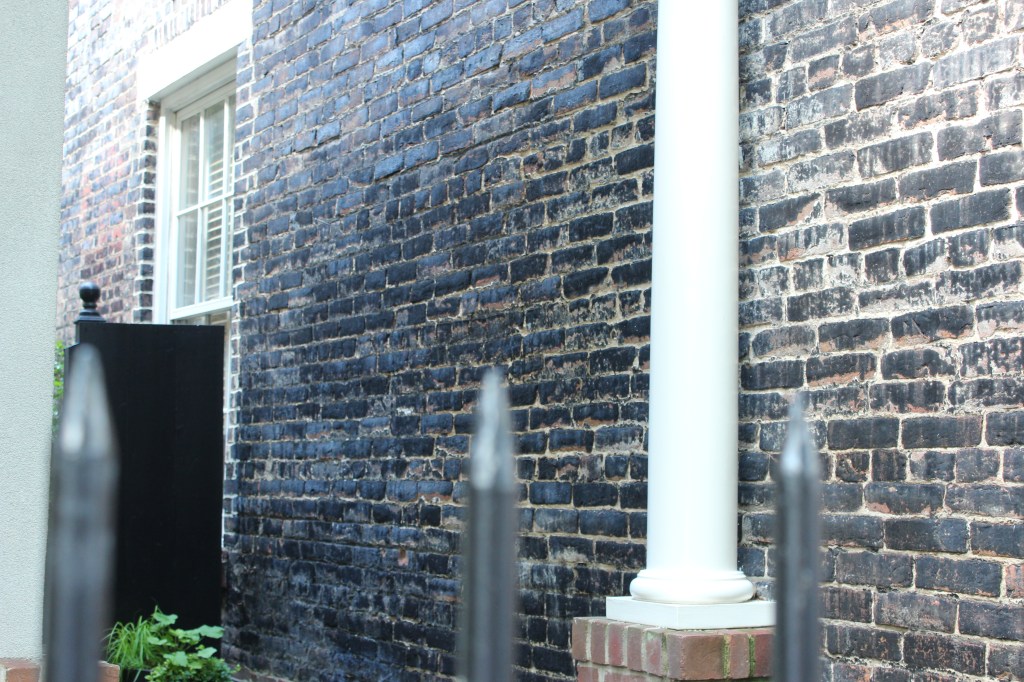
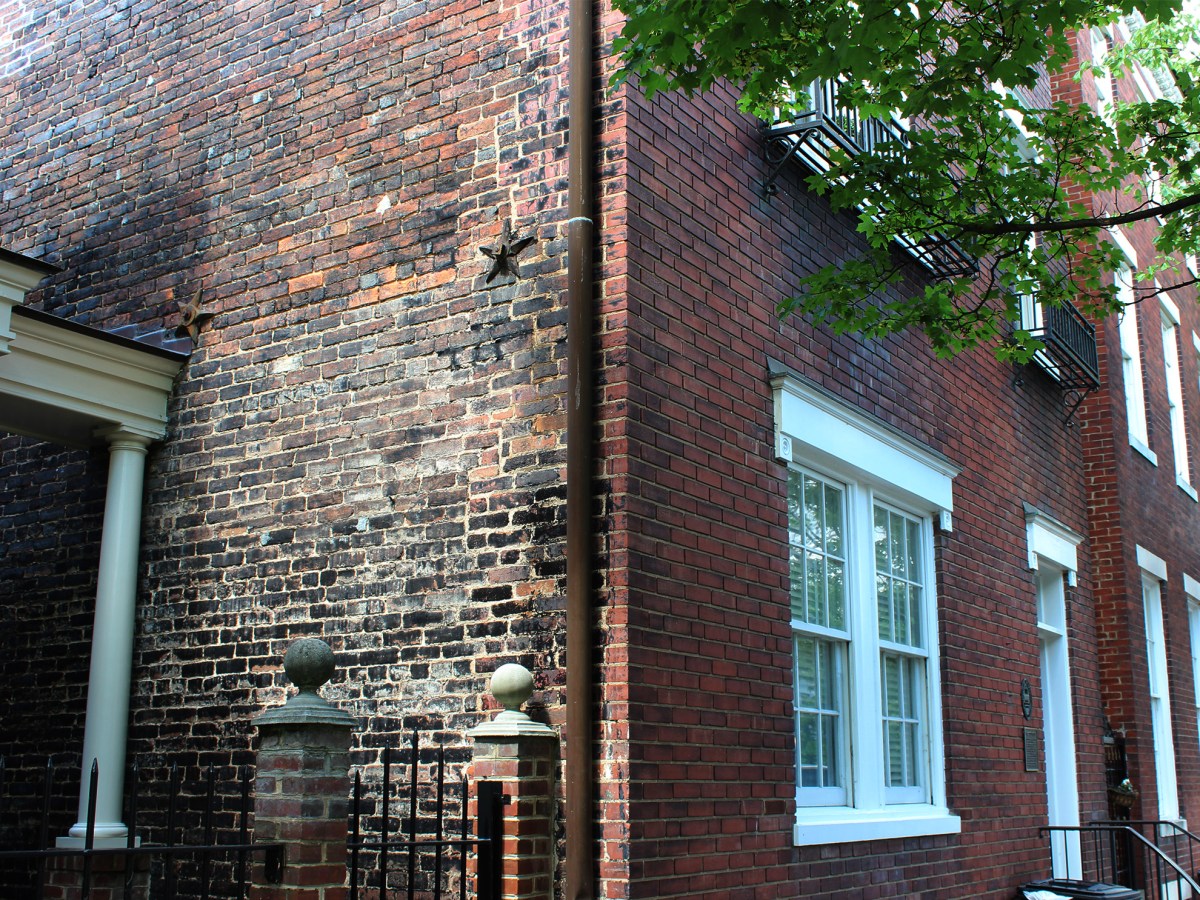
That evening, the offices of the Alexandria Gazette at 310 Prince Street caught fire and burned. How the fire began remains unknown. Several sources call the fire “mysterious,” but other sources claim that the fire was started by Union soldiers as retaliation for the editorial.15 Regardless of origin, the scars from the fire remain on the side of the building to this day, a testament to the historical event that occurred on this spot. 

On May 13, 1862, Edgar Snowden Jr. revived the Gazette from the ashes. The paper’s offices were moved to 104 King Street, over a local bookstore. The May 13th edition of the paper states it as “a continuation of domestic annals commenced by the Alexandria Gazette in 1799, and, together with the sheets of ‘The Local News,’ completes the connection between the sixty-second and sixty-third volumes of the Gazette.” The text describes the summaries as  “necessarily brief” and “without details.” The first item listed is the fire on February 10: “The Alexandria Gazette office burned, and further issue of “The Local News” suspended.” In the opposite column, in a brief yet somehow triumphant fashion, the last item reads: “May 13.—Alexandria Gazette resumed.”

And resume it did. The Alexandria Gazette runs to this day. While hunting for the location of 104 King Street, I spied the old, battered newspaper box in front of Mia’s Italian Restaurant with a plain sticker plastered on the side: Alexandria Gazette Packet.18 I jumped out of the car and ran to see if there were any old copies inside. Lo and behold, I pulled out a July 16, 2020 edition of the Gazette. While we were never able to pinpoint exactly where 104 King Street sat, it crossed our minds that the newspaper box sits the closest it can to the original office. 

At the top of the paper, in small letters, is a brief and powerful tagline: “Serving Alexandria for over 200 years.”

Footnotes

  1. Anderson, Robert Nelson. “A History of Printing in Arlington (Alexandria) County.”  Arlington Historical Magazine Vol. 1 Issue 3 (1959): p. 11, http://arlingtonhistoricalsociety.org/wp-content/uploads/2016/02/1959_2Printing.pdf 
  2.  Anderson, “Printing,” p. 11.
  3.  Rawson, David. “Samuel Snowden.” Index of Virginia Printing, http://indexvirginiaprinting.org/bio/393/. Rawson notes that Fowler had the publication for only two months and it was financially troubled.
  4.  Rawson, “Index.” The name Alexandria Advertiser and Commercial Intelligencer only lasted until 1803. The succession of names included: Alexandria Daily Advertiser, 1803-1808; Alexandria Daily Gazette, Commercial and Political, 1808-1812; Alexandria Gazette, Commercial and Political, 1812-1817; Alexandria Gazette and Daily Advertiser, 1817-1819; Gazette and Daily Advertiser, 1819-1821; Alexandria Gazette and Daily Advertiser, 1821-1822; Alexandria Gazette and Advertiser, 1822-1824; and Alexandria Phenix Gazette, 1825-1833. At some point between 1833 and 1834 the “Phenix” portion of the name was dropped.
  5.  Cappon, Lester. “The Yankee Press in Virginia, 1861-1865.” The William and Mary Quarterly. Vol. 15 No. 1 (1935): pp. 81-88. The Sentinel only lasted from 1859-1861. Cappon describes it as “pro-secession and radical.” 
  6.  Cappon states the paper “disbanded,” but Anderson, citing a different publication by Cappon, states that the editors “escaped” to Warrenton, Virginia. 
  7.  Anderson, “Printing,” p. 18.
  8.  Cappon, “Yankee Press,” p. 81.
  9.  Tuyull, et al. “Sic Semper Tyrannis: The Alexandria Gazette under Union Occupation.” Journalism in the Fallen Confederacy (New York: Palgrave, 2015), pp.18-41. 
  10.  The Local News, (Alexandria, VA) February 10, 1861.
  11.  Pope, Michael Lee. Wicked Northern Virginia (Charleston: History Press, 2014), p. 107.
  12.  “St. Paul’s History.” St. Paul’s Episcopal Church, n.d., https://stpaulsalexandria.com/start-here/#1540312179561-b3069e59-ff71
  13.  The Local News, (Alexandria, VA) February 10, 1862.
  14.  Interesting side note: Captain Elon Farnsworth later died at the Battle of Gettysburg on July 3, 1863.
  15.  Anderson and Pope claim that Union forces set the fire, as does the historical marker at 310 Prince Street. However, Jeremy Harvey (author of Occupied City: Portrait of Civil War Alexandria, Virginia) states the fire began under “mysterious circumstances.” https://www.hmdb.org/m.asp?m=41832 
  16.  Anderson, “Printing,” p. 18.
  17.  Alexandria Gazette, (Alexandria, VA) May 13, 1862. 
  18.  Mia’s address is 100 King Street. We could not locate 104 King Street, but we assume it was on the second floor (since Anderson points out it was above a bookstore) and probably absorbed into the restaurant space. 

Categories
Alexandria blog Civil War Matthew Eng

Beyond a “Ruinous Condition:” Alexandria’s Historic Wilkes Street Tunnel (PART I)

(This is the first of a three-part series on Alexandria’s historic Wilkes Street Tunnel.)

Matthew Eng, Offbeat NOVA

There is an ordinary looking tunnel one-half mile away from the heart of Old Town Alexandria’s bustling King Street waterfront. The tunnel, approximately one hundred and seventy feet long, extends between South Royal and Lee Streets, passing under Fairfax Street. Long ago, the citizens that lived in its proximity referred to the area as “tunnel town” after the aforementioned structure. Nowadays, it’s better known by the name of the street it passes through: the Wilkes Street tunnel. The street and its tunnel are named after John Wilkes, a radical English statesman who championed the cause of the American colonies against King George III.

The tunnel’s connection to the city and Northern Virginia is not unlike the structure itself, with beaming rays of light peaking at either end amidst long periods of murky gloom and blackness. After awakening some of its past ghosts, maybe this in depth look at the troubled history of the Wilkes Street tunnel will coax others out of the darkness and into the light. 

PART I: Tunnel Town 

To tell the story of the Wilkes Street tunnel, you have to start at the creation of the Orange and Alexandria Railroad, the first set of tracks to pass through the tunnel’s arched walls. The Orange and Alexandria Railroad Company chartered the railroad in 1848. This first incarnation ran from the Potomac River docks at the far end of Union Street in Alexandria to Gordonsville in Orange County. At its peak just before the American Civil War, the railroad extended to an expanse in the Commonwealth nearly one hundred and fifty miles from Alexandria to Lynchburg.1

Bridge on Orange & Alexandria Railroad (Library of Congress Image #LC-DIG-ppmsca-33468)

T.C. Atkinson, Chief Engineer of the railroad, put a notice in the local newspaper in February 1850 for Alexandria’s portion of railroad construction, including a tunnel “about 360 feet in length with support walls, bridge, and culvert masonry.” According to former Alexandria City Archaeologist Pamela Cressey, the local firm of Malone and Crockett won the contract and soon began work in earnest.2 George H. Smoot, then President of the Orange and Alexandria Railroad, stuck a shovel in Wilkes Street between Fairfax and Lee (then-called Water Street), which became the first work done for the tunnel. By April of the following year, the American Telegraph reported that the tunnel was proceeding “with vigor” and would soon be completed. By that time, the company had already laid the rails for the Orange and Alexandria railroad on Union street.3 

On May 6, 1851, the first locomotive was placed on the track for the Orange and Alexandria Rail, traveling “from the north end of Union Street to the tunnel on Wilkes Street.”4 The news snippet reported that “the performance was good, and gave general satisfaction.” The dutiful work of Malone and Crockett, however, decreased in quality after the initial victories of the tunnel design. It deteriorated so much that they were eventually taken off the project, according to chief engineer Atkinson. It was not until October 1855 that the Gazette reported that the railroad company, now in charge of construction, planned to complete the eastern end of the tunnel overlooking the Potomac River. By early July 1854, locals hoped for a speedy conclusion to the tunnel’s initial construction, as “it should not be suffered to remain in its present condition any longer.”5 

The tunnel was officially completed in 1856, over budget and over schedule. The tunnel’s original intended purpose was as a route service and major connector to the railroad carrying supplies and goods from wharfs and warehouses on the Alexandria waterfront to all points south. A nearby large depot and roundabout house was located up the track in the present-day Carlyle/Eisenhower business district. The tunnel’s sandstone vaulted walls stretched to nearly sixteen feet in height at the top of its brick arch. The western end of the tunnel featured a long ramp with brick wall sides. Architecturally, it is known as a “cut and cover” bridge, a common technique later popularized by the highly unpopular Washington Metro Area Transition Authority in Northern Virginia, Maryland, and Washington, D.C.

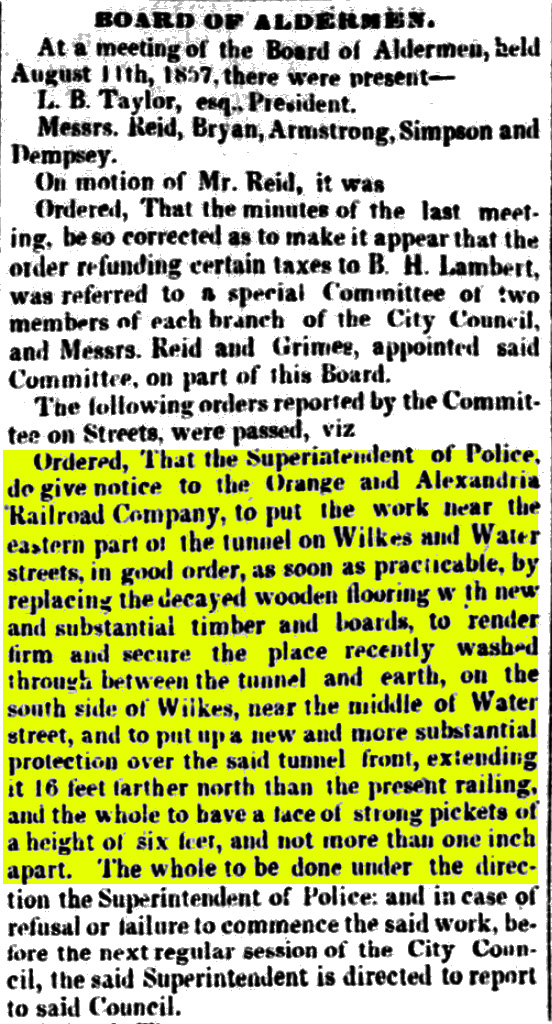
Order for the Superintendent of Police to enforce improvements on the Wilkes Street Tunnel (Alexandria Gazette, August 14, 1857)

Problems with the tunnel’s “completed” construction began almost immediately. In 1857, the Alexandria Committee on Streets reported in the Gazette about the poor condition of the tunnel, particularly the drainage and its already decaying eastern end that faced the Potomac River and Union Street.6 The tunnel’s condition became a pressing issue that continued well into the summer of 1857, coming to a head in August. The shoddy craftsmanship came up once more in a Board of Alderman meeting proceedings in the August 14, 1857, issue of the Gazette. The Superintendent of Police had given notice to the Orange and Alexandria Railroad Company to “put the work near the eastern part of the tunnel on Wilkes and Water Streets, in good order.” The work to be done included the replacement of decaying wooden flooring with new timber and better protection on the tunnel’s front. The same order was later published in the newspaper in November and April of the following year, so it is unclear when the work was actually finished, if at all. 

Alexandria’s location to the proximity of Washington, D.C., made it an important political stop for many candidates seeking victory in the hotly contested election of 1860. Locals came out to support then-Presidential candidate and Alexandria native John Bell and the Constitutional Union Party in a torch-light procession and meeting on September 28, 1860, less than two months before election day. With a large sign emblazoned with an eagle declaring, “The Constitution, the Union, and the Maintenance of the Laws,” a train carrying Bell traveled through the Wilkes Tunnel on its way to the White House amongst a throng of “Tunneltown boys” carrying big bells and cheering huzzahs and other garish exultations. This is the first instance that you see a newspaper refer to the area around the Wilkes passageway as “tunnel town.” The article ended with a conclusive “assurance” that Alexandria would “speak for the Union in November next, in thunderous tones.” It was hardly thunderous. Bell was embarrassed in the election, and Alexandria voted to secede in 1861 at the start of the American Civil War.7

During the war, Alexandria was a city with Confederate sympathies that quickly fell back into the watchful eye of the Union across the river on May 24, 1861, remaining in Federal hands until the end of the conflict. During that time, the Union Army made the city a major center for troops and supplied being sent to the front lines. Wounded soldiers were brought back to local hospitals in the area, like the Lyceum and, perhaps most famous, Mansion House Hotel depicted in the short-lived PBS series Mercy Street. The Orange and Alexandria Railroad, like so many others at this time, were also taken under control by the Union Army for the war effort, which included the use of the Wilkes Tunnel. 

It was not until this brief period of Federal occupation that we begin to see the dark history connected to the tunnel. The Alexandria Gazette, a paper that decidedly leaned its journalistic integrity towards the Confederacy, included several stories of odd occurrences and malfeasance by Union soldiers in the dark tunnel. After the first major battle in Manassas (Bull Run), the newspaper reported that a woman threw rocks collected in her apron at “panic-stricken” Union Zouave soldiers as they escaped through the tunnel onto awaiting gunboats along the Alexandria waterfront. It was the first “baptism of fire” for these men, but hardly the last casualty in Alexandria during the war.8 

Under the heading of a “SERIOUS ACCIDENT,” the Gazette reported on the first major incident involving the tunnel in occupied Alexandria on August 26, 1862. According to the brief writeup, a soldier’s right leg was cut clean off above the ankle after lying on the railroad track at the eastern entrance to the Wilkes Tunnel the previous night. He was undoubtedly under the “influence of liquor” and, in an attempt to cross the track, fell with his leg across the rail as a locomotive passed over it, too drunk to move out of the way in time. He was later taken to a hospital and treated for his injuries. It was never reported on the condition of the soldier afterwards. It’s clear from this incident and other snippets from the paper that the Federal occupying force were adept at finding new ways of causing trouble as time dragged on and idleness set in. The newspaper also reported on the necessity to clear out Union stragglers around the city “who had thronged the streets” outside of their encampments.

Some time later in 1864, it was also reported that some “fiends” who murdered an individual put his dead body on the tracks near the western end of the tunnel. The corpse’s head was crushed as an oncoming train on the rail passed over it. It was never specified if the individuals responsible were Union soldiers or local citizens.9 

Pvt. Scotten walked into this entrance and never walked out. (Matthew Eng Photo)

The most heinous and unsettling event of the war period occurred two years later in March 1864. On Friday, March 11, 1864, James Scotten of Company G, 4th Regiment, Delaware Volunteers, walked into the Wilkes Tunnel at around six o’clock in the evening and never walked out. According to the report, Scotten was approached by an individual and stabbed in the back of the neck five times. One cut severed his jugular and made a “considerable incision” in his windpipe. One cut from the autopsy report showed the instrument entering the spinal column, which ultimately killed him. Despite his windpipe being cut, one civilian near the tunnel was able to hear Scotten’s pain-stricken groans. By the time he arrived, he was dead. 

Scotten was seen walking into the tunnel with another individual who became the prime suspect, John Rush of the 72d Regiment, New York Volunteers. Scotten had just received four months’ pay on the day he was murdered, with very little money found on his person at the time of his death. Rush was arrested on suspicion of murder where he awaited examination. “The victim wore new clothes and there was every reason to suppose he had enlisted in order to procure several hundred dollars bounty,” the report noted. According to Army records, Rush later mustered out of the war several months later on June 8, 1864, in New York City with the rest of his battle-hardened unit. It is safe to say he was never convicted of any wrongdoing. A perpetrator of the crime was never found, and Scotten is listed as “murdered” on Delaware Civil War veteran logs and online registers today.10 

Private John Rush was mustered out of the military in June 1864, indicating he was never convicted of a crime. (Matthew Eng Image)

Life continued on for the city after these two incidents in 1862 and 1864, respectively. Complaints included in the local newspaper also continued for the sake of safety after a child fell through a set of broken blanks in the tunnel and was considerably hurt. By the time the war ended, the Gazette was back to reporting on the “ruinous condition” of the tunnel that was becoming more dangerous with each passing day.11 

Footnotes

  1. Pamela Cressey, “Wilkes Street Tunnel is Important Piece of Past,” Alexandria Gazette Packet, October 19, 1995. Accessed July 11, 2020, Link.
  2. Ibid.
  3. The American Telegraph, April 14, 1851.
  4. Alexandria Gazette, May 7, 1851. 
  5. Alexandria Gazette, July 1, 1854. 
  6. Alexandria Gazette, June 1, 1857. 
  7. Alexandria Gazette, September 28, 1860.
  8. Alexandria Gazette, March 31, 1922.
  9. Alexandria Gazette, March 10, 1909.
  10. Alexandria Gazette, March 12, 1864.
  11. Alexandria Gazette, September 24, 1864; Alexandria Gazette, January 10, 1865.