Categories
Alexandria Matthew Eng Postscripts

Offbeat Postscripts: The Richard Spencer Apartment in Alexandria

Offbeat Postcripts is a series of short posts where we cover small topics of offbeat history in Northern Virginia. 

By Matthew T. Eng, Offbeat NOVA

We were going to wait until January 20, 2021, to write this short piece on Richard Spencer and his short stay in Old Town Alexandria. After recent events, however, it just felt like the right time.

On February 5, 2017, the Eng clan got into the family truckster and headed into Old Town Alexandria for a relaxing morning of shopping. It was cold that day, with the temperature hanging somewhere in the forties. Our daughter, Zelda, was just a few days shy of her first birthday. With two teeth poking out of the bottom of her mouth, she was very much the vision of a fussy 1-year-old. Admittedly, Angela and I were also a little fussy too. That morning was less than two weeks after the inauguration of President Donald Trump. As proud as I was for Angela and her friends to take part in the Women’s March the day after Trump took office, we still had to settle into the grim reality of a Trump presidency. We both thought the fresh air would do all of us some good. 

You can basically separate Old Town Alexandria in a two sections, split between the north and south of King Street cut off along its Washington Street intersection. Everything across Washington Street towards the Potomac is the heavy-traffic area of Old Town where most of the restaurants and tourist traps are. Do you want to go to the Old Town Alexandria ghost tours or eat at a restaurant with overpriced appetizers? Head to the water. The other side towards the King Street Metro is much quieter with less foot traffic. There’s still a lot of cool shops and restaurants, just not in the same frequency. 

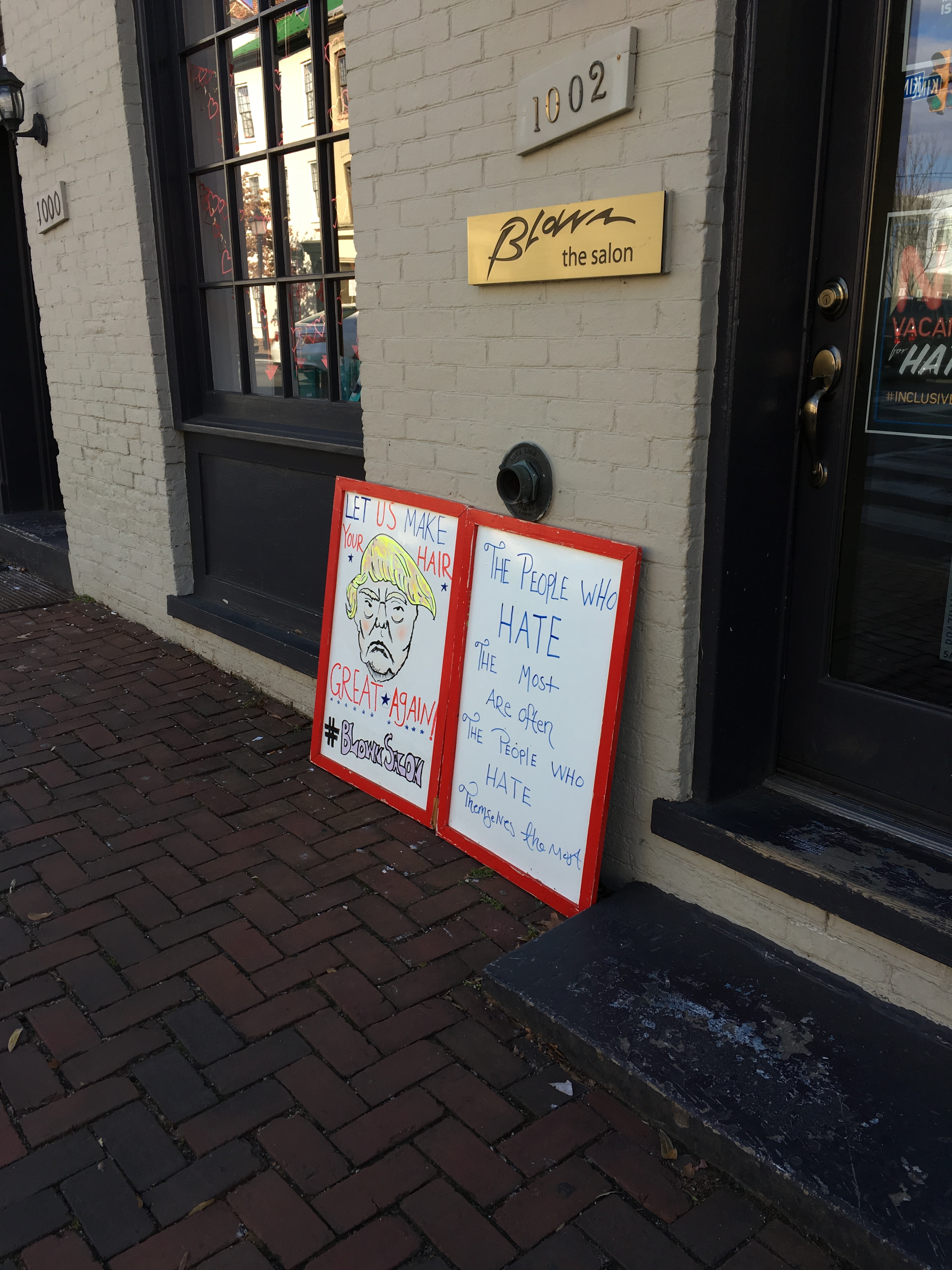
Sign in front of BLOW Salon (Matthew Eng Photo/Offbeat NOVA)

That morning, I parked on a side street off the main road. Our first stop was the former location of Fibre Space, an excellent place for all your yarn needs if you are thinking about getting into knitting or crocheting. I waited patiently with Zelda as Angela shopped for supplies she needed for an upcoming project. After finishing up there, we decided to stroll up King Street to Misha’s Coffee on the corner of King Street and South Patrick St. Walking on the right side of the road on King, we kept noticing “No Vacancy for Hate” and “Everyone is Welcome” signs in the windows and doorways of shops and businesses. Almost every shop had at least one of these signs. A large dry-erase board in front of a salon called BLOW finally tipped us off to what was going on:

“The people who HATE the most are often the people who hate themselves the most.” 

The sign included a tongue-in-cheek “Let Us Make Your Hair Great Again” slogan complete with a Trump caricature. It was then that it finally clicked why all the signs were up. It wasn’t just because of the recent tenant in the White House. Old Town Alexandria also had a new member to its population: notorious white nationalist Richard Spencer. 

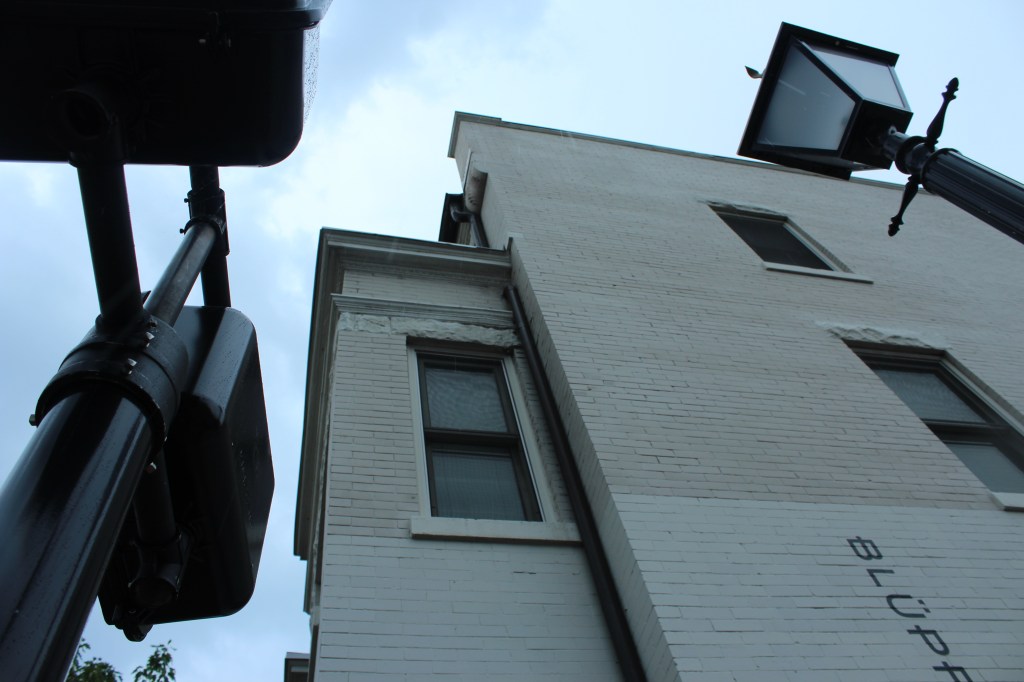
Richard Spencer rented the top two floors of a large white building at 1003 King Street, on the corner of N. Patrick Street, in early 2017. The bottom floor tenant at the time, Blüprint Chocolatiers, had no say in her landlord renting Spencer the space. According to a Washington Post article, however, the owners quickly made it known to residents and visitors that she had nothing to do with their upstairs neighbor. She adorned the front of their shop with red and white ribbons and a sign that read “Everyone is Welcome Here,” which many others in the surrounding area had also done. This, along with the newest addition to Alexandria, was likely in direct response to the then-recent Executive Order banning foreign nationals from seven predominantly Muslim country from visiting the country for ninety days, and suspending entry of all Syrian refugees into the country indefinitely.1 

Of course, we all remember what happened to Spencer on Inauguration Day: 

Previously, Spencer and the National Policy Institute, his white nationalist think tank, were headquartered in neighboring Arlington, Virginia. Perhaps Trump taking the Presidency gave him the idea to seek classier accommodations on the busy Alexandria intersection. 

Throughout his time there, Spencer had to endure a stable group of protestors and demonstrators below his apartment. He had plenty of time to nurse his wounded face and pride as he watched the throng of protestors through closed blinds and darkened rooms from above like a pathetic “man in the high tower.” According to WTOP, they would congregate to protest twice a month. The protests were organized by Grassroots Alexandria, a citizen-led group advocating for the safety and security of fellow Alexandrians.  

So why did he move there? The Washingtonian said it best:

Why would Spencer, when he relocated from Montana, choose to pitch his tent in a deep-blue city whose diverse population is 51 percent minority? The answer is quite basic, actually. “It’s just a nice place,” he says. Spencer thinks Old Town is beautiful. He likes the restaurants. He likes “how it feels—the whole look.”2

The Washingtonian (August 1, 2017)

Spencer only stayed in Old Town for a year and a half. Throughout the course of his time there, we never saw much movement in the upstairs rooms of the white building any time we walked by or drove through the area. Hopefully he got the hint that he wasn’t welcome. There must have been a strong indication in May of 2017 when Spencer had his membership at the Old Town Sport & Health club revoked after the owner made a “business decision” to pull it. Spencer protested the decision, telling Buzzfeed that he was a “model gymgoer” who didn’t bother anyone. When the general manager, a professor at Georgetown’s School of Foreign Service, asked Spencer if he was in fact the same person, he denied it. She published photos of the confrontation in a blog post, adding, “not only are you a Nazi, you’re a cowardly Nazi.” Protests only increased in the wake of the Charlottesville “Unite the Right Rally,” which Spencer attended.3 

Today, the shop beneath the apartment is a sock shop called the Old Town Sock Co. Blüprint Chocolatiers closed their doors on Easter Sunday 2020 after five-years. As of November 5, 2020, the floors above the sock sheet remain without a tenant. 

Jonathan Krall of Grassroots Alexandria had no sympathy after Spencer’s exit from his prime real estate in Alexandria on King Street. In fact, he felt he played a part in him leaving. “Oh, I think we had an effect,” he said in the closing words of a 2018 interview with the Alexandria Gazette Packet. “We did our best.”4 

Donald Trump has been voted out of office. People like Spencer no longer has a platform almost anywhere. His National Policy Institute was banned by YouTube in June of this year for not following the platform’s policies against hate speech. Free speech still (rightfully) exists, but thankfully fewer people are listening to his ilk.5  

For others before him, like George Lincoln Rockwell, their presence was not welcome in this area. Northern Virginia can be many things. A cesspool of traffic. A white liberal cross-section of society filled with unaffordable houses. The bedroom community of government workers. The ends of the yellow, blue, orange, and silver Metro lines. And, most importantly, a suitable substitute for “D.C.” when you tell people you don’t know ask where you’re from because it’s easier geographically. 

It is not, however, a place for fascists, bigots, and small minds. That goes double for the big white house just up the road from Old Town. 

But it’s not over. For now, we can be happy and breathe for the first time in four years. Tomorrow, let’s put our masks on and get back to work.

Donald Trump: You’re Fired (Angela H. Eng Photo/Offbeat NOVA)

Footnotes:

  1.  Patricia Sullivan, “The chocolatiers and the white nationalist, coexisting in Old Town Alexandria, The Washington Post, February 17, 2017. Accessed November 5, 2020, LINK.
  2.  Kim Olsen, “This Virginia Town Can’t Get Rid of Richard Spencer, and It’s Driving Locals Crazy,” The Washingtonian, August 1, 2017. Accessed November 5, 2020, LINK.
  3.  NBC4 Washington, “‘Alt-right’ Leader Loses Gym Membership After Confrontation,” NBC4 Washington, May 22, 2017. Accessed November 5, 2020, LINK.
  4.  James Cullum, “A Vigil to Bid Farewell in Alexandria,” Alexandria Gazette Packet, August 20, 2018. Accessed November 5, 2020, LINK.
  5.  Kaya Yurieff, “YouTube removes Richar Spencer and David Duke a year after saying it would ban supremacists,” CNN (online), June 20, 2020. Accessed November 5, 2020, LINK.
Categories
Arlington Matthew Eng

All You Fascists Bound to Lose: The Assassination of George Lincoln Rockwell

By Matthew T. Eng, Offbeat NOVA

It’s hard to think of Arlington, Virginia, as a hotbed for hate. Living near it has a remarkably price tag. According to one website, Arlington ranks as the eighth-most expensive city in the United States, with the 2020 cost of living sitting at 53% above the national average.1 As you drive through its premiere neighborhoods like Bluemont, Clarendon, and Ballston, you realize why it’s one of the most desirable locations to live in not only Northern Virginia, but the entire country. It is only a stone’s throw from DC, the houses are beautiful, and the landscaping is perfect. Where there are no houses, there are meticulously built high-rises and lush public spaces. As they say, location is everything. 

But Arlington has not always been beautiful and perfect. It was know for darker things . . . other things that lived quietly inside its utopian ecosystem like a virus entering a new host.

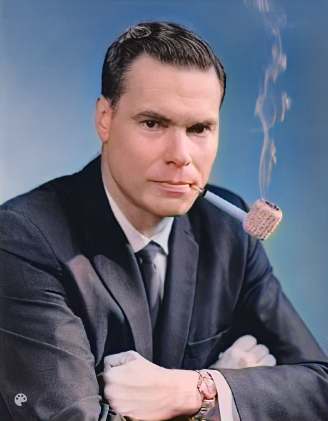
George Lincoln Rockwell (Wikimedia Commons)

Arlington was the former epicenter of the Neo-Nazi/white power movement in the United States for over two decades beginning in the early 1960s. Less than two decades after the end of the Second World War, Washington’s premiere suburb became an enclave for a reincarnation of Nazi Germany’s beliefs when George Lincoln Rockwell came into town. For seven years, Rockwell ran the American Nazi Party from his headquarters on 928 N. Randolph Street in the busy Ballston neighborhood of Arlington. He also ran a barracks for his “storm troopers” at the top of the hill in a mansion farm house called “Hatemonger Hill” by local residents. 

It was from there that he drove the short distance to the Dominion Hills Shopping Center to visit the EconoWash laundromat on August 25, 1967. As Rockwell sat in his car, a disgruntled former party member fatally shot him from the roof of the building. Rockwell’s death marked a critical halt in his march towards white racialism at a time when the Civil Rights movement had reached its strongest point. It also stands as a bleak reminder of the resurgence of hatred into modern life today.2

George Lincoln Rockwell was born in Bloomington, Illinois, in 1918. He lived a privileged childhood, and was talented in many subjects. While studying philosophy at Brown University, Rockwell dropped out of school to accept a commission as an officer in the United States Navy in 1938, just three years removed from the United States’ entry into the conflict. He served as a naval aviator during the Second World War, operating in both the Atlantic and Pacific Theaters. As a lieutenant commander living in San Diego with his family during the Korean War, he became acquainted with Adolf Hitler and Nazism. He also applauded American figures like anti-Communist stalwart Senator Joseph McCarthy and General Douglas MacArthur. It was from the latter that he adopted his signature corncob pipe, an accessory he held onto until the day he died. 

Later, he divorced his wife and married another woman with similar interests and sympathies of his own. By 1955, he was back stateside in Washington, D.C., publishing a periodical called U.S. Lady, a magazine made for U.S. service member’s wives that doubled as his mouthpiece for his racist ideologies. His racist attitudes and words grew more vocal and more popular in the latter half of the decade, gaining a following in and around his new home in Arlington County, Virginia. He gathered his thoughts for a new vision of racial purity. He called it the American Nazi Party. By the end of the decade, he had his first headquarters in Arlington inside a brick rambler at 6512 Williamsburg Boulevard. As author Charles S. Clark noted in his exposé on Rockwell, “through the window, neighbors could see his lit-up swastika on a red flag.” The home is now a private residence estimated in value at $758,000.

ANP Headquarters on 928 N. Randolph Street, now high-rise luxury apartments (lindseybestebreurtje/Google Street View)

In 1960, Rockwell’s American Nazi Party moved to a new location at 928 N. Randolph Street, today the site of high-rise apartments. In front of the near-derelict building was a large sign that everyone could read from the road: “White Man…Fight! Smash the Black Revolution Now.” His numbers of followers continued to grow into the early 1960s. He eventually set-up a “stormtrooper barracks” inside a large hilltop farmhouse two miles away from his headquarters at 6150 Wilson Boulevard. Local residents came to call the location “Hatemonger Hill.”4 

The American Nazi Party (ANP) spewed their racist vitriol inside the beltway and beyond. Rockwell used the party as a platform for advocating deporting Black Americans back to Africa, sterilizing Jews, and executing race traitors like President Eisenhower and Chief Justice Earl Warren. Famously, Rockwell and several of his followers drove a swastika-clad Volkswagen van from Arlington to New Orleans to protest the “Freedom Rides” like some low-rent, racist pilgrimage to Bonnaroo.5 

Despite their media attention, the ANP was small. One estimate had them numbering only thirty “hardcore followers” and just over three hundred total during the Rockwell era. One of those followers was John Patler, a former United States Marine who was honorably discharged after being arrested at an ANP rally. Born John C. Patsalos, he changed his last name to Patler to sound phonetically like “Hitler.” He joined the party officially in 1960 and served as the editor and cartoonist for the organization’s magazine, Stormtrooper. He was expelled from the group in 1967 for harboring “Bolshevik leanings” after a disagreement with Rockwell over policy. Although Patler claimed he loved Rockwell “like a father,” and he to him “like a son,” Patler grew unwilling to see a world where the two were separated. Rockwell sullied on, spending most of his time atop Hatemonger Hill. Patler festered until the anger, frustration, and disappointment reached a boiling point in the summer of 1967.6 

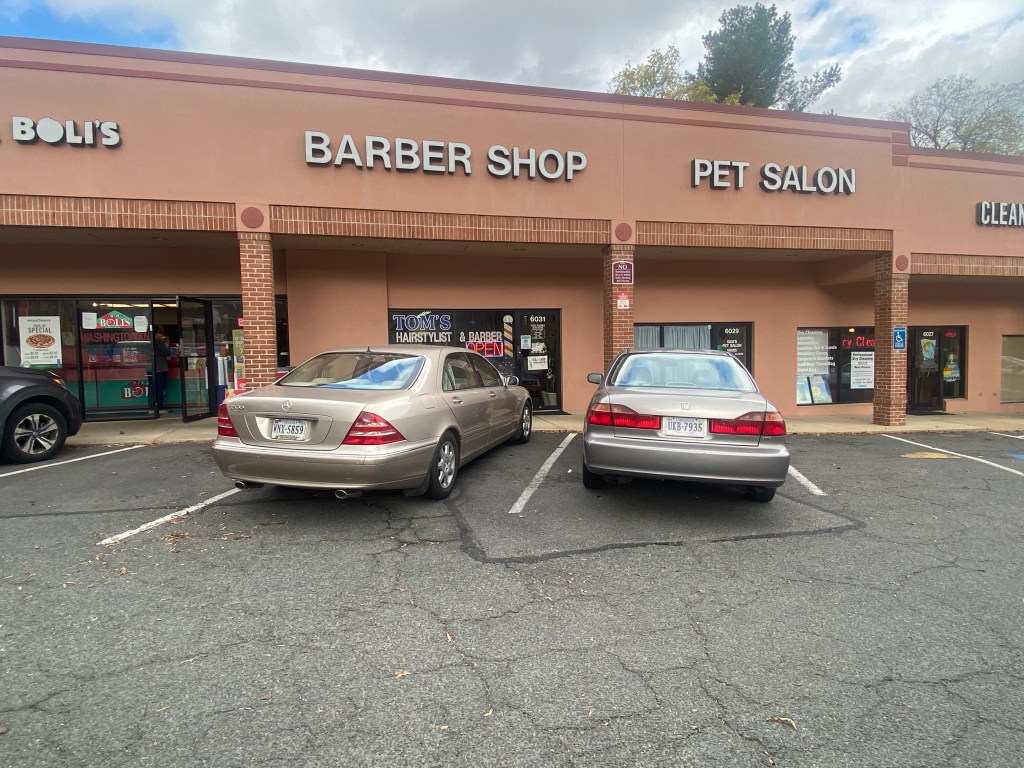
Dominion Hills Shopping Center Today. The silver sedan in the distance is where Rockwell was killed. (Matthew Eng Photo)

Around noon on Friday, August 25, 1967, Rockwell went down the hill with his laundry to visit the EconoWash, one of the many establishments in a small strip mall called the Dominion Hills Shopping Center. He was dressed in a white shirt and dark slacks. Parking his 1958 Chevrolet in front of a barber shop owned by Tom Blakeney, the two waved at one another before Rockwell exited his car and entered the laundromat. He appeared moments later, having forgotten his bleach. As he returned to his car, as Tom Blakeney remembers, he heard two shots ring out. “I thought a car had backfired,” he said. He continued: 

“I saw Rockwell kind of jumping around in the front seat, and I thought he was having a seizure. I saw him point at the roof and then slump over the steering wheel.”7

Tom Blakeny, Tom’s Barber Shop Owner

Two shots traveled through the windshield. One landed into Rockwell’s heart and the other ricocheted off the seat and into the roof of the vehicle. His car knocked into another nearby vehicle. According to Charles S. Clark, Rockwell “fell and landed face-up in the parking lot, splayed beside his box of Ivory Snow and a copy of the New York Daily News.” The leader of the ANP was gone. A coroner later pronounced him dead at the scene.8

Where Rockwell died (Matthew Eng Photo/Offbeat NOVA)

Rockwell’s final gesture was for a very good reason. He was pointing at his killer, John Patler. Patler had used the vantage point from the top of the roof of the Dominion Hills Shopping Center to aim down and shoot Rockwell. Patler was a former Marine, who are as a rule expert in their marksmanship. Arlington police arrested the 29-year-old half an hour later on Washington Boulevard. A discarded raincoat and cap believed to be Patler’s was found in a nearby yard, and a German Mauser Semiautomatic pistol was recovered in the water along nearby Four Mile Run below a footbridge. He was convicted of first-degree murder in December 1967, and sentenced to twenty years in prison. He was later paroled in 1975, serving less than half of his original sentence. As for Rockwell, he was given a military burial at Culpepper National Cemetery. Although the agreement for his military burial stipulated that there be no Nazi insignias to be displayed during his burial, his followers violated these conditions. He was secretly cremated the next day.9 

Today, very little evidence of the assassination exists. There are no historical markings, only businesses that have come and gone since 1967. The facade of the entire complex has changed. The one business that still exists is the barber shop, now called Tom’s Hairstylist & Barber. As of 2010, Tom Blakeney, the original owner, was still alive, retired and living in Fredericksburg, Virginia. Looking through several pictures for references, we were able to pinpoint the exact spot that Rockwell died in August 1967. Neo-Nazi sympathizers have come to the strip mall’s parking lot for years to pay homage to Rockwell. 

Hatemonger Hill is now a picnic area in Upton Hill Regional Park (Renegade Tribune/Parks Rx)

Hatemonger Hill, less than a mile away, is now a picnic pavilion where families eat in between trips to the batting cages, mini-golf courses, and swimming pool. The land was demolished and annexed to Upton Hill Regional Park in 1973, as the party members soon lost their lease after Rockwell’s death.10 

Unfortunately, Rockwell’s death would not the end of the city’s relationship with hate and division. 

As recently as 2016, Arlington resurfaced again as a nucleus for hate when WTOP reported that alt-right talking head/inauguration punching bag Richard Spencer and the National Policy Institute, a white supremacist think tank, was based in town before moving to neighboring Old Town Alexandria a few years later.11 Charlottesville may be a few hours’ drive from Arlington, but I do not believe what transpired there was  lost on residents who lived through the tumultuous years of the ANP in their city.   

On August 25, 2017, a small group of Nazis showed up to the very spot where Rockwell was killed. Dressed in white shirts, black slacks, and black ties, they paid their respects to the former American Nazi Party leader. A guest at the nearby barber shop took a photo of the six individuals giving the requisite “sieg heil” salute, with one holding a large Nazi flag in the middle. The bottom of the flag touches the asphalt and the darkened motor oil stains left there over the years…well maintained machines slowly oozing out their excess and leaving an indelible mark for future generations. I can think of no better metaphor for the arrogance of the individuals in the photograph. As one Twitter user responded to the photograph with, “I count 6 losers & a flag.”

Six losers and a flag (NBC4/Aki Peritz Twitter)

I understand that journalistic integrity is built on a foundation of objectivity. That is clearly out of the window for this article. It was painful enough to expose the old wounds of such a great city once again, so close to a time when we are all near-broken and politically fragile. So if you are upset with the bias in this article because Offbeat NOVA is taking a political stance against the creeping Kudzu of fascism in the United States, we only have a few words to say. Like Rockwell, there will come a time when the hate will end, either by their own hand or the genuine good of others. 

Today is election day, when the very soul of the nation is at stake. Whether you like it or not, this year is a mirror to Charlottesville in 2017. Arlington in the 1960s. Nuremberg in 1938. But like those other events, those involved will fail. Why? Because in the good words of Woody Guthrie, all you fascists are bound to lose. 

Footnotes:

  1.  Kat Tretina, “10 Most Expensive Cities to Live in for 2020,” Education Loan Finance. Accessed November 1, 2020, LINK.
  2.  United Press International (UPI), “Rockwell, U.S. Nazi party leader, slain,” United Press International, August 25, 1967. Accessed November 2, 2020, LINK.
  3.  Charles S. Clark,”Close-Up Of An American Nazi,” Northern Virginia Magazine, November 28, 2010. Accessed November 2, 2020, LINK.
  4.  Clark, “Close-Up;” Mark Jones, “Nazis in Arlington: George Rockwell and the ANP,” WETA Boundary Stones, January 2, 2013. Accessed November 2, 2020, LINK.
  5.  Jones, “Nazis in Arlington.” 
  6.  Frederick James Simonelli. American Fuehrer: George Lincoln Rockwell and the American Nazi Party. Champagne: University of Illinois Press, 1999. 
  7.  Charles S. Clark, “Death of an Arlington Nazi,” Northern Virginia Magazine, December 30, 2010. Accessed November 2, 2020, LINK.
  8.  Clark, “Death of An Arlington Nazi;” UPI, “Slain.”
  9.  Michel E. Miller, “The shadow of assassinated American Nazi commander hangs over Charlottesville,” The Washington Post, August 21, 2017. Accessed November 2, 2020, LINK.
  10.  Mark Jones, Nazis in Arlington.” 
  11.  Dick Uliano, “White nationalist, alt-right group calls Arlington home,” WTOP News, November 22, 2016. Accessed November 1, 2020, LINK.
Categories
Alexandria blog Matthew Eng

Timing is Everything: Coming Attractions

By Matthew T. Eng, Offbeat NOVA

We have been lacking a little in the content lately. Fortunately, there’s a reason: we bought a house!

The new Offbeat Nova HQ (Matthew Eng Photo)

Both Angela and I are very excited about this. It’s something we have talked about for a very long time, for sure. If we are going to be exploring northern Virginia history for the indefinite future, it made sense to truly put down our roots in the area.

So, instead of exhausting ourselves trying to put something out that we might not be completely happy with, we decided to let everyone know what is in on the short list for upcoming posts. Enjoy.

The Fairfax “Butt Slasher” (Fairfax County)
For six months in 2011, a man known as the “Butt Slasher” terrorized women in northern Virginia in shopping malls. Women were warned to “keep track of their behinds” while shopping and pay close attention to their surroundings. 

Bunnyman Bridge (Clifton)
You may have heard about it. Is it an urban legend, real, or just a joke? We take a look at the “Bunnyman” of Clifton and the bridge where he supposedly hanged his victims. This will be a collaborative post with Uncanny America

Top Golf Alexandria (Fairfax County)
It was the first Top Golf in America. Now it sits abandoned and derelict near a busy shopping area in Fairfax County. We explore the history and complicated business plan of Top Golf Alexandria. 

Offbeat Eats: Egg Foo Young in Suburbia (Gainesville)
This new segments explores some of the best food off the beaten path. Our first segment will showcase a small and unassuming Chinese restaurant in Gainesville, VA, and the incredible egg dish with a unique connection to American history. 

Offbeat Eats: Steak and Ale’s “Kensington Club” Recipe (Alexandria)
If you’ve traveled anywhere near the Mark Center in Alexandria, chances are you have seen the abandoned Steak n’ Ale restaurant with its iconic sign. We look at the restaurant itself and recreate one of its signature steak recipes to taste test. 

All You Fascists Bound To Lose (Arlington)
We revisit the site of the murder of George Rockwell, leader of the American Nazi Party, in a small Arlington strip mall. Just in time for the election. 

Categories
blog Matthew Eng Prince Willilam County

Lorena Bobbitt Revisted: Examining NOVA Dark Tourism in Manassas

By Matthew T. Eng, Offbeat NOVA

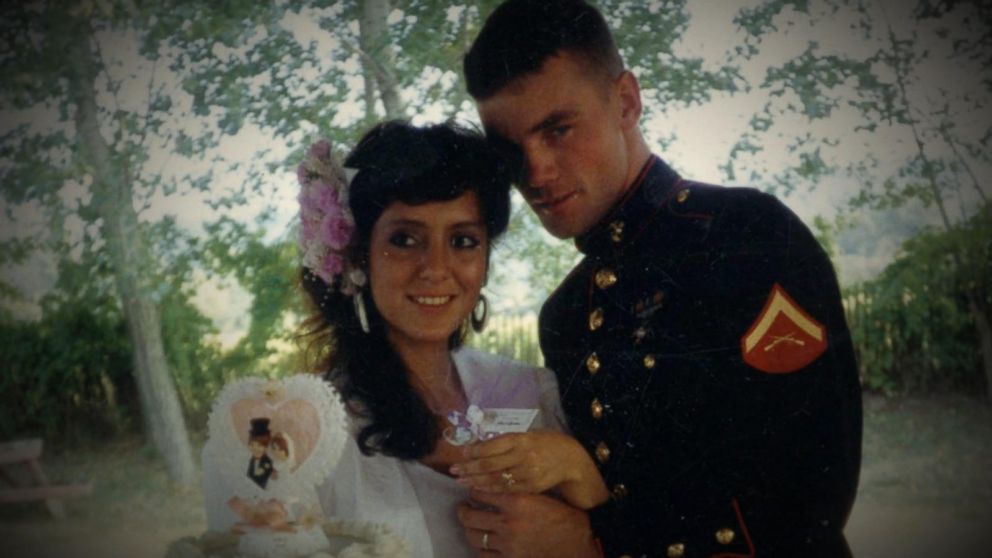
On June 22, 1993, John Wayne Bobbitt and his wife, an Ecuadorian immigrant named Lorena, discussed the possibility of divorce. The couple had issues. Many of these issues stemmed from the ex-Marine’s abusive behavior towards his young bride. She went to the police that day in hopes of obtaining a restraining order on her husband. Unfortunately, the process dragged and she left. 

John Wayne Bobbitt and Lorena (Amazon Prime Documentary/ABC News)

That night, John and a friend went out for a night of heavy drinking around their home in Manassas, Virginia. The two returned, late and drunk, to the couple’s second floor apartment near Route 28 and Old Centreville Road. John stumbled into the bedroom and raped Lorena before falling asleep in a drunken stupor. That was enough. As Lorena went into the kitchen to get some water just before 4 am, she brought an 8-inch carving knife into the bedroom and cut her husband’s penis off. He was drunk enough to not immediately wake up or notice the large pool of blood that collected around him. 

Lorena got into her 1991 Mercury Capri with the weapon and penis still in her hands and drove off out of the complex down Maplewood Drive. At the intersection of Maplewood Drive and Old Centreville Road, she finally realized her husband’s severed penis was still in her hand and tossed it out the window across from a 7-Eleven in a grassy field in front of the Paty-Kake Daycare Center. Shocked and scatterbrained, she drove to the only place she thought of going — her work, a nail salon approximately four miles away in the Old Centreville Crossing shopping center. Nobody was there, so she deposited the bloody knife into the trashcan next to the nail salon and proceeded to her boss’s house. Once there, her boss, Janna Bisutti, called the police. She divulged to authorities where the missing appendage could be found. The police eventually found it, brought the small measure of manhood into the nearby 7-Eleven, and placed it into a hot dog container on ice where it was transported to the hospital and reattached on John. The rest is history.

Henry David Thoreau once wrote that he went into the woods of Concord, Massachusetts, to “live deep and suck the marrow out of life,” and “cut a broad swath and shave close.” He did not pontificate how close he shaved in his time in solitude next to the pond. I don’t think he had John Bobbitt in mind when he wrote Walden, but it was for this reason that I, armed with the “essential facts of life,” ventured into the interior of Manassas to pique my newfound curiosity in one of Northern Virginia’s premiere sites of dark tourism. 

Truthfully, I didn’t know much about the Lorena Bobbitt case—besides all the jokes wrapped in fragile masculinity and fear that gave comedians months of content in the early nineties. It wasn’t until the Jordan Peele Lorena documentary came out last year that I fully understood all the facts about the case, the biggest of which was that it occurred nearby where I lived in Northern Virginia. The documentary centered on three main places that Lorena visited on the early morning of June 23, 1993: her home, the field across from the 7-Eleven, and her place of business where she deposited the weapon. 

I decided to visit these three places in 2020 and retrace her steps from that night. Although I took several pictures of these places during the day several weeks ago, I wanted to go back at night and retrace the steps Lorena did 27 years ago. The first thing I had to do was figure out the starting point: her apartment.

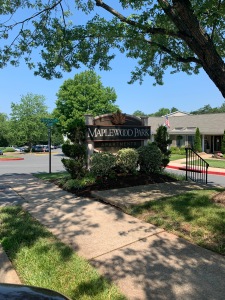
Maplewood Park Apartments, 2020. Lorena Bobbitt lived here with John on the night of September 23, 1993 (Eng Photo/Offbeat NOVA)
Maplewood Park Apartments

Looking through old newspaper articles, as well as the recent video taken for the documentary, I was able to piece together her location in the Maplewood Park apartments off Route 28 in Manassas. She lived on the second floor of a front facing apartment at 8174 Maplewood Drive. The complex, both during the day and at night was always crowded with cars and activity. It’s a far cry from the dilapidated state often written about in stories. The area is well-kept, even if its location is flanked by countless liquor and vape stores off the main road. It’s as if the idea of John Bobbit’s douchebaggery blanketed the surrounding area like some deadly airborne pathogen of Axe body spray laced with Aristocrat vodka and menthol cigarettes. Looking into the second floor apartment at night, I couldn’t help but run through the sequence of events in my head and reflect on the courage it took for her to act against her aggressor.  

It’s only a short drive down the street to the 7-Eleven. I got to the stop sign at the intersection where she threw the appendage up and over her car into the grassy field and chuckled. Based off of the images of the location where it was found, it was a hell of a throw. Good for you, girl. It looks like they are clearing the area for a construction project at that corner location. Soon, the location will turn into something entirely different, so I feel fortunate to record the area before any new buildings spring up. 

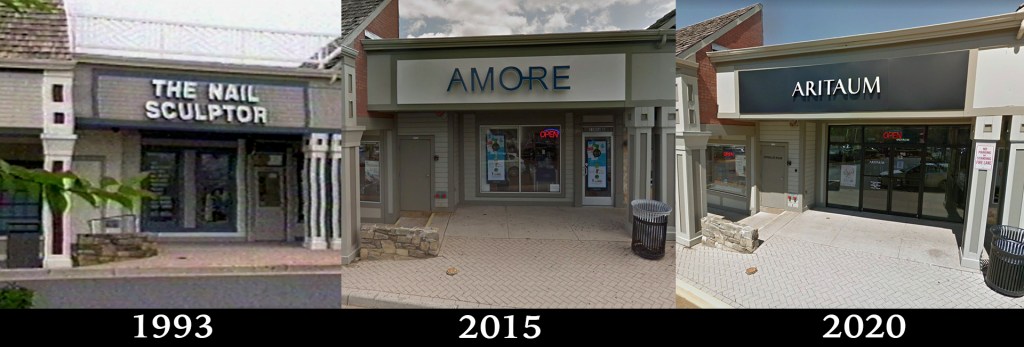
The hardest location to find was the nail salon she went to after ejecting the penis out her driver side window, the Nail Sculptor. Put simply, the location as it was in 1993 and in the documentary does not exist anymore. Simple Internet searches yielded me similar results. They always talked about the salon and the city it was located in, Centreville. But that was it. No address could be found anywhere. So, once again armed with a business name and location, I went on DOBsearch and reverse engineered the information to give me a physical address. The location is in the middle of the Centreville Crossing Shopping center roughly four miles away from her former apartment in Manassas. 

The Nail Sculptor over the years in the Centreville Crossing Shopping Center in Centreville, VA (Eng Photo/Offbeat NOVA)
The Nail Sculptor over the years (Google Maps/Eng Photo)

When I drove there at night, I carried a screenshot I took from the documentary in my phone. Sure enough, all the details matched up, including the stone sitting area on a small slope right in front of the shop. The location seems to have been a revolving door of beauty salons and establishments since Bisutti left sometime in the 1990s. The location was something called Amore until 2015 when it turned into what it is still today, a Korean makeup retailer called Aritaum. I don’t know if it was intentional or not, but there is a trash can still right next to the shop — the same location where Lorena dropped her bloody knife on top of a KFC fried chicken container in 1993. Intentional or not, I thought it was a nice touch.

But that’s not all that I did in my visit to Lorena’s greatest hits. Don’t worry. I saved the best for last. 

How many of you know what it’s like to eat a hot dog at the same place where mortified men put a penis on ice? My guess is not many of you. But I had to know. So I went recently got one at that exact location, eating it a few feet from where Lorena alley-ooped her abusive husband’s dismembered member out the window onto a grassy field with a Kareem Abdul-Jabar hook shot. The experience was surreal to to say the least.  

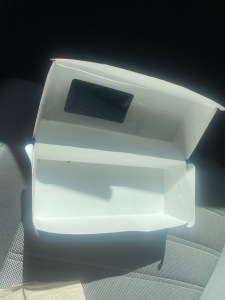
"Hot Dog Bag" of John Wayne Bobbitt's penis (Eng Photo/Offbeat NOVA)
“Hot Dog Bag” (Eng Photo/Offbeat NOVA)

The 7-Eleven itself looked like any other one you’ve walked into. I immediately started thinking about the officers that carried John’s penis into it, frantically looking for ice and anything to hold it in. I can imagine them looking straight at the hot dog rollers and put two and two together before pleading to that poor employee to hand them one. No big bite for the officers. They would take theirs to go. 

So I got a hot dog in honor of Lorena and ate it in the parking lot. It tasted like any other 7-Eleven hot dog you’ve had before. I had to stop thinking about why I was there to enjoy it as much as I could. 

Footnotes:

Sources were gathered from the Amazon Prime Lorena documentary, ABC News Special “The Bobbitts,” and The Washingtonian article, “The Definitive Oral History of the Bobbitt Case, 25 Years Later.”

Categories
Matthew Eng Postscripts Prince Willilam County

Offbeat Postscripts: Montclair Veterans Flagpole

Offbeat Postcripts is a series of short posts where we cover small topics of offbeat history in Northern Virginia. 

By Matthew T. Eng, Offbeat NOVA

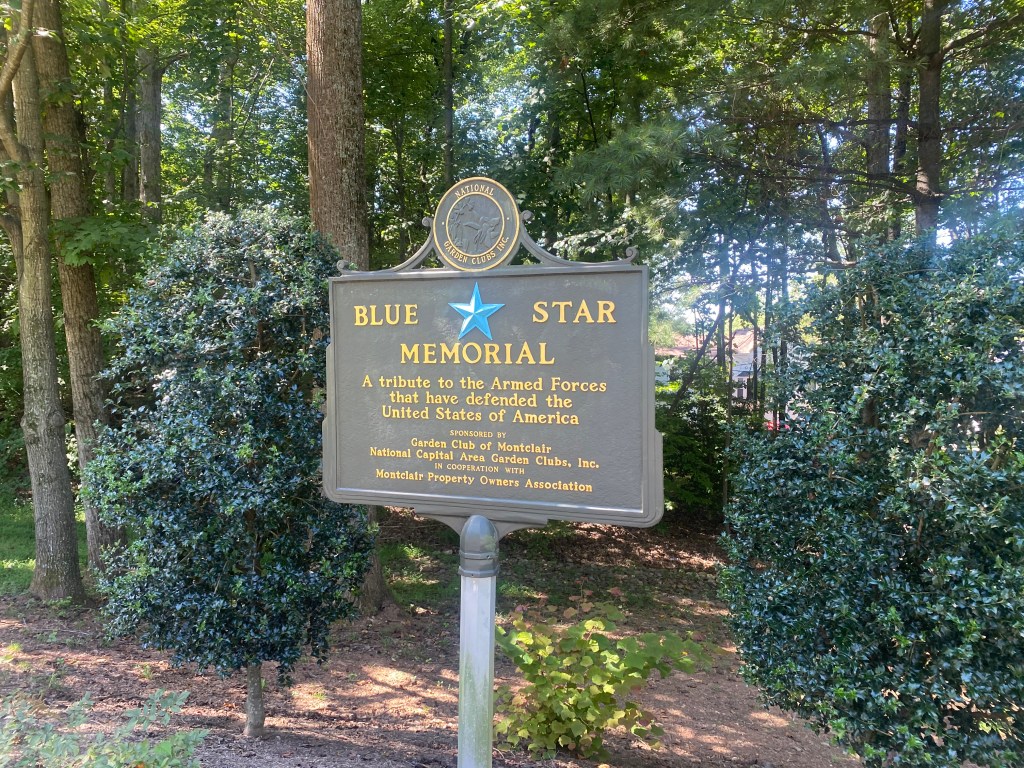
There is a flagpole in the middle of a garden and brick path in the desirable Montclair neighborhood in Dumfries, VA. A small set of benches sit nearby like restful sentries waiting for neighborhood residents to take in the patriotic tableau in quiet reflection. The small area is located directly in front of the Montclair Property Owners Association, Inc. The flagpole, unassuming in its position off the road near the busy intersection of Waterway Drive and Cardinal Drive, is even more mysterious in its true purpose.

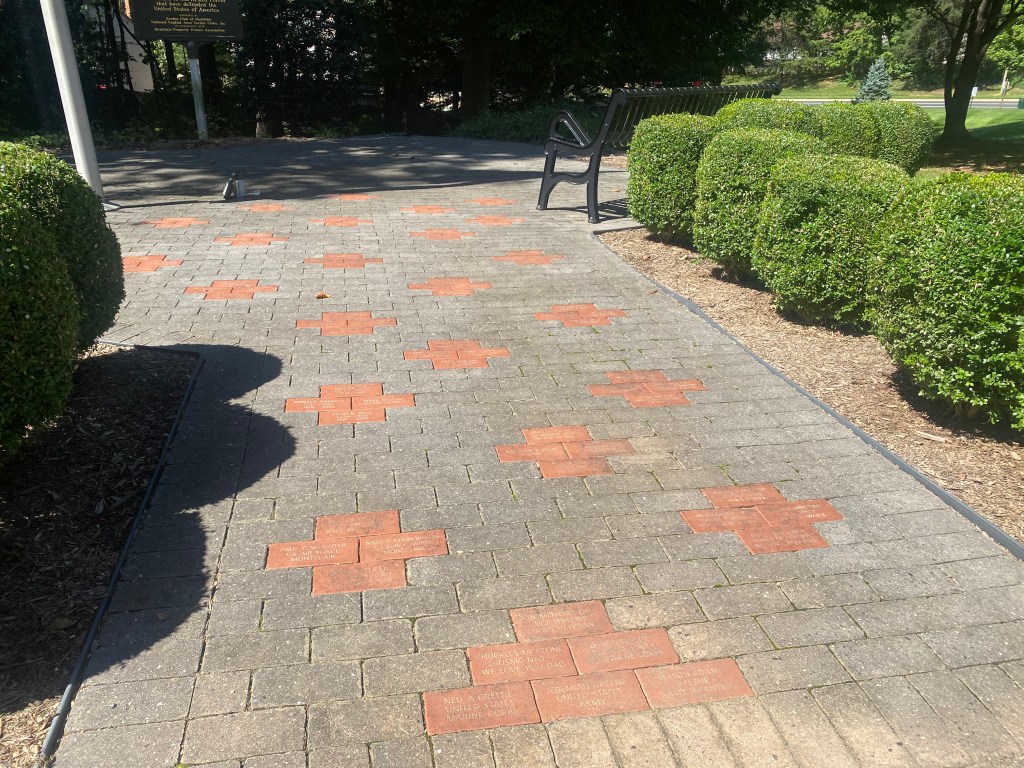
A Blue Star Memorial marker shows the location as a “tribute to the Armed Forces that have defended the United States of America.” On the brick path leading up to the flag are the names and short messages of Montclair residents who have served in foreign wars and conflicts from World War II to the present day. It’s a nice way to honor the men and women who lived locally but served globally. 

If that was the real reason why the flagpole was there, we would certainly not be covering it here for Offbeat NOVA. There are countless flagpoles and Blue Star Memorial markers around the region with similar stories and purposes. 

This one is different.

Resting on the ground on the opposite end of the flagpole is a small rock, largely obstructed by some of the overgrown grass on its edges. The inscription highlights the true reason why the flagpole was erected:

“DEDICATED TO THE BRAVE MONTCLAIR RESIDENTS WHO SERVED OUR COUNTRY IN 

OPERATION DESERT STORM.

JULY 4, 1991”

The flagpole was dedicated in 1991 in honor of those who served in Operation Desert Storm. What is most interesting is the date it was dedicated: July 4, 1991. The more I think about it, the more it makes sense. 

One of the things I can remember about the Gulf War was the overwhelming sense of patriotism Americans felt for those fighting in the Middle East. Although the Cold War ended that year, the one big moment that stands out for me was Operation Desert Storm. I had a relative who served over there during the conflict and it was a big deal for my family to show our support. I remember the ticker tape parades. The trading cards. The patriotic songs. Dedicating the Montclair Veterans Flagpole on Independence Day, only four months removed from the end of the brief war, is a testament to the patriotic fervor many felt back home. Although 650,000 Americans served in the Gulf War region between 1990-1991, there are not many monuments to it today, even if plans are supposedly underway to create a national memorial up the road in Washington, D.C. 

Now that we are currently in the thirtieth anniversary of the conflict, we felt it was the perfect offbeat anecdote to the United States’ Cold War farewell tour. 

If you happen to be in Dumfries, VA, stop by this unassuming flagpole. Who knows. Maybe you’ll love it so much you’ll want to live there. Judging by the location of it, you’re already halfway there. 

Categories
Matthew Eng Springfield

Finding the 9/11 Springfield Mall DMV Through the Internet Archive

Matthew Eng, Offbeat NOVA

Not unlike the history-shaping year we are currently having, 2001 altered the course of American history when the terrorist attacks occurred on September 11, 2001. I was just starting my senior year at First Colonial High School in Virginia Beach, VA. I didn’t get my news and information from the Internet back then because I had my parents and the television. I was in school when the attacks occurred, so I didn’t see anything about it with my own eyes until that afternoon. After watching the planes crash into the World Trade Center a few times, I was done with it. I don’t think I processed it, but I was at least finished with learning more about it at the time.

The Internet looked much different in the early fall of 2001. The majority of Americans did not have broadband Internet. Most of us, like my family, used AOL and a dial-up modem to get online. I talked with imaginary friends in chat rooms. I left tacky away messages on Instant Messenger. I printed off driving directions from MapQuest. To be completely honest, I mostly used the Internet to get one thing: illegally downloaded music. Just kidding, of course.

(Vice.com)

News websites in 2001 look blocky and archaic by today’s standards, yet I still remember them well. In the process of thinking about a post to do for this week, I began thinking about any connections the 9/11 terrorist attacks had to Northern Virginia. As a relatively recent import into the area, I had no prior knowledge save from what I have gathered on the subject over the years. Truth be told, the facts surrounding the actual attacks are still an open wound for most of us. 

In a year where we are still hemorrhaging from emotional bleeding, I felt another angle was needed. In my research, I discovered an interesting connection between two of the terrorists that flew a plane into the Pentagon and the means in which they gained credentials to purchase a ticket for American Airlines Flight 77. It involved a DMV in a slowly-approaching dead mall about ten minutes from where I live now. This is the story of how I found that DMV Express location today, using the modern Internet to recall the halcyon days of the digital age. 

Let me tell you a quick story. 

The 7-Eleven off Leesburg Pike where
Hanjour and al-Mihdhar bartered for
false IDs. (Eng Photo)

On August 1, 2001, Saudi Arabian nationals Hani Hanjour and Khalid al-Mihdhar traveled to Falls Church, VA, to a 7-Eleven off Leesburg Pike to obtain fraudulent documentation. One of the employees there, Luis Martinez-Flores, was willing to openly expose a very broad loophole in the process for obtaining Virginia identification for a price of $100. The three men proceeded to the DMV Express in the lower level of Springfield Mall. Hanjour and al-Mihdhar used a false address provided by Flores, 5913 Leesburg Pike, just a short drive from the 7-Eleven where Flores worked. The address, once verified and falsely signed by Flores as truth, provided the necessary criteria for Hanjour and al-Mihdhar to claim themselves as  legal residents in the Commonwealth of Virginia. They received their identity cards that day. 

IDs in hand, both were able to purchase tickets on American Airlines Flight 77, which departed from Dulles International Airport for Los Angeles, California, at 8:10 am on September 11, 2001. These two men, along with three other Saudi Arabian nationals, hijacked the flight, crashing it into the western side of the Pentagon an hour and twenty minutes later at 9:37 am. Fifty-eight passengers lost their lives. An additional 125 fatalities occurred on the ground at the Pentagon. 

I want to focus less on the horrific tragedy of the day and instead explore what occurred a few miles down the road from where I now live. Where were those places? Specifically, what happened to the DMV Express? We have been going to the newly renovated Springfield Town Center since it reopened in 2014, and have never seen a DMV in the mall. Like the majority of the structure itself, it seemed that the DMV Express was swallowed in the mall’s closure in 2012 before cocooning itself in a two-year construction phase. What emerged, Springfield Town Center, looked nothing like its shabby predecessor. The DMV Express was gone, alongside most of the previous stores in it. The posh space has now shed all its drab architectural insecurities for clean lines and a bland color scheme that would make most asylums blush. 

How could I recall the past and pinpoint exactly where the DMV Express was located? I can go to the same place I go for the answers to all my problems….the Internet! But where to start?

A quick Google search on “DMV Express, Springfield VA” leads you to the DMV Select, located caddy-corner to Springfield Town Center Today. No information on the former DMV Express exists in the search results, even on the first four pages. In fact, it looks like there are no locations named “DMV Express” in the state of Virginia. 

I had to unpeel another layer of the Internet. I wasn’t ready to go to the core just yet. If possible, I hoped to avoid places like Reddit and 4chan, the figurative center of Dante’s Internet inferno where simps sit frozen in ice suffering next to unabashed “Karens,” anti-vaxxers, and people who chew too loudly. 

The next step was video. Thankfully, I found something. I typed in “Springfield Mall 1990s” into the search bar. The first hit was from a user by the name of “SignalsOverTheAir” who reminisces about the original Springfield Mall before it closed in 2012. Sure enough, the very first thing he mentions is the DMV Express. I can finally see what it looks like. But the shop as it existed in 2012 was closed up, so I had no bearings to go on. I had to go further.  

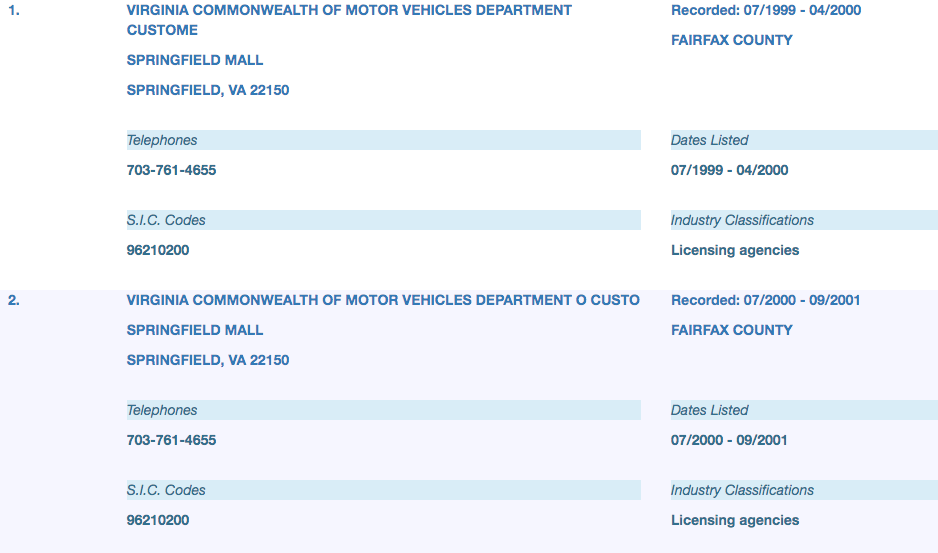
Results from DOBSearch (Screencap)

My next step was to look it up on a website I have used before for looking up businesses, dobsearch.com. Upon searching, I was able to find the business inside the mall. But the address it gave was not specific to any shop. The telephone number was old and dead. Another dead end. 

Through the number, however, I was able to find an old PDF document from the DMV that listed different customer service centers around the country. It had a slightly different address for the one in Springfield. 

6691-A Springfield Mall
Springfield, VA 22150

Unfortunately, when you type in that address into Google, it takes you to a Taco Bamba Taqueria down the road. As delicious as those tacos are, it did not quench my curious appetite for answers. Then it hit me. If I wanted to find the old Internet, I had to go to the one place that stores it for safe keeping, the Internet Archive! 

The problem was I couldn’t use on a search team like today. I had to have a website in mind. What would it be? I put in the stupidest and simplest answer I could think of: www.springfieldmall.com. Bingo. 

Springfield Mall Website, c. 2002 (Internet Archive)

Apparently the mall slogan back in 2002 was “Turn up the fun.” No wonder they wanted to gut the place and start over. Looking at the menu on the right, I chose the “Service and Financial” hyperlink, which gave me an old school list of relevant businesses. Seven businesses down from some place called “Back Rubs USA” was the DMV Express. I finally found it! It had a different 1-800 number and everything! The best part was, the directory finally showed it’s location, on Lower Level A section. Thankfully when I clicked it, it took me to a c. 2002 map of the mall. Looking at the map, I was able to decipher exactly where it was, and what happened to the location of arguably one of the most famous DMV locations in American history. 

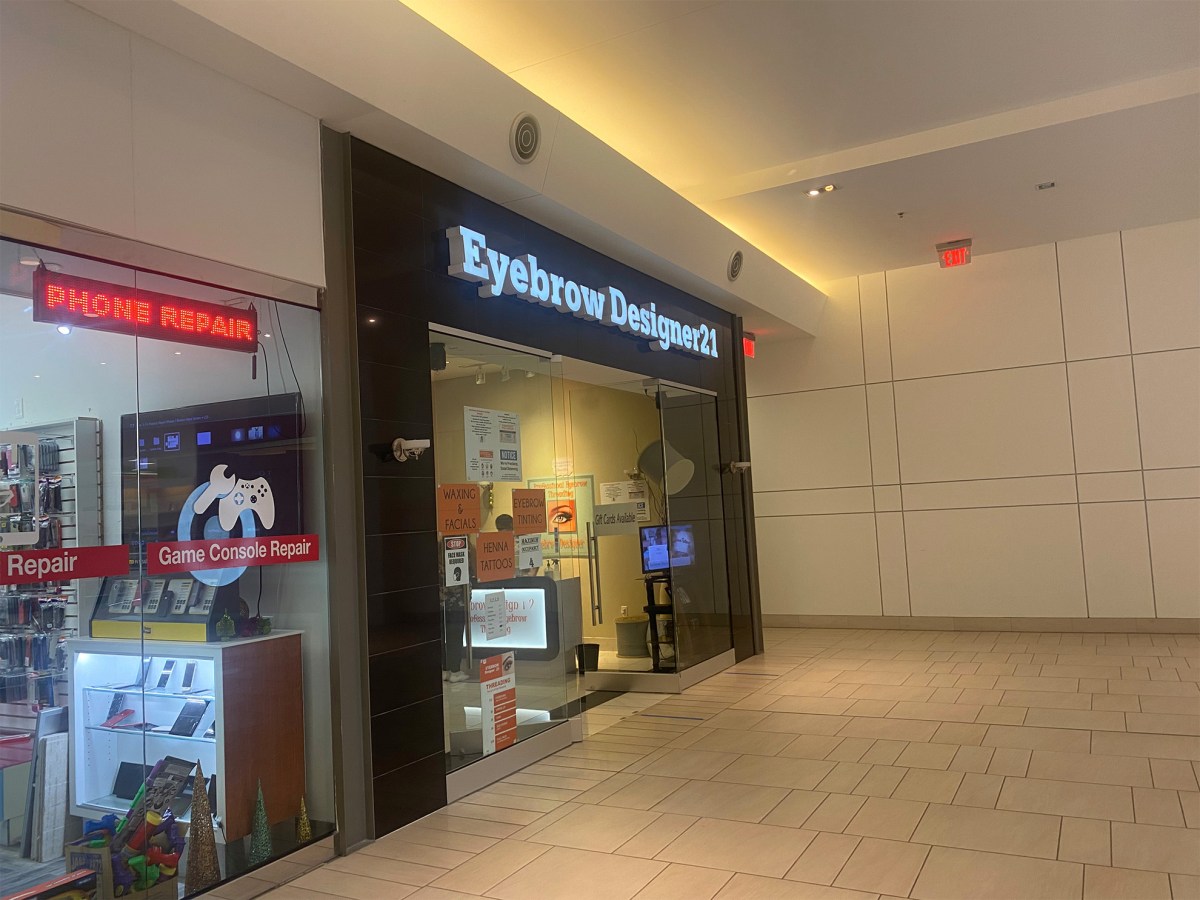
The former DMV Express is now Eyebrow Designer 21 (Eng Photo)

The former DMV Express was located just outside the lower level of the Target store underneath the escalators. Today, the location is currently a beauty spa and salon called Eyebrow Designer 21. In the few times I would peak out to get footage for this video after making a Target run, the place always seemed busy. It looks like a nice establishment. Good Yelp reviews. I wonder if they know what happened there nearly twenty years ago. 

I am thankful that modern technology allowed me to reach back two decades into the past to find what I was looking for. In a year when everything is crushing us down, rehashing the sordid details of 9/11 seemed too much for me. Using the Internet for an offbeat scavenger hunt, however, is another story. 

Categories
Arlington blog Matthew Eng

Arresting Great Value James Bond: The Aldrich Ames House

By Matthew Eng, Offbeat NOVA

I love everything about spies and spy movies. I love the cool gadgets, fast cars, faster women, and scarred villains that stand between our heroes and world destruction. 

Of course, every well-known popular culture spy is attractive, physically perfect, and has infinite money, skills, and abilities. We think of the Adonis-like figure of Daniel Craig stepping out of the water in Casino Royale, Jason Bourne throat-chopping Russian operatives, and Ethan Hunt blowing up a helicopter with bubble gum at the end of Mission Impossible.

Of course, that’s popular culture’s version of a spy. In reality, they look like Robert Hanssen, John Anthony Walker, Jonathan Pollard, Harold James Nicholson, and perhaps the most heinous American spy working for a foreign country, Aldrich Ames.

(Matthew T. Eng)

Ames is both the polar opposite of pop culture’s rendition of a spy and the perfect amalgamation of its reality. It’s as if you are showing a picture of James Bond to your mom, who sees it and replies that you have double agent spies at home. Yes. He is the Great Value version of a name brand spy. James Bland. Ethan Hunt’s Ketchup to Heinz. THAT is Aldrich Ames. 

Yet the more you look at him, the more you see the cold deadness in his eyes. The lack of remorse. They are the lifeless doll’s eyes of a shark that Quint talks about right before he is eaten by one in Jaws. He might not look it, but he is a cold-blooded assassin; one that dealt death with secrets, not force. He looks like somebody you’d see passing the checkout line of a convenience store, and wouldn’t know that he was the perpetrator of one of the worst betrayals in U.S. history — one that culminated with a nearly decade-long mole hunt that ended near a home he purchased with blood money in a quiet upper class neighborhood in Arlington, VA. 

Aldrich Ames was born in River Falls, Wisconsin, in 1941. He spent his childhood traveling with his father before settling near the CIA’s Langley headquarters in McLean. He later began his full-time career there in 1962. 

Ames and his wife Rosario (Paul Davison Crime)

On paper, Ames’ career and service at the CIA checks all of the boxes of somebody teetering the line between instability and the abyss. He had a lifelong struggle with alcohol and was financially ruined through a divorce between he and a fellow CIA agent. He was also placed in increasingly sensitive posts throughout his career. He met is second wife, Rosario, in Mexico City in the early 1980s. Despite several hiccups in his performance, he was nonetheless elevated to the chief of the Soviet branch of counterintelligence at the CIA. His job focused on the recruitment of foreign agents, the very people he would turn on in due time. 

In 1985, he sold the names of KGB officers working for the United States to a Soviet Embassy official for the amount of $50,000. He offered up more names for intelligence officials and military officers working against them in return for money. A trend developed in his routine at work. He continued to spy over nine years from Rome in the late 1980s to headquarters in Langley from 1990 to 1994.1 Many of these agents he exposed were captured by the Soviets and KGB and imprisoned. A handful were confirmed to be executed by USSR authorities shortly after their arrest and mock trial. In all, Ames betrayed at least twelve agents working for the United States within the Soviet Union and bloc countries in the 1980s and early 1990s. 

Why did he do it? In an interview after his arrest, Ames said he did it for reasons only known to him. If you asked former Director of Central Intelligence, R. James Woolsey, the “warped, murdering traitor” did it because he “wanted a bigger house and a Jaguar.”2 

Aldrich Ames House, 2512 North Randolph Street, Arlington, VA (Bigwig Digs)

And that’s exactly what he got for his troubles. Unlike the spies we see in Hollywood, Ames was careless with his spending habits. According to one report of evidence put together by the FBI, Ames and his wife Rosario spent nearly $1.4 million between April 1985 and November 1993.3 By the time of his arrest the following year, he had amassed a fortune totaling $2.5 million for nearly a decade of Soviet-financed espionage. The most egregious of his expenses came on August 1, 1989, when he bought a home in the Country Club Hills section of North Arlington on 2512 North Randolph Street. According to author Peter Maas, it was the first place that the realtor showed him. It was truly a brick and mortar representation of the new wealth he felt he so duly earned for his services. As Maas stated, “the immediate surroundings said upper middle class in capital letters.”4 

Ames bought the house outright and paid in cash. The seller first asked the realtor to ask for $540,000 and “negotiate down.” But Ames did not hesitate, offering the full amount up front. At first, the realtor thought they had perhaps gotten the money from drug-related activities because Rosario was from Colombia. Without taking out a mortgage on the house, he explained the unexplainable simply an inheritance. And just like that, Ames and his wife were instantly elevated amongst the doctors, lawyers, senior businessman, and government bureaucrats that lived next to him. 

Most popular culture spies are mobile, and you never really see where they live. Does James Bond own a toaster oven? We’ll never know because he is too busy putting armageddon on a temporary pause. Not Ames. He had it all and didn’t care about the optics. The North Randolph Street house was a statement. Rosario quickly put in renovations to the spacious five bedroom house to the tune of $95,000. The house had a spacious library and large living room. The best part was that there was no backyard access for anyone to see their activities because of a steep grade that led up to the houses on top of a large slope. Ames felt comfortable enough to build a large deck and hot tub. He made an in law suite downstairs for Rosario’s visiting family from Colombia. Along with the house came the fancy cars, clothes, and accessories, all of which he bought at a rate that far exceeded his paycheck. Either careless or naive, Ames carried on like he would never be caught. Until he was.5

CIA Mole Hunt Team (CIA)

All of these transactions made by Ames were quickly checked by a small team of CIA agents, working closely with the FBI, ultimately finding hundreds of thousands of dollars in deposits in Swiss bank accounts. This “mole hunt” team was created in 1986 after the first Soviet asset disappearances, was led by career CIA agent Jeanne Vertefeuille along with four other agents. By 1989, a lead came about pointing to Ames as the culprit. How did they know? As a friend of Ames, Diana Worthen noticed how far he and his wife were living beyond his means. The biggest giveaway was their luxurious house. After more digging and surveillance help from the FBI in 1992, they noticed a large spike in Ames’ accounts that would always come directly after his work-related rendezvous with Soviets. As a leader in the CIA’s Soviet/East Europe Division, it happened often. The FBI took over the case from there in 1993, gaining more information for his ultimate arrest, which came in February of the following year, ironically on President’s Day. 

During that holiday weekend, Ames was preparing for a trip to Moscow, no doubt to divulge more information on assets. The FBI asked his boss Dave Edgers to call and ask him to leave his house and come in to discuss something on the morning of Monday, February 21, 1994. They wanted him out of the house and separate from Rosario when they arrested him. Thankfully, Ames bought into it and told him he would be there at Langley momentarily. The FBI already knew that his typical work route meant leaving his driveway and the curve on North Randolph before turning right on North Quebec Street where he turned a left at the Nelly Custis intersection.6 

Several minutes after he hung up, Ames appeared in his Jaguar sedan with a cigarette in his mouth as he left his house and headed toward Quebec street, where he was approached by FBI agents and arrested. The nine-year manhunt was finally over. He later admitted in a television interview that he was completely shocked that he had been caught. 

Arrest Location of Ames, 1995 vs. Today
(FBI/Google Maps)

There’s one photo in particular used by the FBI to document Ames’ arrest. You can see from the photo Ames being escorted by FBI agents into a sedan. Using several sources, I discovered that the photo was taken near the intersection of North Quebec Street and Nelly Custis Drive, a short distance from his house. It looks much quieter today. I’m sure the residents of this upper middle class neighborhood feel much safer knowing the Ames’ aren’t there, even if he spent half a decade hiding in plain disguise as a Soviet-bought imposter.

Ames was convicted of espionage in 1994 and is currently serving a life sentence without the possibility of parole in the Federal Correctional Institution in Terre Haute, Indiana. His wife Rosario received a five-year sentence for tax evasion and conspiracy to commit espionage. She was clearly a co-conspirator in her husbands activities, as it was found she had as healthy a spending habit as Aldrich. When the FBI searched their house after the arrest, they found more than 500 pairs of shoes, sixty purses, and 165 unopened boxes of pantyhose.7 

There is a small silver lining to all of this. In 1995, Ames’s prosecutors presented a check in the amount of $549,000 for the victims of his crimes. The check included the price of the Randolph Street house as well as the other assets seized by the government, including his 1992 Jaguar sedan and property ranging from expensive suits to silver. According to the Washington Post, the sum only represented a fifth of the $2.7 million that Ames received for spying on behalf of Moscow.

So where does the house stand today?  According to public records, the home was last sold for $401,000 in April 1995. Today, the estimate of the household is listed at $1,184,351. Houses in the Country Club Hills neighborhood run from just under a $1 million on the low end to nearly $3 million.9 The median estimate for price in the neighborhood is just below this at $1.167 million. Take that against the median value for a house in Arlington, which is $751,000, still at the higher end in the entire country. You can see why Ames selected this particular neighborhood as his home base. According to one website, Arlington’s cost of living is 53% above the national average.10 

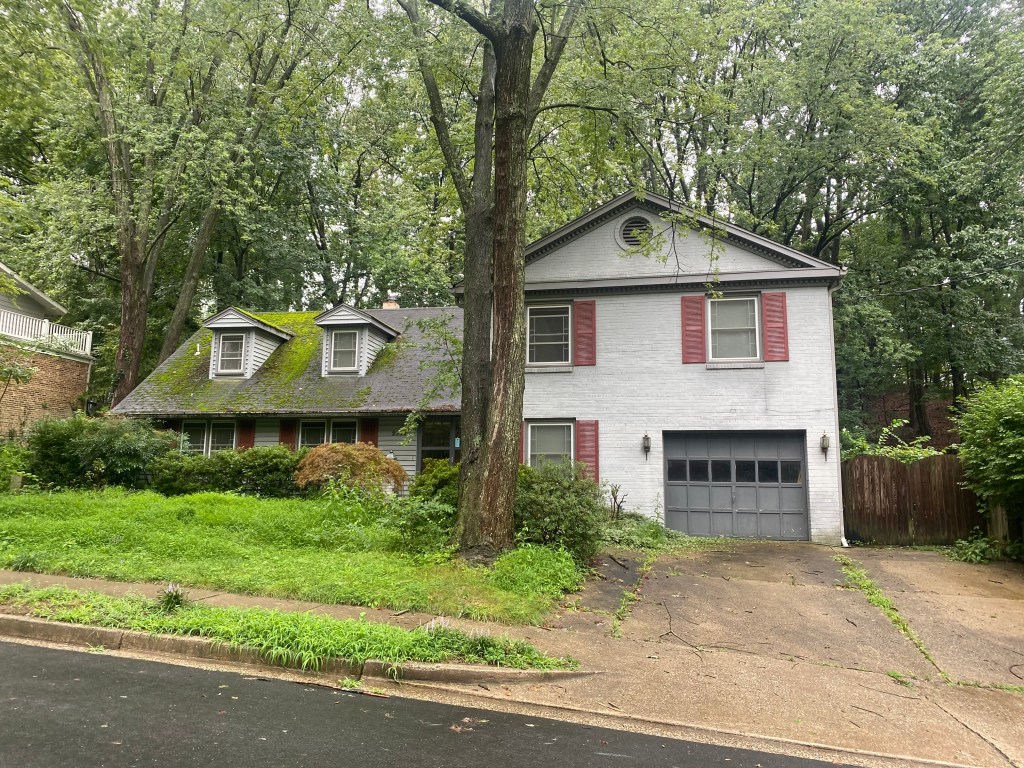
Former Residence of Aldrich Ames Today (Matthew Eng)

Looking at this house on North Randolph Street today, you would hardly guess it fits that description of domestic opulence. Driving through the neighborhood, Ames’ former residence sticks out like a sore thumb. The front yard appears overgrown and unkempt. Grass is growing between cracks in the driveway. The siding on the house is dirty and disheveled. Moss grows in sections on the roof near the second floor windows. The colors are altogether muted from its former heyday. 

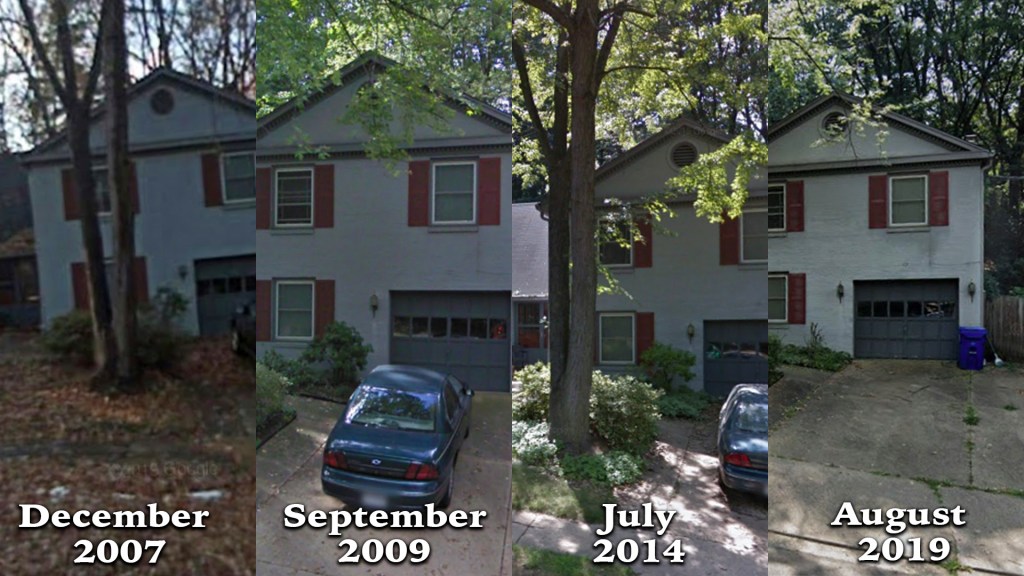
Composite of Former Ames Household Over Twelve Years (Google Maps)

It wasn’t always that way. Thanks to Google Maps, there is a record of what the house looked like on four separate occasions: December 2007, September 2009, July 2014, and August 2019. You can see the slow decline of the look and feel of the house over time. It’s hard to tell if anyone is currently occupying the house. A traitor’s house does not deserve light and love. Perhaps it should remain this way — nearly derelict and devoid of charm or character. It stands as a reminder of the cost of secrets and information and the faustian bargain one must make to achieve an unearned status of wealth and prestige. 

Footnotes:

  1. Tim Weiner, “Why I Spied; ALDRICH AMES,” The New York Times, July 31, 1994.
  2. Weiner, “Why I Spied.”
  3. Senate Select Committee on Intelligence, An Assessment of the Aldrich H. Ames Espionage Case and Its Implications for U.S. Intelligence, November 1, 1994. Accessed September 1, 2020, LINK.  
  4. Peter Maas, Killer Spy: The Inside Story of the FBI’s Pursuit and Capture of Aldrich Ames, America’s Deadliest Spy (New York: Warner Books, 1995), 104-105.
  5. Maas, Killer Spy, 105.
  6. Maas, Killer Spy, 213. 
  7. Maas, Killer Spy, 222-223. 
  8. Charles W. Hall, “Aldrich Ames’s Spying Booty Shifted To a Good Cause.” Washington Post, September 1, 1995.
  9. Zillow, 2512 N. Randolph Street. Accessed September 4, 2020, LINK.
  10. Education Loan Finance, “10 Most Expensive Cities to Live In for 2020,” March 2, 2020. Accessed September 4, 2020, LINK.
Categories
blog Instagram Matthew Eng

Offbeat NOVA Presents: NOVAcancy

By Matthew Eng, Offbeat NOVA

A long time ago, Justin Timberlake once described my hometown of Virginia Beach as “a desolate area of the world” with “nothing but strip malls and Chick-fil-A’s.” Personally, I take great offense to that. There weren’t that many Chick-fil-A’s in Virginia Beach when I grew up. 

It’s true that Virginia Beach has a seemingly endless stream of retail and shopping centers along its main thoroughfare, Virginia Beach Boulevard. From the main artery of the boulevard, retail veins spring from all directions, including the most important to my childhood, Lynnhaven Parkway. About a half mile up the road from my main childhood mall and shopping area stood Toy Castle, standing alone like a mansion on a hill in a valley of mediocre retail and chain restaurants. 

Since standalone toy stores have vanished in favor of small sections in larger retail stores like Wal Mart and Target, it’s hard to find a modern day comparison. When I was a kid, my mom would take me there every so often. I would go in, my ActionToy Guide in my hand, ready to pick out the latest and greatest action figure.

Formerly Toy Castle, Virginia Beach (Google Maps Screencap)

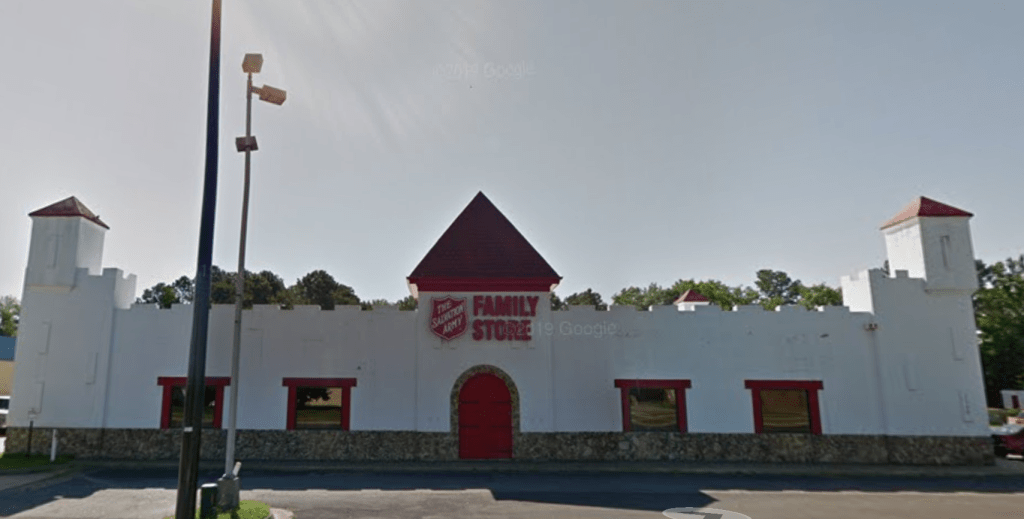
Toy Castle was definitely a place reserved for special occasions. Toy stores in the late 1980s were a paradise, and visiting one was a special treat reserved for accomplishments, like A’s on math tests. Toy Castle, however, was extra special. The large standalone building looked exactly like an old school Playmobil castle. The yellow exterior was flanked by two large turrets on either end of the building. The bottom of the structure was covered in rocks, giving the effect that the parking lot was a giant asphalt moat. The icing on the cake was the drawbridge door that led you into into its great hall of retail. 

But the magic wouldn’t last. When I was a teenager, Toy Castle closed and became something entirely different: a craft store. Paul’s Arts and Crafts stayed there for a number of years until it eventually became a Salvation Army, which is still there today. Remarkably, the turreted building never drastically altered its appearance. Sure, it’s had a few paint jobs over the years, but the structure’s bones have remained intact. 

This idea of retail rebirth is something that has always sparked my fascination. Businesses and restaurants close down. New businesses open, but the remnants of past establishments remain. If you look closely, you can see instances of this phenomenon all over the place. Wendy’s restaurants become a cash advance. Extinct department stores become grocery stores. Later, the extinct grocery store becomes a fitness center.

Toys R US/Aldi, Alexandria VA (2018/2020)

Fast forward to the present day. I have lived in northern Virginia for almost seven years, and in that time I have already seen a bevy of businesses change hands, leaving the shell of their former selves to molt and emerge from their cocoons as something entirely different. It would be an interesting project to document these businesses. Although the buildings may not hold the mythical grandeur that Toy Castle once held in my heart, it’s important to tell the story of the changing landscape of the area. It’s also a great way to get feedback from viewers reading this who know of a place that has undergone such a restoration. Surely there are hundreds of places in the area that have closed down and reopened as something else. We would love to hear your feedback. 

We are starting this new series on our Instagram, so make sure to check it out and check back often. Although we are documenting these buildings now, they might give us ideas for future posts of Offbeat NOVA. We are always looking for new ideas, and the list is ever-expanding.

Follow us as we update content in the next week and beyond with the hashtags #offbeatnova and #NOVAcancy. The first few we will debut this week are naturally in our neck of the woods in Fairfax County, but we’d love to hear what you have to say. Drop us a line in our Instagram DM or email us at offbeatnova@gmail.com. Enjoy NOVAcancy! 

Categories
Arlington blog Matthew Eng

Real and Stagnate: Arlington’s Fast Food Music Grail

By Matthew Eng, Offbeat NOVA

I have a confession to make. It’s going to be a hard one to admit to fellow music lovers. Here it goes. 

I wasn’t into Nirvana until much later in life. I know…I KNOW.  

I was very young when “Smell’s Like Teen Spirit” became the Seattle earworm that congested radio and television airwaves in the early 1990s. When Nevermind was released in 1991, I was only seven years old. My experience with music up until then had been whatever my dad listened to. If you wanted to mosh to some Dan Fogelberg, James Taylor, or Jackson Browne in the early 1990s, I was your guy. I knew all the words to “Somebody’s Baby” and “Run for the Roses” long before I committed the mantra-like meanderings of the band’s biggest hit inside a poorly-ventilated high school gymnasium to memory.  

My first real exposure to Nirvana came just before the end the band in 1993 for the televised Unplugged in New York concert on MTV. They played it on the station so much afterwards that I had plenty of time to sneak into our room above the garage to watch it. The entire concert blew me away. What impressed me the most, though, was their drummer, Dave Grohl. I didn’t know anything about him seeing him on stage for that televised concert. Throughout the concert, Grohl played an acoustic drum kit and sang backup vocals perfectly. He even picked up an acoustic bass for one of the songs. How could he be so good at more than one instrument? I had to know more. By the time I did my research about Grohl and the rest of the band (which in the early 90s meant combing through magazines at the local bookstore), Nirvana was over. Cobain died by suicide in April 1994 and the band broke up forever shortly after. Would I ever see my newfound musical hero again? As it turns out, I would. 

Grohl recording Foo Fighters (Photo by Michel Linssen/Redferns)

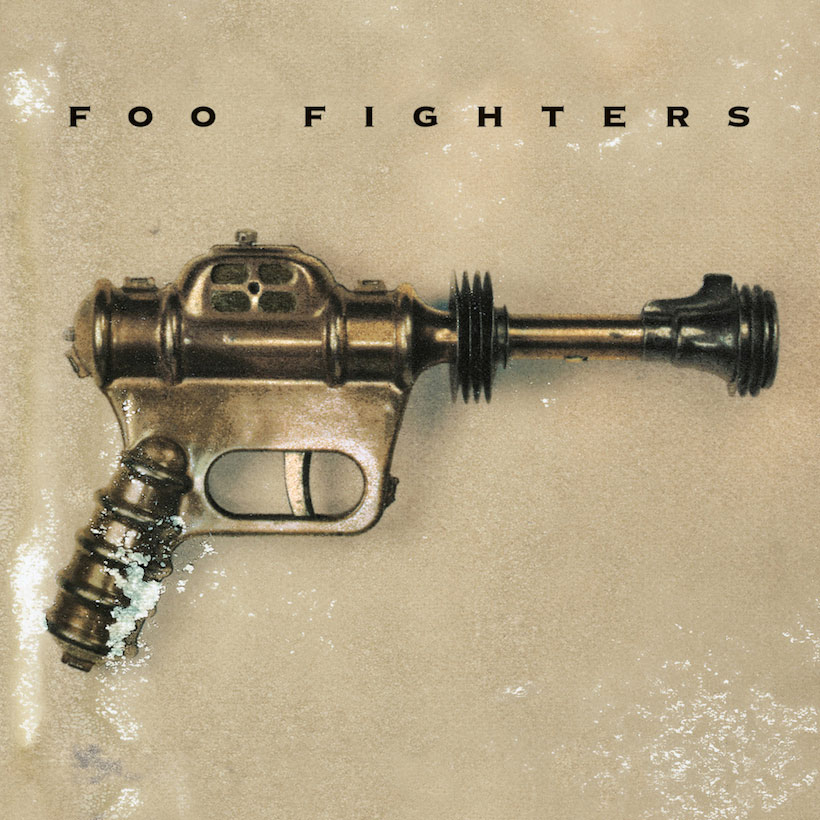
Unbeknownst to me, Grohl had been secretly recording his own songs while he played drums in Nirvana. Not only was he good at drums, singing, and bass, he was a hell of a guitar player. He could do it all. Six months after Cobain’s death, Grohl booked six days in a local Seattle studio to record what would become the first Foo Fighters record. Besides a few guest appearances, he recorded every instrument and sang every word. 

Foo Fighters was released on Roswell Records on Independence Day, 1995. When I heard about the release with my friends, all of which were now enamored with Grohl and grunge music culture, I begged my dad to go to the local music store to get it. He eventually acquiesced my request, and we went to Planet Music in Virginia Beach. I can remember bringing my SONY discman with me so I could listen to it immediately after ripping off the impossibly-hard-to remove shrink wrap encasing the compact disc. 

Keep in mind, Foo Fighters would not be my first grunge music purchase at that point. I had several already in my collection by July 1995, including Pearl Jam’s Ten, Soundgarden’s Superunknown, The Smashing Pumpkins’ Siamese Dream, and of course, Nirvana’s Unplugged in New York. I had never been more excited up to the point getting a record than when I did with Foo Fighters. “This is a Call,” their first single, released on the radio a few weeks before, and I was in love with the overall sound. It sounded like Nirvana, but more polished. It was punchier and faster paced. One might say it had the existential qualities of punk rock music, a genre I would also embrace less than two years later. But for 1995, it was all about this release. 

Foo Fighters (Roswell Records/1995)

The first couple of songs were fantastic off the bat. To this day, there are very few first tracks that hit harder than “This is a Call.” The next two songs, which also became singles and iconic music videos to boot, still resonate with me. It’s the middle of the album that I continue to go back to, with one song in particular. Standing up among a three song set exploring some differing styles such as eighties post-punk nostalgia (“Good Grief”) and grunge-drenched shoegaze (“Floaty”) is the two minute and forty-six second brain melt that is “Weenie Beenie.”

“Weenie Beenie” was the first song I ever heard that felt truly aggressive to me. The aggression felt good, even for a middle class kid with a b-plus average. The song starts loud and ends louder. Grohl’s characteristic scream is put on display there for the first time. The drums are open ended with plenty of hi hat filling the empty space between the drones of bass and guitar. The snare hits like hammers on your ear drums. The guitars are tuned down and turned up to a nearly uncomfortable level. In the immortal words of Nigel Tufnel, the amps “go to eleven.” It’s a sound I would identify with for the rest of my life. Just because a song sounds angry, doesn’t mean it IS about anger. Without sounding too nostalgic, the song is an emotional one. Every music lover has a genesis to their obsession. Mine happens to be “Weenie Beenie.” 

My first experience with music, c. mid 1990s.

I couldn’t play a single instrument when the eponymous release came out in 1995, but it undoubtedly spurred me to pick up my first, a black and white bass guitar, for my birthday in 1996. I still own and cherish that bass to this day. Over the course of middle and high school, I made it a goal to learn all the instruments Dave Grohl could play. I can play all of them now, in varying degrees of precision (or lack thereof). 

It wasn’t until I was in college at James Madison University that I found out through some old archived interview that “Weenie Beenie” was named after a northern Virginia fast food stand nearby where Grohl grew up. I had to go. But geography, my lack of vehicle, and my studies (…right) kept me from making a pilgrimage to this fast food holy grail. After a while, I simply forgot about it, even if I continued to make that album part of my rotation throughout my high school years and beyond. 

It’s been twenty five years since Foo Fighters was released. What better time to FINALLY go to this iconic northern Virginia establishment than now? Once we started the Offbeat NOVA project, it was the first thing I wrote down. We had to finally go. I was not disappointed. 

Weenie Beenie is located just north of the Shirlington neighborhood in Arlington. The small restaurant, offering walk-up service only (no doubt a great boon for business in the currently pandemic) sits unpretentiously in a small parking lot across from a park. The restaurant is the last remaining of a chain of restaurants created by notorious pool shark Bill Staton and his uncle Carl in 1950. According to the Arlington Public Library, Staton funded the first stand alter collecting nearly $30,000 in earnings from a profitable gambling trip in Arkansas. The namesake of the establishment became the nickname of the pool player for the rest of his life.1 

The food tasted amazing (Angela H. Eng Photo)

I asked Angela to put the song on as we drove down Shirlington Road. where the restaurant was located. After twenty five years, I had finally arrived. 

When I looked it up, Google said it was known for “BBQ sandwiches and hot dogs.” I wasn’t feeling a hot dog on a hot summer day, so we decided on grubbing on a pair of barbecue sandwiches and fries. As we ordered, our daughter Zelda charmed all of the waiting customers around us. It was so unbearably hot and humid that day (nearly 100 degrees), that all of us waiting for our food attempted to hang out in the small amount of shade the tiny orange eaves the restaurant provided from the direct sunlight. After about fifteen minutes, we finally received our hot bag of food. I brought it back to the car and cranked the air conditioning before eating my sandwich. The first thing I noticed was the bun. Normally a soggy afterthought to barbecue sandwiches, the bun was thick and toasted, holding all of the seasoned meat and cool coleslaw together. 

I took my first bite of the barbecue sandwich as Dave growled into the chorus of the song inspired by the place I was finally eating at. The meat was warm and well seasoned, with just a hint of spice to it. It also had a tang to it reminiscent of the North Carolina-vinegar style I love so much. The coleslaw was not unlike the restaurant itself, simple and unpretentious. The sandwich reminded me of a better version of a famous drive-in restaurant I grew up eating at in Norfolk, VA, Doumars. Whereas those sandwiches were small and soggy, the one dished up at Weenie Beenie was large, crispy, and filling.

Zelda and I patiently wait for our food (Angela H. Eng Photo)

But I’m not finished. I haven’t talked about the fries yet.  I don’t have a picture of the fries because we ate them too fast. Weenie Beenie serves large, wedge-cut fries with an addicting seasoned coating on them. Complimented by the sugary, umami taste of ketchup, they were crispy and perfect. By the time the song was over, we were halfway through our entire meal. It was gone completely in another two minutes. We drove away from Weenie Beenie still sticky with sweat but full and content with delicious food. It’s definitely not a meal you can have all the time, but surely worth waiting nearly thirty years for. Eating there closed a very important chapter of my life, when music was new and exciting. 

I highly recommend giving this local business your patronage. When you roll up on the unassuming establishment in your car, don’t forget to crank the seventh track on the first Foo Fighters album while you do. 

Footnotes

  1. Arlington Public Library, “The Weenie Beenie,” Link.

Categories
Alexandria blog Matthew Eng

Beyond a “Ruinous Condition:” Alexandria’s Historic Wilkes Street Tunnel (PART III)

(This is the last edition of a three-part series on Alexandria’s historic Wilkes Street Tunnel. Read PART I | Read PART II)

Matthew Eng, Offbeat NOVA

PART III: Out of the Dark and Into the Light

The Wilkes Tunnel, once a fixture of the local newspaper in the mid to late 1900s, lost its journalistic spotlight at the dawn of the twentieth century. The tunnel never made large headlines again and retreated to the minutiae of daily life. Minor repairs were done at the turn of the century, such as new safety signals in 1899 that regulated the speed of the incoming trains to a more respectable five miles per hour. Public opinion remained unchanged into the new century. By 1905, citizens still lodged ineffective complaints against the tunnel, particularly the east end. Under the headline of “A Dangerous Trap,” a May 12, 1905, article pulled out all the old theatrics of Alexandrians nearly two generations ago. “Sooner or later some careless child or nurse will precipitate a baby carriage and its occupant to the railroad track below, or a pedestrian tumble down the incline in the night, when a damage suit against the city will follow,” the article mused. Not long after that article was written, a young child happened fulfill the complaintive prophecy and fall into the tunnel. A young boy named Norton, a resident of tunnel town, fell into the tunnel just in front of his home off Wilkes Street in early September 1907. He as in fact the second child to fall in the tunnel that year. It became such an issue that the city Mayor at the time, F.J. Paff, to create a fence around the Western entrance. It was never confirmed if a fencing was put in place, as the complaints continued in the first decade of the new century. 

A collection of articles from the early 20th century about the Wilkes Tunnel (Alexandria Gazette)

Vagrants were caught playing poker in the concealed light of the tunnel’s entrances. Other children continued to jump on railcars and use the tunnel like some long-gone fortification to throw stones at railcars and pedestrians passing by. On April Fool’s Day 1911, the Gazette reported a prehistoric skeleton of a mastodon was “unearthed” from the east end of the runnel where the railroad company was making repairs. It was enough news for a small crowd of excitable residents to congregate at the tunnel the next morning, only to find the ruse a product of the mere changing of a calendar page and a forgetful public gullible enough to belief such a ruse.1  

During the First World War, the tunnel was deepened to accommodate higher boxcars for the war effort. A recent archaeological investigation by the Office of Historical Alexandria unearthed a second rail line curving at Union Street and converging at the eastern end of the Wilkes Tunnel near a recent park construction. According to Archaeologist Garrett Fesler, the track was built between 1921 and 1941 before ultimately disappearing by 1964.2 Four years later in 1968, the Wilkes Tunnel was included in the first state-wide survey conducted by the Historic American Engineering Record (HAER). The sketches reside on the Library of Congress’s website. By this time, the surveyor sketching the drawing noted that the tunnel now lied “abandoned in the heart of Alexandria.” 

The tunnel continued in use until 1975 when the tracks were removed, this time for good. The tunnel was soon repurposed as the pedestrian and bike pathway as it stands today. Somewhere between then and today, a historical marker was placed forward of the eastern entrance, detailing the history and legacy of the tunnel. That faded sign, like the tunnel, has also seen its better days. Plaques on the western end of the tunnel tell more of the tunnel’s history and connection to the once influential railroad that traversed through it. It’s hard to tell if anyone notices beyond the casual tourist or the jogger taking a short breather. 

The closure of the tunnel was likely due to the decline of industrial activity on the Alexandria waterfront. The Old Town area has only increased in popularity in the years since the tunnel’s closure, becoming a Northern Virginia showpiece of new posh ships, stores, and restaurants still showing a feint veneer of the city’s past. The heart of this area is the regal intersection of King Street and Union the very road where the former Orange and Alexandria track once passed through before curving into the Wilkes Tunnel a half mile later. 

Nearby Hoof’s Run Bridge, on the National Register since 2003 (Matthew Eng Photo)

The tunnel is not currently listed in the National Register of Historic Places. Alexandria is a city where you can’t throw a stone without finding the rounded bronze plaque bequeathed by the Department of the Interior. In all, there are forty-nine properties and districts listed under the National Register in the city of Alexandria. That includes six National Historic Landmarks (like the Historic District itself or Gadsby’s Tavern). The Wilkes Tunnel does not apply to either. Interestingly enough, the only other surviving portion of the Orange and Alexandria Railroad present down the street from the tunnel, the Hoof’s Run Bridge, has been on the National Register since 2003. In the nomination form for the bridge, the author references the “tunnel in Alexandria” on multiple occasions but treats it as the lesser of two surviving structures to the now-defunct railroad. Perhaps those deep-seeded misgivings of the residents of “tunnel town” were too much after all.3 

That doesn’t mean the tunnel has left the public eye in recent years. In the Internet information age, the tunnel has made a resurgence of interest in travel websites, biking blogs, Yelp reviews, and Flickr pages. It’s a popular place for local couples to take wedding or engagement photos. If they only knew the irony of those photos given its history and connection to unchecked domestic violence. Less than a mile away from the Old Town Alexandria Ghost Tour hub on King Street, the tunnel has made its rounds among the macabre musings of several amateur writers such as this humble entry into the historical/pop culture lexicon. If anything, the tunnel is photogenic and short enough for light to pass through your camera lens, making it eerie, but not eerie enough. 

Define Irony: Taking engagement photos in a tunnel where a jealous husband tried to kill his younger, spendthrift wife (Google Image Screenshot)

Looking at Google Maps, the overhead satellite map shows the curved road where the track from Union Street bent sharply into the Wilkes Street Tunnel. That is where the high-priced townhomes are located today, standing guard like affluent sentinels standing guard over their not-so historic landmark. How many have actually contemplated the tunnel’s history before passing through it? 

High-priced condominiums nearby the tunnel’s eastern entrance off Union Street (Matthew Eng Photo)

A small park called Windmill Hill just over the bluff where Fairfax Street passes over the tunnel, providing the bookend to the overpriced homes of the city’s nouveau riche on the right of the eastern entrance. There is a spacious basketball court and playground where kids play; no doubt they are local to the area. One would highly doubt they refer to themselves as residents of “tunnel town” today as they did so long ago.

Walking through the tunnel, you don’t feel any “cold spots” that some bloggers love to pontificate about in their content. You can still see the simplistic vaulted sandstone walls as you walk into it. The farther you walk in, the more you take in the landmark’s dank, mossy bouquet, especially on a warm day. At the tunnel’s center point, approximately half of the one-hundred-and-seventy-foot distance, it is very dark, even in the daytime. Your mind does wonder if you are standing at the exact point where Private Scotten was murdered. Where they dragged the dead body to be crushed by a passing train during the Civil War. And, of course, where Mollie McKinley struggled with her violent husband before being shot four times. You walk in the same blood-soaked path she did in near darkness before she sought help out into the daylight. You don’t feel an otherworldly presence while you are in the tunnel, but your mind will at least wander with its strange and complex history carefully in tow. 

Graffiti inside the tunnel (Matthew Eng Photo)

Very little else of the historic track remains in Alexandria. But then again, Alexandria is no longer the type of city that sustains railroads, foundries, and tanneries as it did in its commercial and industrial heyday. The tunnel once attracted anything form concerned parents, drunkards, vagrants, to the occasional murderer. Nowadays, it’s a breezeway for runners and bicyclists’ daily workout regimen. The tunnel, in many cases, is one of the few remaining pieces of that city’s history untainted by gentrification and modern conveniences. The city that exists around it today is much different. Alexandria, for better or worse, has evolved into tunnel town’s polar opposite. “It wasn’t always high-priced townhomes, archaeologist Garrett Fesler once said. “It was a working, thriving city.” Whatever tiny part the Wilkes Tunnel played in that narrative; it kept its working class literally on track. 

Footnotes

  1. Alexandria Gazette, September 4, 1907; Alexandria Gazette, April 1, 1911. 
  2. Evan Berkowitz, “Construction Unearths 20th-Century Railroad Tracks,” Alexandria Times, July 20, 2017. Accessed 12 July 2020, Link.
  3. Virginia Department of Historic Resources, “Orange and Alexandria Railroad’s Hoof’s Run Bridge,” PDF Upload (April 2018), Accessed 11 July 2020, Link.