Categories
Alexandria blog Matthew Eng

Beyond a “Ruinous Condition:” Alexandria’s Historic Wilkes Street Tunnel (PART III)

(This is the last edition of a three-part series on Alexandria’s historic Wilkes Street Tunnel. Read PART I | Read PART II)

Matthew Eng, Offbeat NOVA

PART III: Out of the Dark and Into the Light

The Wilkes Tunnel, once a fixture of the local newspaper in the mid to late 1900s, lost its journalistic spotlight at the dawn of the twentieth century. The tunnel never made large headlines again and retreated to the minutiae of daily life. Minor repairs were done at the turn of the century, such as new safety signals in 1899 that regulated the speed of the incoming trains to a more respectable five miles per hour. Public opinion remained unchanged into the new century. By 1905, citizens still lodged ineffective complaints against the tunnel, particularly the east end. Under the headline of “A Dangerous Trap,” a May 12, 1905, article pulled out all the old theatrics of Alexandrians nearly two generations ago. “Sooner or later some careless child or nurse will precipitate a baby carriage and its occupant to the railroad track below, or a pedestrian tumble down the incline in the night, when a damage suit against the city will follow,” the article mused. Not long after that article was written, a young child happened fulfill the complaintive prophecy and fall into the tunnel. A young boy named Norton, a resident of tunnel town, fell into the tunnel just in front of his home off Wilkes Street in early September 1907. He as in fact the second child to fall in the tunnel that year. It became such an issue that the city Mayor at the time, F.J. Paff, to create a fence around the Western entrance. It was never confirmed if a fencing was put in place, as the complaints continued in the first decade of the new century. 

A collection of articles from the early 20th century about the Wilkes Tunnel (Alexandria Gazette)

Vagrants were caught playing poker in the concealed light of the tunnel’s entrances. Other children continued to jump on railcars and use the tunnel like some long-gone fortification to throw stones at railcars and pedestrians passing by. On April Fool’s Day 1911, the Gazette reported a prehistoric skeleton of a mastodon was “unearthed” from the east end of the runnel where the railroad company was making repairs. It was enough news for a small crowd of excitable residents to congregate at the tunnel the next morning, only to find the ruse a product of the mere changing of a calendar page and a forgetful public gullible enough to belief such a ruse.1  

During the First World War, the tunnel was deepened to accommodate higher boxcars for the war effort. A recent archaeological investigation by the Office of Historical Alexandria unearthed a second rail line curving at Union Street and converging at the eastern end of the Wilkes Tunnel near a recent park construction. According to Archaeologist Garrett Fesler, the track was built between 1921 and 1941 before ultimately disappearing by 1964.2 Four years later in 1968, the Wilkes Tunnel was included in the first state-wide survey conducted by the Historic American Engineering Record (HAER). The sketches reside on the Library of Congress’s website. By this time, the surveyor sketching the drawing noted that the tunnel now lied “abandoned in the heart of Alexandria.” 

The tunnel continued in use until 1975 when the tracks were removed, this time for good. The tunnel was soon repurposed as the pedestrian and bike pathway as it stands today. Somewhere between then and today, a historical marker was placed forward of the eastern entrance, detailing the history and legacy of the tunnel. That faded sign, like the tunnel, has also seen its better days. Plaques on the western end of the tunnel tell more of the tunnel’s history and connection to the once influential railroad that traversed through it. It’s hard to tell if anyone notices beyond the casual tourist or the jogger taking a short breather. 

The closure of the tunnel was likely due to the decline of industrial activity on the Alexandria waterfront. The Old Town area has only increased in popularity in the years since the tunnel’s closure, becoming a Northern Virginia showpiece of new posh ships, stores, and restaurants still showing a feint veneer of the city’s past. The heart of this area is the regal intersection of King Street and Union the very road where the former Orange and Alexandria track once passed through before curving into the Wilkes Tunnel a half mile later. 

Nearby Hoof’s Run Bridge, on the National Register since 2003 (Matthew Eng Photo)

The tunnel is not currently listed in the National Register of Historic Places. Alexandria is a city where you can’t throw a stone without finding the rounded bronze plaque bequeathed by the Department of the Interior. In all, there are forty-nine properties and districts listed under the National Register in the city of Alexandria. That includes six National Historic Landmarks (like the Historic District itself or Gadsby’s Tavern). The Wilkes Tunnel does not apply to either. Interestingly enough, the only other surviving portion of the Orange and Alexandria Railroad present down the street from the tunnel, the Hoof’s Run Bridge, has been on the National Register since 2003. In the nomination form for the bridge, the author references the “tunnel in Alexandria” on multiple occasions but treats it as the lesser of two surviving structures to the now-defunct railroad. Perhaps those deep-seeded misgivings of the residents of “tunnel town” were too much after all.3 

That doesn’t mean the tunnel has left the public eye in recent years. In the Internet information age, the tunnel has made a resurgence of interest in travel websites, biking blogs, Yelp reviews, and Flickr pages. It’s a popular place for local couples to take wedding or engagement photos. If they only knew the irony of those photos given its history and connection to unchecked domestic violence. Less than a mile away from the Old Town Alexandria Ghost Tour hub on King Street, the tunnel has made its rounds among the macabre musings of several amateur writers such as this humble entry into the historical/pop culture lexicon. If anything, the tunnel is photogenic and short enough for light to pass through your camera lens, making it eerie, but not eerie enough. 

Define Irony: Taking engagement photos in a tunnel where a jealous husband tried to kill his younger, spendthrift wife (Google Image Screenshot)

Looking at Google Maps, the overhead satellite map shows the curved road where the track from Union Street bent sharply into the Wilkes Street Tunnel. That is where the high-priced townhomes are located today, standing guard like affluent sentinels standing guard over their not-so historic landmark. How many have actually contemplated the tunnel’s history before passing through it? 

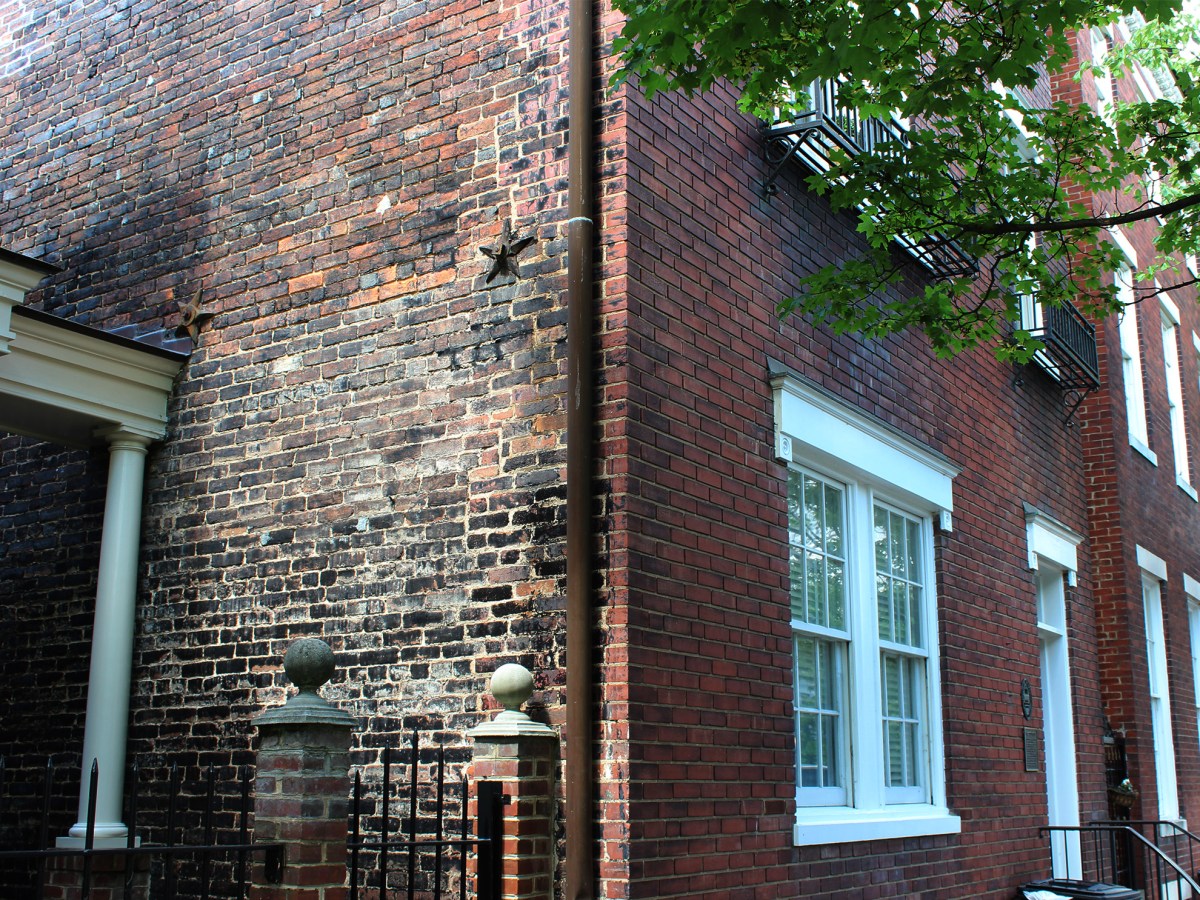
High-priced condominiums nearby the tunnel’s eastern entrance off Union Street (Matthew Eng Photo)

A small park called Windmill Hill just over the bluff where Fairfax Street passes over the tunnel, providing the bookend to the overpriced homes of the city’s nouveau riche on the right of the eastern entrance. There is a spacious basketball court and playground where kids play; no doubt they are local to the area. One would highly doubt they refer to themselves as residents of “tunnel town” today as they did so long ago.

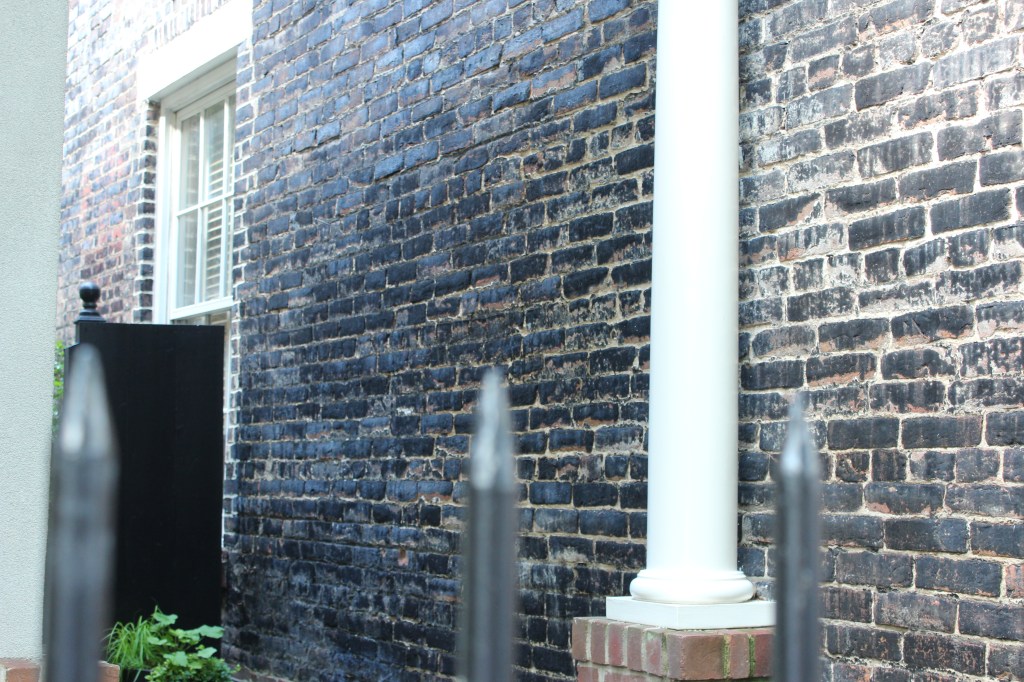
Walking through the tunnel, you don’t feel any “cold spots” that some bloggers love to pontificate about in their content. You can still see the simplistic vaulted sandstone walls as you walk into it. The farther you walk in, the more you take in the landmark’s dank, mossy bouquet, especially on a warm day. At the tunnel’s center point, approximately half of the one-hundred-and-seventy-foot distance, it is very dark, even in the daytime. Your mind does wonder if you are standing at the exact point where Private Scotten was murdered. Where they dragged the dead body to be crushed by a passing train during the Civil War. And, of course, where Mollie McKinley struggled with her violent husband before being shot four times. You walk in the same blood-soaked path she did in near darkness before she sought help out into the daylight. You don’t feel an otherworldly presence while you are in the tunnel, but your mind will at least wander with its strange and complex history carefully in tow. 
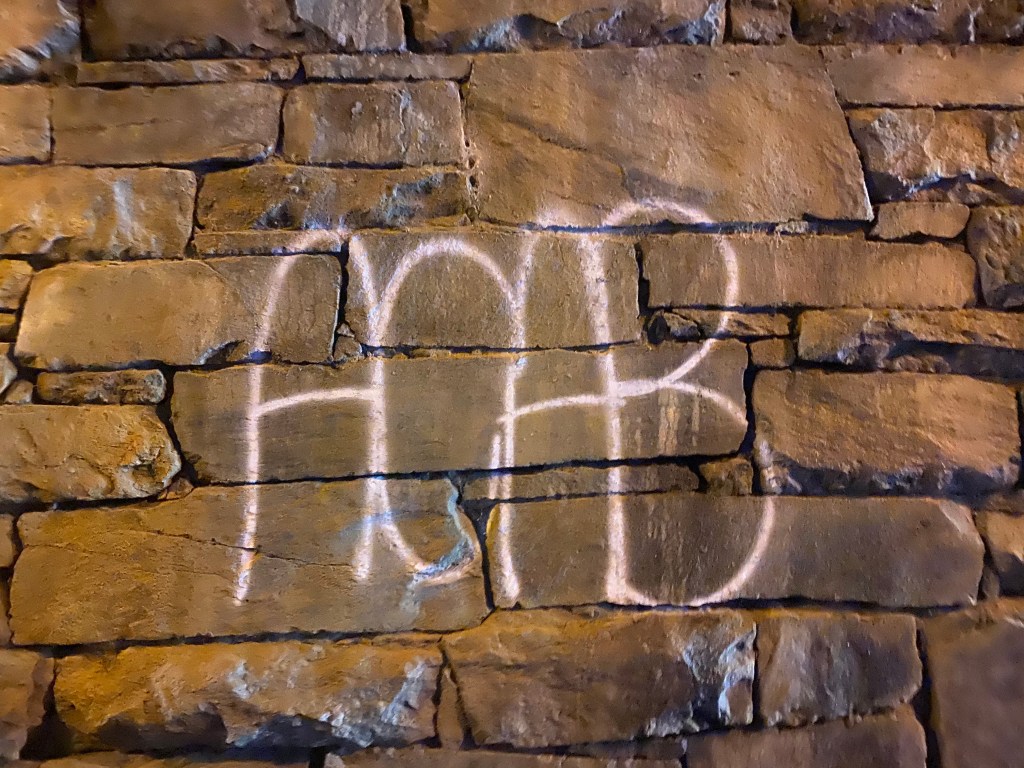
Graffiti inside the tunnel (Matthew Eng Photo)

Very little else of the historic track remains in Alexandria. But then again, Alexandria is no longer the type of city that sustains railroads, foundries, and tanneries as it did in its commercial and industrial heyday. The tunnel once attracted anything form concerned parents, drunkards, vagrants, to the occasional murderer. Nowadays, it’s a breezeway for runners and bicyclists’ daily workout regimen. The tunnel, in many cases, is one of the few remaining pieces of that city’s history untainted by gentrification and modern conveniences. The city that exists around it today is much different. Alexandria, for better or worse, has evolved into tunnel town’s polar opposite. “It wasn’t always high-priced townhomes, archaeologist Garrett Fesler once said. “It was a working, thriving city.” Whatever tiny part the Wilkes Tunnel played in that narrative; it kept its working class literally on track. 

Footnotes

  1. Alexandria Gazette, September 4, 1907; Alexandria Gazette, April 1, 1911. 
  2. Evan Berkowitz, “Construction Unearths 20th-Century Railroad Tracks,” Alexandria Times, July 20, 2017. Accessed 12 July 2020, Link.
  3. Virginia Department of Historic Resources, “Orange and Alexandria Railroad’s Hoof’s Run Bridge,” PDF Upload (April 2018), Accessed 11 July 2020, Link.

Categories
Alexandria blog Matthew Eng

Beyond a “Ruinous Condition:” Alexandria’s Historic Wilkes Street Tunnel (PART II)

(This is the second of a three-part series on Alexandria’s historic Wilkes Street Tunnel. Read PART I)

Matthew Eng, Offbeat NOVA

PART II: The Curious Case of Mollie McKinney

Naturally, the track fell into disrepair during the Reconstruction period, adding insult to the already dilapidated condition of the tunnel. At one point, there was a resolution that instructed the Committee on Streets to take steps to have the problematic east end of the tunnel walled in and filled. The resolution never gained any speed and was soon forgotten.1 

After the Panic of 1873, the railroad consolidated into the Virginia Midland Railway, one of the many times the tracks under the tunnel would change corporate hands before ultimately meeting its end as a rail tunnel over a hundred years later. The tunnel became a popular place for young boys and aspiring prepubescent vagabonds to congregate, arousing the suspicions of the citizens of tunnel town. The police reported several instances of vagrancy for these boys, who had the habit of jumping from the top of the tunnel onto the passing cards below. “This is an exceedingly dangerous practice,” said one concerned citizen, “and should be put a stop to by police before some of these bold children are crushed under cars.” Meanwhile, the tunnel continued to be as one person put it, “not only unsightly, but dangerous.” The people of tunnel town and Alexandria would soon find out how dangerous it could be on an unusually cool day in the late summer of 1882.2 

Alexandria Gazette, August 17, 1882

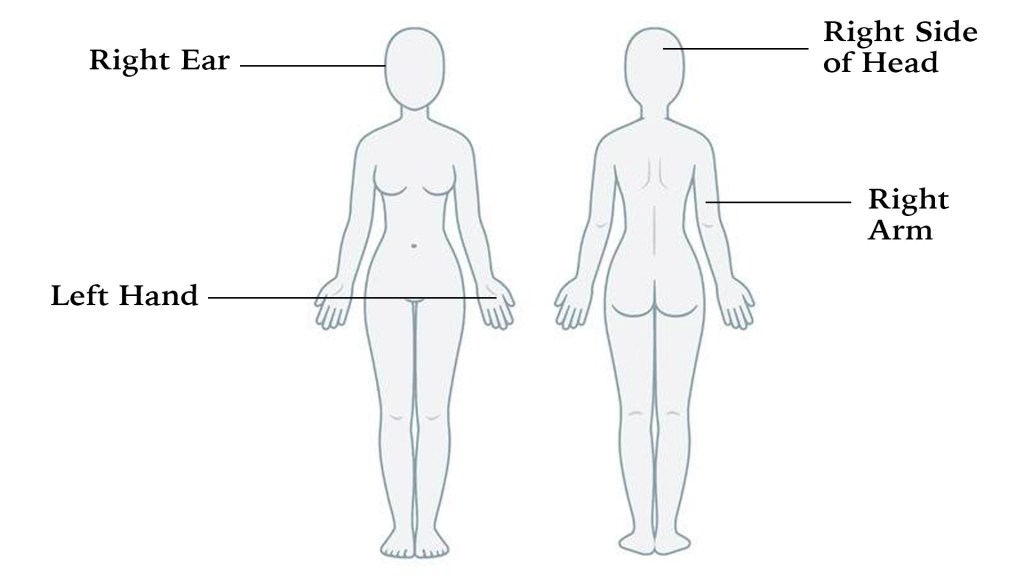
Twenty-two-year-old James Cliff walked with his young wife Mollie McKinney on the morning of August 16, 1882, to the Potomac Ferry Company Wharf. Mr. Cliff’s sixteen-year-old bride fancied a trip to Washington, D.C. Money was tight for the young couple. Mollie had allegedly come up with funds for a nice trip into the big city. At the time, the couple had only been married for about five months. Three months after they were married, Mr. Cliff was let go from his job as a tinsmith due to poor health, draining their cash flow considerably. Although he protested her trip that morning, he insisted on escorting his wife. Mr. Cliff suggested they take a shortcut to the ferry on King Street through the Wilkes Street tunnel. Midway through the tunnel, at its darkest and most concealed point, James slapped his wife and drew a small caliber pistol and proceeded to fire several shots at her. Mollie was hit in four places: on her right ear, on her head above the ear, in the fleshy muscle of her right arm, and her left hand. Ms. McKinney’s screams were heard by several people in the neighborhood, yet nobody seemed to detect foul play at first glance. Two young boys who happened to be walking through the tunnel at the time of the struggle had a visual on the struggle in question. Upon hearing Mollie’s cries, they approached the helpless woman before being told by Mr. Cliff to turn around and leave, who reportedly fired two shots at them. Mrs. Cliff emerged from the tunnel moments later, visibly weeping and covered in her own blood. Mr. Cliff followed close behind his wife, carrying himself cool and calm as if the recent burst of violence were merely a lover’s quarrel.3

Mr. Cliff stopped to chat with several parties in attendance nearby, admitting to them that he had in fact shot his wife. “So great was the surprise at his action,” the article stated, “that no one attempted to arrest him.” He proceeded to walk casually down Royal Street in the direction of the canal. Several women encountered the gravely wounded Mollie McKinney on the corner of Royal and Wilkes and escorted her home. After nearly passing out from blood loss, the helpful women brought her back to life until a doctor arrived to remove what projectiles he could out of her body. The doctor removed the balls from her hand and arm but waited to remove those in her ear and head until she had “calmed down.” The wounds were serious, but not fatal, thankfully.4 

Mollie was hit in four places on her body by her husband, James Cliff.

A crowd soon formed around the house of Mollie McKinney. Oddly enough, it took a great amount of time before anyone in the vicinity began to search for the husband who had walked away from the crime scene so calmly and casually. What kind of man was he, and what possessed him to make an attempt on his wife’s life? 

James Cliff had spent the better part of two months sick with consumption, which forced him out of his job, unfit and unable to work. Mollie, not one to shy for the finer things of life, asked for fine clothes, food, and companionship, which her husband answered with jealousy, physical abuse, and emotional abuse. This was all well documented by those that knew the couple. Neighbors reported that Mr. Cliff was known to “whip” his wife, but not in a manner that would suspect further efforts of deeper foul play. His friends said he was possibly insane. Yet in the realm of Gilded Age romance, Mr. Cliff and Mrs. McKinney had forgivable differences. Mollie’s habit of seeking “lively company” made Mr. Cliff insanely jealous, which was likely the prime motive for the attempted murder. Such behavior is never an excuse, however distasteful it may be to a sick husband strapped for cash at the beginning of an unhappy marriage, for murder. For all intents and purposes, he casually walked away from the city unmolested.5

After the altercation, James Cliff took the Washington Road outside the Alexandria jurisdiction where he waited until evening when he returned to the city feeling too weak from his illness to move further. He went directly to his sister’s house on Duke Street. His sister proceeded to call for the police who took him into custody. The Alexandria Gazette reporter met with Mr. Cliff in his jail cell the following morning to speak to him about what happened. When the reporter arrived, Mr. Cliff was reading the very report on the incident published that morning. He then preceded to tell his side of the story, correcting the report’s ostensible misinformation “in a very indifferent manner.”6 

Much of the offender’s account played out like the article from the previous day. Mr. Cliff insisted that it was his wife’s own idea to go to the wharf for the express purpose of borrowing money for a trip to Washington. Mr. Cliff stated that his wife had not secured money for a tryst in the big city quite yet. How she would get it was up for speculation. The tunnel route, in his eyes, was her idea. He also said that he had a very loving marriage with Mollie until he got sick. It was only after this that she “would never stay with a consumptive man, hoping God might paralyze her if she did.” He continued his tale of sorrows for several more lines, regaling the reporter with a litany of jealous notions and suspicious of infidelity. To him, whatever had happened in the previous morning, was justified. Meanwhile, down the street in their home, Mollie rested from her serious injuries, with one of the balls in her ear still lodged firmly in place. Sadly, the article summarizing the second day of the event ended on a somber note indicative of the time period:

“Mrs. Cliff, it is understood, does not want her husband punished for his crime, and is willing, like a woman, to blame herself entirely for the affair.”7

Alexandria Gazette, August 18, 1882

It was an ominous warning of things to come. If not prophetic.

Two months went by before there was a conclusion to the Cliff assault case. In the middle of October 1882, the Commonwealth set out to convict the prisoner James Cliff, who had the “intent to maim, disfigure, disable, and kill” his wife. Neither party had apparently seen each other since the incident in August, but circumstances that played out would prove that to be highly unlikely. After taking time for the selection of jury, witnesses were called, including Mollie McKinney herself. In a shocking turn of events, she refused to testify in court against her husband, giving no reply when asked about the events on the 17th of August. When she did finally speak up later on during questioning, she merely said that “she had nothing to tell” and objected to other leading questions that would have assuredly convicted Mr. Cliff. All the prosecutor could get from the witness after several attempts to get her to tell the truth was a smile. The smiling grew infectious, and soon laughter was heard in the courtroom. When asked if she had been talked to or influenced before the trial, she responded with a submissive and inaudible “yes.” She then refused to say anything else on the matter of the trial, which forced the prosecutor to send his star witness to jail for contempt of court for the evening. The trial reconvened on the follow day, October 16, 1882, with the witness in a hopefully better position for testimony. She agreed to “tell part, but not all” of her story. Whatever she said must not have been compelling as the end of the trial neared. Other witnesses were examined, playing into the hands of the defense, who asked for a plea of transitory insanity before the jury retired.8 

Sometimes, things do not go like you think they will, especially during the Victorian Era. (Alexandria Gazette, October 16, 1882)

A verdict was reached later that evening after a short deliberation. Foreman Joseph Kauffman presented a verdict of not guilty. James Cliff, now a free man, left the court room with his wife “arm in arm, as loving as if nothing has ever happened to disturb their domestic relations.” Applause could be heard audibly in the court room after the verdict was delivered. It was said that the insanity plea put up by the defense “was worked with a success in this case that even the family of the prisoner did not anticipate.” Who would? Such was the time and delicate circumstances that let a jealous man with anger issues get away with some of the worst instances of domestic abuse. It was the unfortunately product of the time period. The vehicle for that violence was eerily enough the Wilkes Street tunnel, which provided Mr. Cliff with the perfect location to strike her in a jealous rage. The Gazette later reported that Mr. Cliff met his end later on in the Wilkes Tunnel, but that could not be confirmed at present. 

If you or someone you know are being abused domestically, call the National Domestic Violence Hotline at 1-800-79907233. If you cannot speak safely, log onto thehotline.org or text LOVEIS to 22522.

Footnotes:

  1. Alexandria Gazette, November 29, 1871. 
  2. Alexandria Gazette, April 21, 1876. 
  3. Alexandria Gazette, August 17, 1882. 
  4. Ibid.
  5. Ibid.
  6. Alexandria Gazette, October 16, 1882. 
  7. Ibid.
  8. Alexandria Gazette, October 17, 1882. 
Categories
Angela H. Eng blog Civil War

A Holy Dispute: The Alexandria Gazette Burning of 1862

Angela H. Eng, Offbeat NOVA

It’s not hard to grab a newspaper in the Old Town section of Alexandria, Virginia. Stroll down King Street and you’ll see a number of newspaper and circular boxes: pamphlets for things to do and see in Old Town, ads for ghost tours, copies of the Alexandria Times and the Zebra. However, at the intersection of King and Union Street is a lone newspaper box for the Alexandria Gazette Packet.  The Gazette is an unassuming, small paper that averages about 15 pages per issue and costs a quarter. It also has the distinction of being one of, if not the, longest-running newspaper in the United States. 

Alexandria Gazette Newspaper Box on Union Street, Alexandria. The box sites nearby the location of its post-fire offices. (Eng Photo)

Alexandria’s history of printing dates to 1784. The city’s first printing plant belonged to George Richards and Company, and it stood at the intersection of Princess and Fairfax Street.1  This plant produced Northern Virginia’s first paper, titled The Virginia Journal and Alexandria Observer.2 The present-day Alexandria Gazette can trace its origins to this first paper. 

The year 1800 marked the arrival of Samuel Snowden to Alexandria. Snowden, a New Jersey native, began a paper that same year with another collaborator and called it the Alexandria Adviser. However, Snowden soon bought the Columbian Mirror and Alexandria Gazette,from William Fowler in December of 1800.3 Snowden initially called this combined paper The Alexandria Advertiser and Commercial Intelligencer, he changed the name multiple times before settling on the Alexandria Gazette sometime between 1826 and 1828.4 Snowden continued to run the Gazette until his death in 1831; Snowden’s 21 year- old son, Edgar Snowden, resumed  ownership of the paper. 

In 1860, the United States was on the brink of war. Lincoln was elected President in November. Not long after his inauguration in March 1861, the Civil War began with the firing on Fort Sumter on April 12. A little over a month later, on May 23,Virginia seceded from the Union. On the morning of May 24, Union soldiers marched to Alexandria from Washington, D.C. and occupied the city. At the time, Snowden and his son, Edgar Snowden Jr., were running the Gazette. There was one rival newspaper, The Virginia Sentinel, which had begun the previous year.5 It is unclear whether the editors of the Sentinel disbanded or fled, but when the Union occupation began, the Gazette was the only remaining paper in Alexandria.6 

Edgar Snowden, Jr. (sparedshared3)

Under Union occupation, the Gazette did not thrive. Snowden and Edgar Jr. continued to print the paper, but “telegraph communications were denied the publishers and Alexandria had become stagnated economically.”7 By the summer of 1861, the paper had disappeared. However, that fall, Edgar Jr. began a small paper called The Local News. It was a “small non-committal sheet with almost no editorials.”8 Overall, it had varied content: news stories, advertising, current events—it could even report on the crimes of Union soldiers, such as fights and break-ins.9

The Local News ran smoothly and without incident until February 1862. Then, on Sunday, February 9, an event occurred that caused Snowden to publish—what was for the time—an inflammatory editorial. 

“ARREST OF A MINISTER WHILE AT PRAYER IN A CHURCH—GREAT EXCITEMENT”

The headline of the first column in the February 10 edition of the Gazette hints at a wild story to follow. However, the story is recounted in an objective, straightforward manner. St. Paul’s Episcopal Church, founded in 1808 and currently at 228 South Pitt Street, was the site of a disturbance between Union soldiers and Alexandrians. The Reverend K.J. Stewart conducted Sunday services at the church, and at the services on February 9, he began to read the litany. However, several Union soldiers in the congregation, including Captain Elon Farnsworth, noticed that the Reverend did not recite the prayer for the President of the United States. The soldiers demanded he read the prayer, but he ignored them. Farnsworth then decided to arrest the Reverend, so “the prayer book was taken from Mr. Stewart’s hand, he was seized and conducted out of the church, followed by bis little daughter who clung to her father, and was held by one of the soldiers.”10 Michael Lee Pope’s account of the event adds a bit of flair: when soldiers removed the Reverend’s prayer book, he continued to recite the litany from memory. Also, as the Reverend was dragged out the church door, a lady in the choir gallery threw a book at a Union soldier.11 A history of the church on the St. Paul’s website also acknowledges, “ a warning was issued to ‘females and others,’ threatening arrest for offensive remarks and demonstrations prompted, no doubt, by the actions of several St. Paul’s ladies, including one who is said to have dropped her prayer book from the gallery onto the head of an offending officer.”12

The Local News (February 10, 1862)

The Reverend was taken through the streets of Alexandria, in his clerical robes, to Farnsworth’s quarters. The General Montgomery was summoned from the services he was attending at the nearby Christ Church to deal with the situation. He later released Reverend Stewart at the direction of government in Washington, D.C. 

However, the column on the far right of that paper’s edition tells the same story—with less objective details. The editorial describes the event as never having “a parallel among civilized nations, certainly not in the history of this country.”13 The story continues, “an interruption occurred of the character which the law designates as ” brawling”—that is, the intervention of noise and tumult by certain persons, who had come to the church with the intention of interrupting the service should it not proceed according to their wishes.” When the Reverend refused to read the prayer for the President, Farnsworth “undertook to officiate in prayer (if prayer it can be called) by reading the prayer for the President of the United States.” Then he demanded the arrest of the Reverend and called him “a rebel and a traitor.”14 The column continues to deplore the actions of the Union soldiers and declares, at the end, “It will, however, be well to state that Mr. Stewart only insists upon the right of all ambassadors to communicate with their King, untrammeled by civil or military interference.” 

So incensed from the event was Snowden, that he ends the column with a listing of prominent men present in the church and states that they will “testify to the facts as above stated.” He then ends the column with a statement that copies of the paper have been sent to the President and George McClellan, the Commanding General of the Union forces. 

Though the event ended peacefully, the Union unrest was far from over. 

Gazette House Burning Detail, 310 Prince Street, Alexandria, VA (Eng Photo)

That evening, the offices of the Alexandria Gazette at 310 Prince Street caught fire and burned. How the fire began remains unknown. Several sources call the fire “mysterious,” but other sources claim that the fire was started by Union soldiers as retaliation for the editorial.15 Regardless of origin, the scars from the fire remain on the side of the building to this day, a testament to the historical event that occurred on this spot. 

On May 13, 1862, Edgar Snowden Jr. revived the Gazette from the ashes. The paper’s offices were moved to 104 King Street, over a local bookstore. The May 13th edition of the paper states it as “a continuation of domestic annals commenced by the Alexandria Gazette in 1799, and, together with the sheets of ‘The Local News,’ completes the connection between the sixty-second and sixty-third volumes of the Gazette.” The text describes the summaries as  “necessarily brief” and “without details.” The first item listed is the fire on February 10: “The Alexandria Gazette office burned, and further issue of “The Local News” suspended.” In the opposite column, in a brief yet somehow triumphant fashion, the last item reads: “May 13.—Alexandria Gazette resumed.”

And resume it did. The Alexandria Gazette runs to this day. While hunting for the location of 104 King Street, I spied the old, battered newspaper box in front of Mia’s Italian Restaurant with a plain sticker plastered on the side: Alexandria Gazette Packet.18 I jumped out of the car and ran to see if there were any old copies inside. Lo and behold, I pulled out a July 16, 2020 edition of the Gazette. While we were never able to pinpoint exactly where 104 King Street sat, it crossed our minds that the newspaper box sits the closest it can to the original office. 

At the top of the paper, in small letters, is a brief and powerful tagline: “Serving Alexandria for over 200 years.”

Footnotes

  1. Anderson, Robert Nelson. “A History of Printing in Arlington (Alexandria) County.”  Arlington Historical Magazine Vol. 1 Issue 3 (1959): p. 11, http://arlingtonhistoricalsociety.org/wp-content/uploads/2016/02/1959_2Printing.pdf 
  2.  Anderson, “Printing,” p. 11.
  3.  Rawson, David. “Samuel Snowden.” Index of Virginia Printing, http://indexvirginiaprinting.org/bio/393/. Rawson notes that Fowler had the publication for only two months and it was financially troubled.
  4.  Rawson, “Index.” The name Alexandria Advertiser and Commercial Intelligencer only lasted until 1803. The succession of names included: Alexandria Daily Advertiser, 1803-1808; Alexandria Daily Gazette, Commercial and Political, 1808-1812; Alexandria Gazette, Commercial and Political, 1812-1817; Alexandria Gazette and Daily Advertiser, 1817-1819; Gazette and Daily Advertiser, 1819-1821; Alexandria Gazette and Daily Advertiser, 1821-1822; Alexandria Gazette and Advertiser, 1822-1824; and Alexandria Phenix Gazette, 1825-1833. At some point between 1833 and 1834 the “Phenix” portion of the name was dropped.
  5.  Cappon, Lester. “The Yankee Press in Virginia, 1861-1865.” The William and Mary Quarterly. Vol. 15 No. 1 (1935): pp. 81-88. The Sentinel only lasted from 1859-1861. Cappon describes it as “pro-secession and radical.” 
  6.  Cappon states the paper “disbanded,” but Anderson, citing a different publication by Cappon, states that the editors “escaped” to Warrenton, Virginia. 
  7.  Anderson, “Printing,” p. 18.
  8.  Cappon, “Yankee Press,” p. 81.
  9.  Tuyull, et al. “Sic Semper Tyrannis: The Alexandria Gazette under Union Occupation.” Journalism in the Fallen Confederacy (New York: Palgrave, 2015), pp.18-41. 
  10.  The Local News, (Alexandria, VA) February 10, 1861.
  11.  Pope, Michael Lee. Wicked Northern Virginia (Charleston: History Press, 2014), p. 107.
  12.  “St. Paul’s History.” St. Paul’s Episcopal Church, n.d., https://stpaulsalexandria.com/start-here/#1540312179561-b3069e59-ff71
  13.  The Local News, (Alexandria, VA) February 10, 1862.
  14.  Interesting side note: Captain Elon Farnsworth later died at the Battle of Gettysburg on July 3, 1863.
  15.  Anderson and Pope claim that Union forces set the fire, as does the historical marker at 310 Prince Street. However, Jeremy Harvey (author of Occupied City: Portrait of Civil War Alexandria, Virginia) states the fire began under “mysterious circumstances.” https://www.hmdb.org/m.asp?m=41832 
  16.  Anderson, “Printing,” p. 18.
  17.  Alexandria Gazette, (Alexandria, VA) May 13, 1862. 
  18.  Mia’s address is 100 King Street. We could not locate 104 King Street, but we assume it was on the second floor (since Anderson points out it was above a bookstore) and probably absorbed into the restaurant space.