

By Matthew Eng, Offbeat NOVA
I have a confession to make. It’s going to be a hard one to admit to fellow music lovers. Here it goes.
I wasn’t into Nirvana until much later in life. I know…I KNOW.
I was very young when “Smell’s Like Teen Spirit” became the Seattle earworm that congested radio and television airwaves in the early 1990s. When Nevermind was released in 1991, I was only seven years old. My experience with music up until then had been whatever my dad listened to. If you wanted to mosh to some Dan Fogelberg, James Taylor, or Jackson Browne in the early 1990s, I was your guy. I knew all the words to “Somebody’s Baby” and “Run for the Roses” long before I committed the mantra-like meanderings of the band’s biggest hit inside a poorly-ventilated high school gymnasium to memory.
My first real exposure to Nirvana came just before the end the band in 1993 for the televised Unplugged in New York concert on MTV. They played it on the station so much afterwards that I had plenty of time to sneak into our room above the garage to watch it. The entire concert blew me away. What impressed me the most, though, was their drummer, Dave Grohl. I didn’t know anything about him seeing him on stage for that televised concert. Throughout the concert, Grohl played an acoustic drum kit and sang backup vocals perfectly. He even picked up an acoustic bass for one of the songs. How could he be so good at more than one instrument? I had to know more. By the time I did my research about Grohl and the rest of the band (which in the early 90s meant combing through magazines at the local bookstore), Nirvana was over. Cobain died by suicide in April 1994 and the band broke up forever shortly after. Would I ever see my newfound musical hero again? As it turns out, I would.

Unbeknownst to me, Grohl had been secretly recording his own songs while he played drums in Nirvana. Not only was he good at drums, singing, and bass, he was a hell of a guitar player. He could do it all. Six months after Cobain’s death, Grohl booked six days in a local Seattle studio to record what would become the first Foo Fighters record. Besides a few guest appearances, he recorded every instrument and sang every word.
Foo Fighters was released on Roswell Records on Independence Day, 1995. When I heard about the release with my friends, all of which were now enamored with Grohl and grunge music culture, I begged my dad to go to the local music store to get it. He eventually acquiesced my request, and we went to Planet Music in Virginia Beach. I can remember bringing my SONY discman with me so I could listen to it immediately after ripping off the impossibly-hard-to remove shrink wrap encasing the compact disc.
Keep in mind, Foo Fighters would not be my first grunge music purchase at that point. I had several already in my collection by July 1995, including Pearl Jam’s Ten, Soundgarden’s Superunknown, The Smashing Pumpkins’ Siamese Dream, and of course, Nirvana’s Unplugged in New York. I had never been more excited up to the point getting a record than when I did with Foo Fighters. “This is a Call,” their first single, released on the radio a few weeks before, and I was in love with the overall sound. It sounded like Nirvana, but more polished. It was punchier and faster paced. One might say it had the existential qualities of punk rock music, a genre I would also embrace less than two years later. But for 1995, it was all about this release.
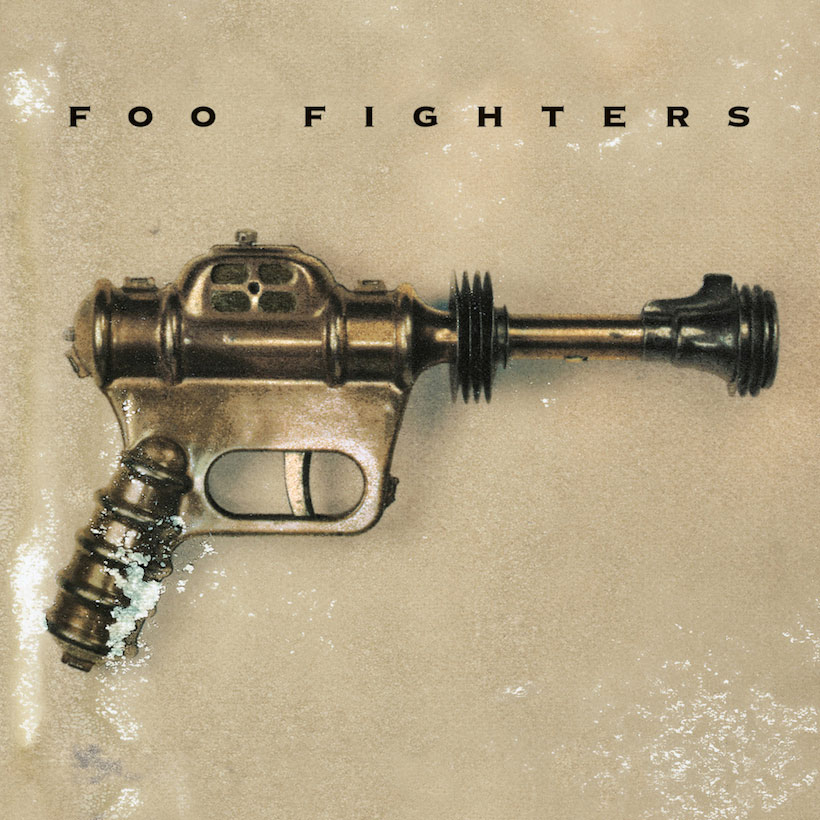
The first couple of songs were fantastic off the bat. To this day, there are very few first tracks that hit harder than “This is a Call.” The next two songs, which also became singles and iconic music videos to boot, still resonate with me. It’s the middle of the album that I continue to go back to, with one song in particular. Standing up among a three song set exploring some differing styles such as eighties post-punk nostalgia (“Good Grief”) and grunge-drenched shoegaze (“Floaty”) is the two minute and forty-six second brain melt that is “Weenie Beenie.”
“Weenie Beenie” was the first song I ever heard that felt truly aggressive to me. The aggression felt good, even for a middle class kid with a b-plus average. The song starts loud and ends louder. Grohl’s characteristic scream is put on display there for the first time. The drums are open ended with plenty of hi hat filling the empty space between the drones of bass and guitar. The snare hits like hammers on your ear drums. The guitars are tuned down and turned up to a nearly uncomfortable level. In the immortal words of Nigel Tufnel, the amps “go to eleven.” It’s a sound I would identify with for the rest of my life. Just because a song sounds angry, doesn’t mean it IS about anger. Without sounding too nostalgic, the song is an emotional one. Every music lover has a genesis to their obsession. Mine happens to be “Weenie Beenie.”

I couldn’t play a single instrument when the eponymous release came out in 1995, but it undoubtedly spurred me to pick up my first, a black and white bass guitar, for my birthday in 1996. I still own and cherish that bass to this day. Over the course of middle and high school, I made it a goal to learn all the instruments Dave Grohl could play. I can play all of them now, in varying degrees of precision (or lack thereof).
It wasn’t until I was in college at James Madison University that I found out through some old archived interview that “Weenie Beenie” was named after a northern Virginia fast food stand nearby where Grohl grew up. I had to go. But geography, my lack of vehicle, and my studies (…right) kept me from making a pilgrimage to this fast food holy grail. After a while, I simply forgot about it, even if I continued to make that album part of my rotation throughout my high school years and beyond.
It’s been twenty five years since Foo Fighters was released. What better time to FINALLY go to this iconic northern Virginia establishment than now? Once we started the Offbeat NOVA project, it was the first thing I wrote down. We had to finally go. I was not disappointed.
Weenie Beenie is located just north of the Shirlington neighborhood in Arlington. The small restaurant, offering walk-up service only (no doubt a great boon for business in the currently pandemic) sits unpretentiously in a small parking lot across from a park. The restaurant is the last remaining of a chain of restaurants created by notorious pool shark Bill Staton and his uncle Carl in 1950. According to the Arlington Public Library, Staton funded the first stand alter collecting nearly $30,000 in earnings from a profitable gambling trip in Arkansas. The namesake of the establishment became the nickname of the pool player for the rest of his life.1

I asked Angela to put the song on as we drove down Shirlington Road. where the restaurant was located. After twenty five years, I had finally arrived.
When I looked it up, Google said it was known for “BBQ sandwiches and hot dogs.” I wasn’t feeling a hot dog on a hot summer day, so we decided on grubbing on a pair of barbecue sandwiches and fries. As we ordered, our daughter Zelda charmed all of the waiting customers around us. It was so unbearably hot and humid that day (nearly 100 degrees), that all of us waiting for our food attempted to hang out in the small amount of shade the tiny orange eaves the restaurant provided from the direct sunlight. After about fifteen minutes, we finally received our hot bag of food. I brought it back to the car and cranked the air conditioning before eating my sandwich. The first thing I noticed was the bun. Normally a soggy afterthought to barbecue sandwiches, the bun was thick and toasted, holding all of the seasoned meat and cool coleslaw together.
I took my first bite of the barbecue sandwich as Dave growled into the chorus of the song inspired by the place I was finally eating at. The meat was warm and well seasoned, with just a hint of spice to it. It also had a tang to it reminiscent of the North Carolina-vinegar style I love so much. The coleslaw was not unlike the restaurant itself, simple and unpretentious. The sandwich reminded me of a better version of a famous drive-in restaurant I grew up eating at in Norfolk, VA, Doumars. Whereas those sandwiches were small and soggy, the one dished up at Weenie Beenie was large, crispy, and filling.

But I’m not finished. I haven’t talked about the fries yet. I don’t have a picture of the fries because we ate them too fast. Weenie Beenie serves large, wedge-cut fries with an addicting seasoned coating on them. Complimented by the sugary, umami taste of ketchup, they were crispy and perfect. By the time the song was over, we were halfway through our entire meal. It was gone completely in another two minutes. We drove away from Weenie Beenie still sticky with sweat but full and content with delicious food. It’s definitely not a meal you can have all the time, but surely worth waiting nearly thirty years for. Eating there closed a very important chapter of my life, when music was new and exciting.
I highly recommend giving this local business your patronage. When you roll up on the unassuming establishment in your car, don’t forget to crank the seventh track on the first Foo Fighters album while you do.
Footnotes
- Arlington Public Library, “The Weenie Beenie,” Link.
 Offbeat NOVA